

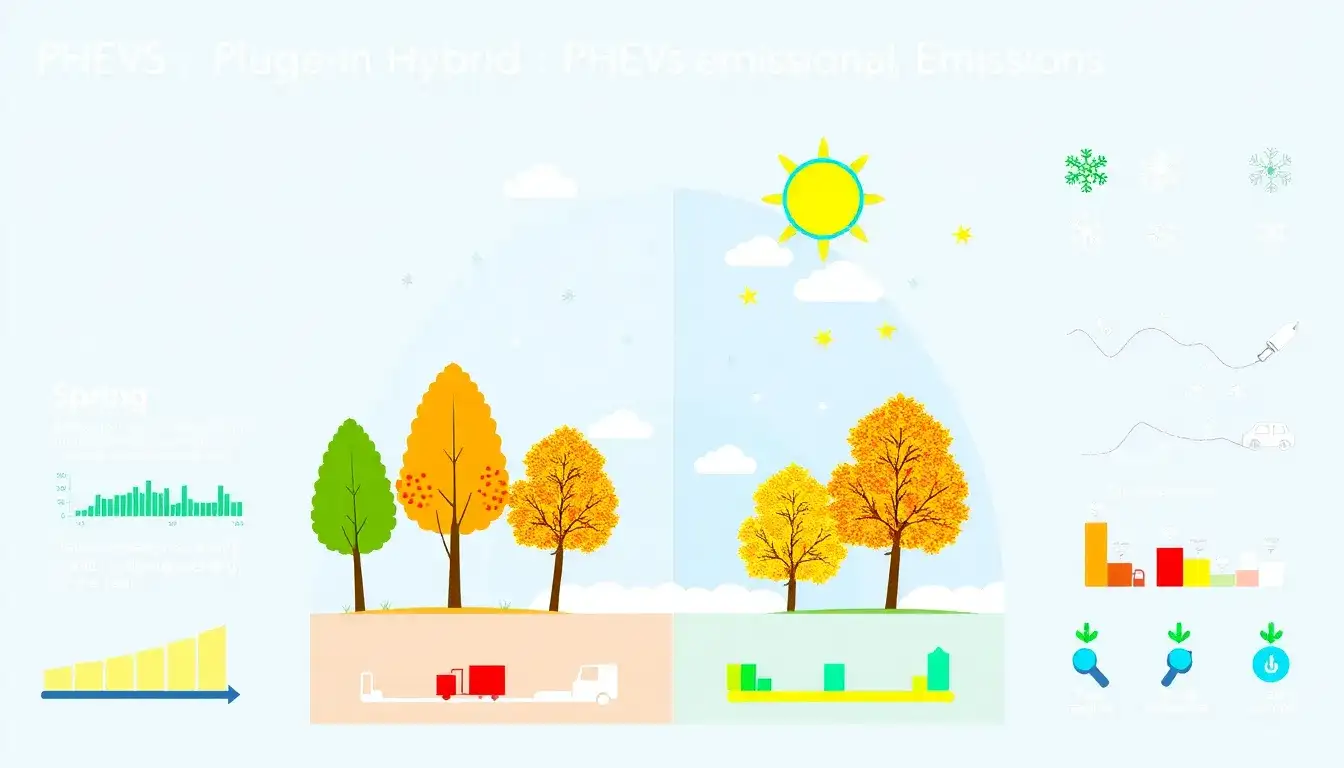
Seasonal Emissions Variations
- Emissions During Ozone Season: During ozone season, typically from May through September, NOx emissions from generators can decrease due to load-shifting and generation efficiency improvements caused by the flexibility in PHEV charging. This means that during this season, PHEVs can contribute to reduced NOx emissions (an ozone precursor) by allowing for smarter management of power generation resources.
- Annual Emissions Patterns: Throughout the year, emissions of CO2 and SO2 increase with PHEV charging loads. Marginal CO2 emissions rates range between 582 kg/MWh and 935 kg/MWh, and marginal SO2 emissions rates are between 0.9 kg/MWh and 1.2 kg/MWh. This suggests that while there are seasonal benefits in terms of NOx, other pollutants like CO2 and SO2 show a more consistent increase regardless of the season.
- General Emission Reduction: Overall, plug-in electric vehicles, including PHEVs, generally produce fewer emissions compared to conventional gasoline vehicles, especially in regions with cleaner electricity sources. However, the specific seasonal variations are more nuanced and depend on the power generation mix and charging behavior during different seasons.
In summary, while PHEVs offer pollution reductions, especially for NOx during ozone seasons, there are ongoing increases in other emissions like CO2 and SO2 associated with their use across all seasons.
Original article by NenPower, If reposted, please credit the source: https://nenpower.com/blog/what-are-the-seasonal-variations-in-emissions-from-phevs/

