

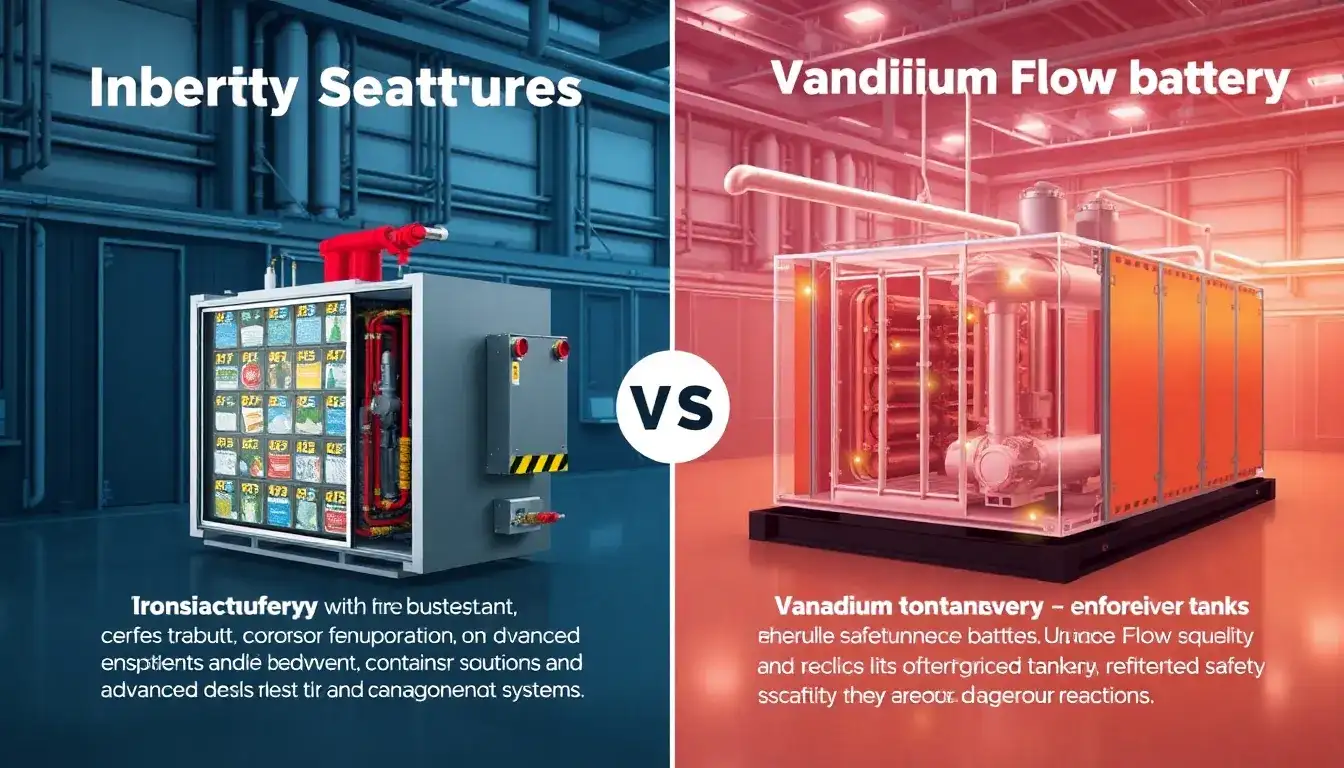
Safety Differences
1. Chemical Stability
- Iron Flow Batteries: These batteries use iron, which is a relatively non-toxic and less reactive metal, offering a safer chemical profile. Iron is not prone to violent reactions with water, unlike some other metals like lithium.
- Vanadium Flow Batteries: While generally stable, vanadium redox batteries involve vanadium ions in different oxidation states, which can pose handling risks if not managed properly. However, their safety risks are generally considered lower than those of lithium-ion batteries but might not be as benign as iron.
2. Risk of Thermal Runaway
- Iron Flow Batteries: These batteries pose no risk of thermal runaway, which means they do not require cooling systems to prevent overheating. This characteristic makes them suitable for environments prone to wildfires or other hazardous conditions.
- Vanadium Flow Batteries: These batteries are also less prone to overheating issues compared to lithium-ion batteries. However, while they do not typically require cooling like lithium-ion batteries, they may not offer the same level of inherent thermal stability as iron flow batteries.
3. Environmental Impact
- Iron Flow Batteries: They are made from easily sourced iron, salt, and water, reducing environmental impacts associated with mining critical minerals like lithium or cobalt. This sustainability aspect enhances their safety profile over the full lifecycle of the battery.
- Vanadium Flow Batteries: While vanadium is not as environmentally concerning as lithium or cobalt, its extraction and processing can still have environmental impacts. However, vanadium flow batteries are generally considered more sustainable than lithium-ion technology.
4. Recyclability and End-of-Life Management
- Iron Flow Batteries: These batteries are highly recyclable or reusable at the end of life, contributing to a cleaner technology lifecycle.
- Vanadium Flow Batteries: Vanadium can also be recycled, and efforts are made to ensure sustainable end-of-life management for these batteries. However, the overall recyclability benefits might not be as emphasized as they are for iron flow technology.
In summary, iron flow batteries offer several safety advantages over vanadium flow batteries, including their non-toxic and less reactive nature, lack of thermal runaway risk, and potentially lower environmental impact due to simpler, more abundant materials. While vanadium flow batteries are also safer than many other technologies like lithium-ion, iron flow batteries stand out for their increased safety and sustainability.
Original article by NenPower, If reposted, please credit the source: https://nenpower.com/blog/what-are-the-safety-differences-between-iron-flow-batteries-and-vanadium-flow-batteries/

