

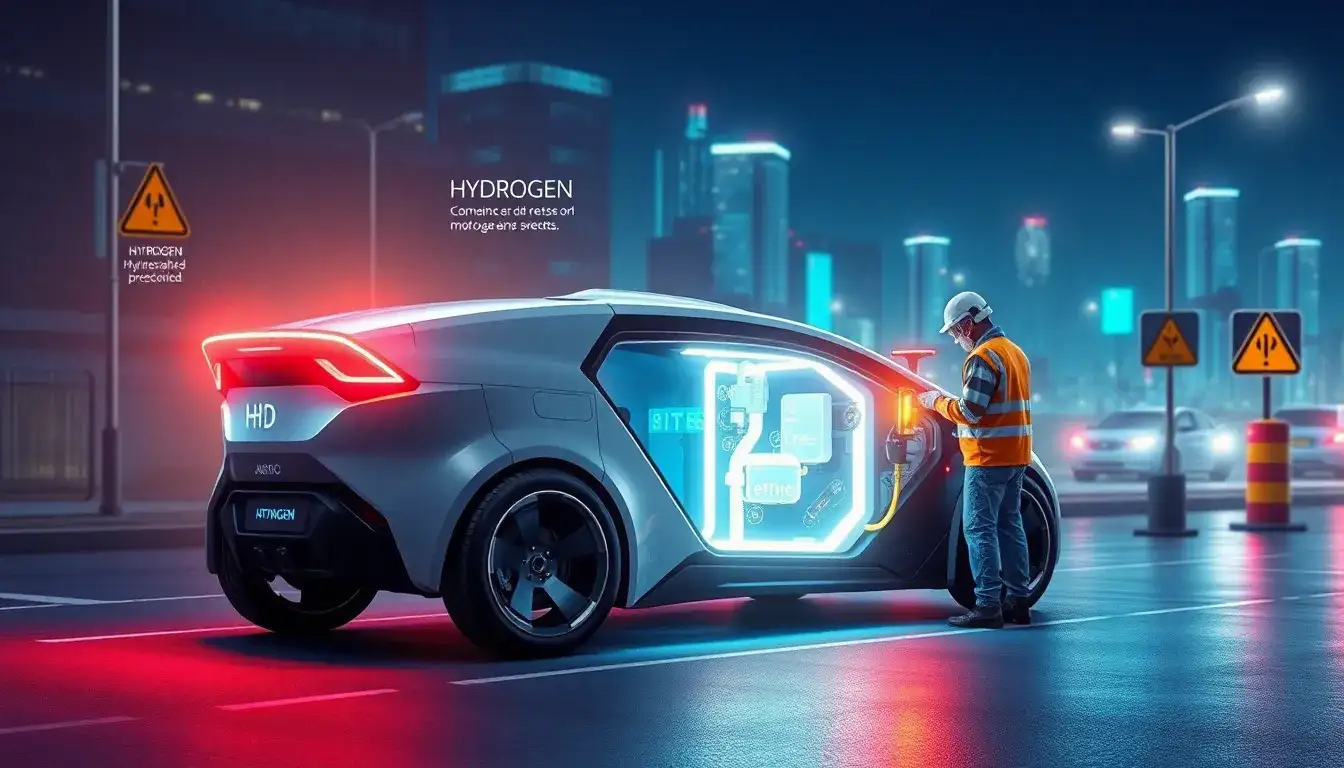
The safety concerns associated with using hydrogen in mobile applications primarily stem from its unique properties and the current state of technology and practices. Key issues include:
Flammability and Explosion Risk
- Hydrogen has a wide flammability range and can ignite over a broad range of air-hydrogen mixtures, which means it can burn easily if leaked and exposed to an ignition source. However, it requires specific conditions such as confinement and ignition to explode, so the risk is manageable with proper safety measures.
- Incidents involving hydrogen in mobile applications could cause catastrophic failures that damage public perception of hydrogen technologies, making safety protocols crucial.
Storage and Handling Challenges
- Hydrogen is typically stored as a compressed gas, liquid, or in solid-state materials, each with specific safety considerations. Compressed gas cylinders and liquid hydrogen tanks must withstand high pressures and maintain insulation to prevent leaks or ruptures.
- Storage technologies have advanced significantly, but there remains a need to address vulnerabilities related to leakage and pressure containment in mobile contexts.
Vulnerabilities in Mobile Equipment
- Mobile hydrogen applications include bulk gaseous storage, transport trailers, mobile fueling equipment, and fuel cells in vehicles and drones. These present unique challenges, such as mechanical stresses during transport and operation that can lead to leaks or failures if not properly managed.
- The nascent nature of these mobile hydrogen technologies means emergency responders and regulators often have limited experience, increasing safety risks and response difficulties in the event of an incident.
Need for Standards and Technologies
- There is an ongoing effort to develop international standards and improve technologies for hydrogen transport and transfer, especially for cryogenic hydrogen in populated areas, to increase safety and efficiency.
- Projects like ELVHyS in Europe focus on enhancing hydrogen transfer safety in public spaces and mobile uses, emphasizing the importance of rigorous engineering controls, monitoring, and safe operation protocols.
Recommended Safety Measures
- Use of ventilation systems, hydrogen gas detection sensors, explosion-resistant equipment, and rigorous testing of storage and transport vessels reduces risk.
- Continuous research into lightweight, composite storage materials and improved containment methods aims to mitigate leakage and improve resilience.
In summary, the safety concerns for hydrogen in mobile applications revolve around its flammability, storage integrity, equipment robustness, and the current gaps in emergency preparedness and standards. Addressing these through advanced materials, technology innovation, strict safety protocols, and regulatory development is critical for safely scaling hydrogen use in mobile applications.
Original article by NenPower, If reposted, please credit the source: https://nenpower.com/blog/what-are-the-safety-concerns-associated-with-using-hydrogen-in-mobile-applications/

