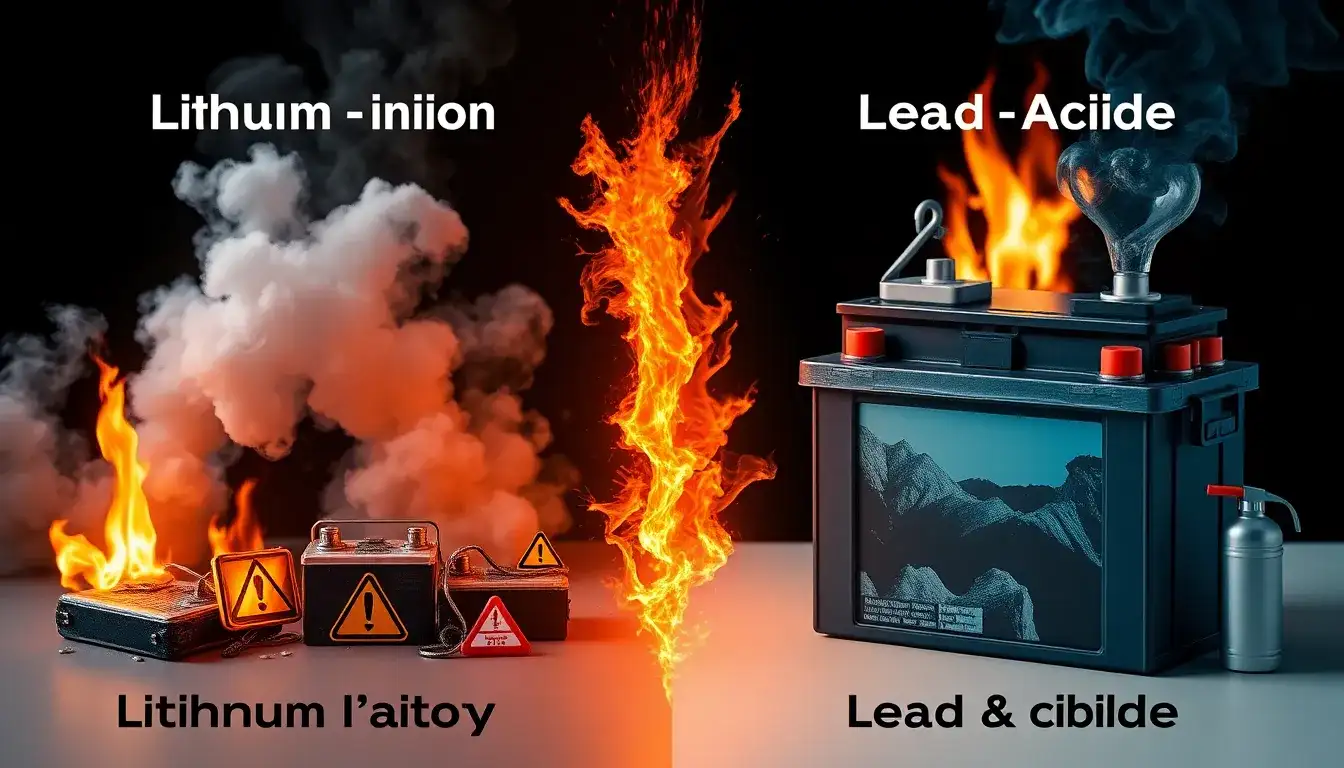
Safety Concerns: Lithium-Ion vs. Lead-Acid Batteries
When comparing lithium-ion and lead-acid batteries, each type presents distinct safety concerns:
Lithium-Ion Batteries
Safety Concerns:
- Fire and Explosion Risks: Lithium-ion batteries can overheat and enter a state of thermal runaway, leading to fires or explosions. These fires can produce toxic gases, are difficult to extinguish, and may reignite even after being seemingly extinguished.
- Chemical and Electrical Hazards: These batteries contain chemicals that can release flammable gases if damaged or improperly handled.
- Heat-Related Hazards: High heat can cause batteries to degrade faster and increase the risk of thermal runaway.
Safety Guidelines:
- Always purchase from reputable manufacturers.
- Follow manufacturer instructions for charging and storage.
- Use the correct chargers and adapters.
- Avoid overcharging or using non-certified (UL) batteries.
Lead-Acid Batteries
Safety Concerns:
- Chemical Exposure: Lead-acid batteries contain acid, which can pose a risk of chemical burns or spills during maintenance. Protective gear is necessary when handling these batteries.
- Less Fire Risk: Generally, lead-acid batteries are less prone to fires compared to lithium-ion batteries, though improper use can still lead to overheating or acid spills.
- Heavy and Bulky: They can be difficult to handle due to their size and weight.
Safety Guidelines:
- Use acid-resistant protective equipment during handling.
- Ensure proper ventilation and avoid inhaling fumes.
- Follow proper disposal methods to avoid environmental contamination.
In summary, lithium-ion batteries are more prone to fire and explosion risks, while lead-acid batteries primarily pose a chemical exposure hazard. Proper handling and use practices are crucial for both types to mitigate these risks.
Original article by NenPower, If reposted, please credit the source: https://nenpower.com/blog/what-are-the-safety-concerns-associated-with-lithium-ion-batteries-versus-lead-acid-batteries/