

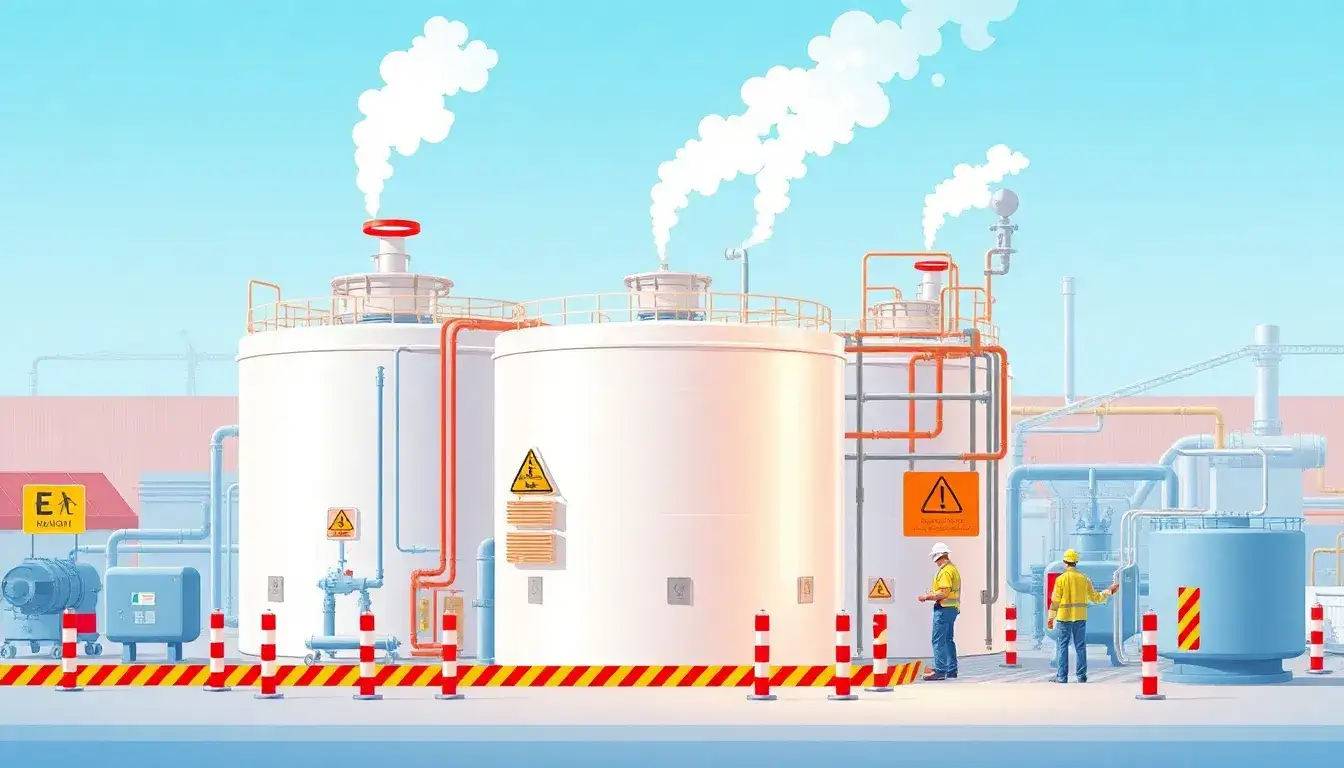
The safety concerns associated with hydrogen storage primarily stem from hydrogen’s unique chemical and physical properties, which require careful engineering and operational controls to mitigate risks. Key safety issues include:
Flammability and Ignition Risks
- Hydrogen can ignite very easily due to its wide flammable concentration range in air and its lower ignition energy compared to conventional fuels like gasoline or natural gas. This makes accidental ignition a critical hazard during storage and handling.
- The flame produced by hydrogen combustion is nearly invisible to the naked eye, necessitating specialized flame detectors to ensure early detection of fires.
Leakage and Diffusion
- Hydrogen molecules are extremely small, allowing them to penetrate tiny gaps and porous materials, increasing the risk of leaks which can lead to explosive mixtures if accumulated.
- Because hydrogen is the lightest gas, any leaked hydrogen can quickly rise and collect under roofs or enclosed structures, forming flammable clouds that can be difficult to detect and control.
Material Compatibility and Embrittlement
- Certain metals used in storage and containment systems can become brittle when exposed to hydrogen, a phenomenon called hydrogen embrittlement, which can lead to cracking or sudden failure of pressure vessels and pipelines.
High-pressure and Low-temperature Storage Hazards
- Hydrogen is often stored either as a compressed gas at very high pressures or as a cryogenic liquid at very low temperatures. Both conditions pose specific risks:
- High-pressure storage demands vessels that can withstand extreme stress, and any failure can cause violent releases.
- Cryogenic storage requires insulated tanks and risk management for extremely cold temperatures to prevent material damage and maintain integrity.
Ventilation and Storage Location Requirements
- To reduce the risk of dangerous hydrogen accumulations, hydrogen storage is preferably outdoors and at a safe distance from buildings, ventilation intakes, and vehicle routes.
- When stored indoors, strict measures must be taken such as using noncombustible materials in construction, providing mechanical ventilation (air intake low, exhaust high), limiting hydrogen volume, maintaining cylinder spacing, and installing hydrogen sensors and automatic shutoffs.
Explosion Risk
- Hydrogen storage inherently carries the risk of explosion if hydrogen, oxygen (air), and an ignition source are all present. Engineering controls focus on preventing leaks, eliminating ignition sources, and quickly detecting any fire or leak to prevent catastrophic events.
In summary, the major safety concerns with hydrogen storage are its high flammability and ease of ignition, the risk of undetected leaks due to the gas’s small molecular size and invisible flame, the potential for embrittlement of storage materials, and hazards related to the high pressures and low temperatures involved. These challenges require specialized containment systems, monitoring, ventilation, and emergency controls to ensure safe storage and use of hydrogen.
Original article by NenPower, If reposted, please credit the source: https://nenpower.com/blog/what-are-the-safety-concerns-associated-with-hydrogen-storage/

