

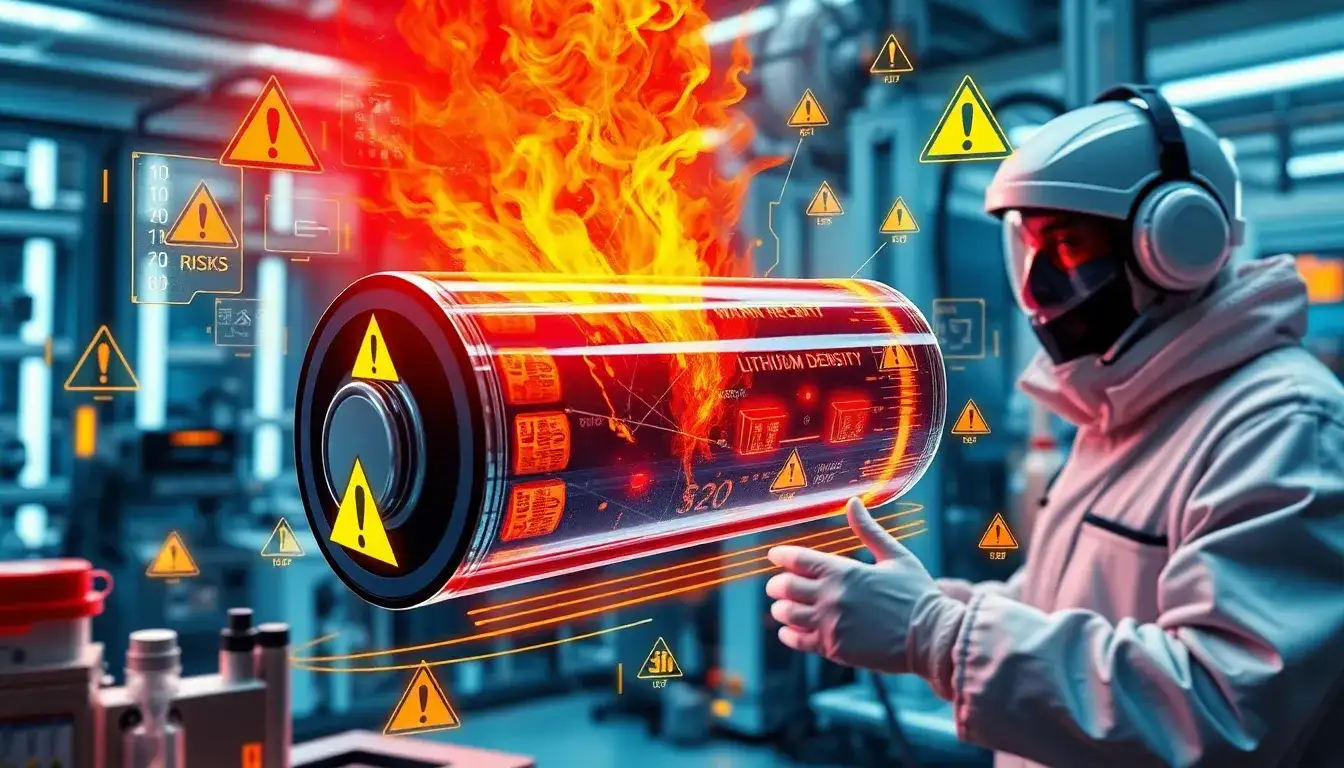
Higher energy density in lithium-ion batteries introduces several safety concerns primarily related to their increased chemical and thermal instability. As energy density rises, the risks of heat generation, thermal runaway, and subsequent fire or explosion also increase significantly.
Key Safety Concerns Associated with Higher Energy Density in Lithium-Ion Batteries
- Thermal Runaway and Fires: Higher energy density means more energy is stored in a compact space, which can lead to more intense and rapid heat generation if the battery is damaged, short-circuited, or improperly handled. This can cause thermal runaway, where the battery temperature rapidly escalates, potentially resulting in fire or explosion. These fires produce intense heat, smoke, and toxic gases.
- Increased Sensitivity to Manufacturing Defects: As lithium-ion batteries become denser, the components such as electrodes and separators become thinner (around 20–25 micrometers). This increases vulnerability to tiny intrusions like metallic dust particles, which can cause internal short circuits leading to catastrophic failures. For instance, a nail penetration in older lower-capacity cells may have been tolerable, but in modern high-capacity cells, it can trigger an explosive reaction.
- Electrochemical Instability: Over-discharge or improper charging creates side reactions in the battery chemistry, such as breakdown of the solid electrolyte interphase (SEI) film and gas generation (H2, CH4, C2H6). These reactions degrade battery performance and increase the risk of swelling, leakage, and eventual failure that can lead to hazardous conditions.
- Handling and Storage Risks: Due to their flammable electrolyte and high stored energy, lithium-ion batteries require careful handling, charging, and storage to prevent accidental short circuits, overheating, or mechanical damage that could trigger fires or explosions.
- Regulatory and Manufacturing Challenges: The push for higher energy densities tightens manufacturing tolerances and demands improved safety standards (such as UL 1642), making production more complex to ensure safety without sacrificing performance.
In summary, while higher energy density improves battery runtime and capacity, it also increases the risk of thermal events, internal shorts, chemical breakdown, and catastrophic failure modes such as fires and explosions. These concerns require enhanced manufacturing quality control, robust battery management systems, and careful usage protocols to mitigate the inherent risks associated with the greater energy stored in modern lithium-ion cells.
Original article by NenPower, If reposted, please credit the source: https://nenpower.com/blog/what-are-the-safety-concerns-associated-with-higher-energy-density-in-lithium-ion-batteries/

