

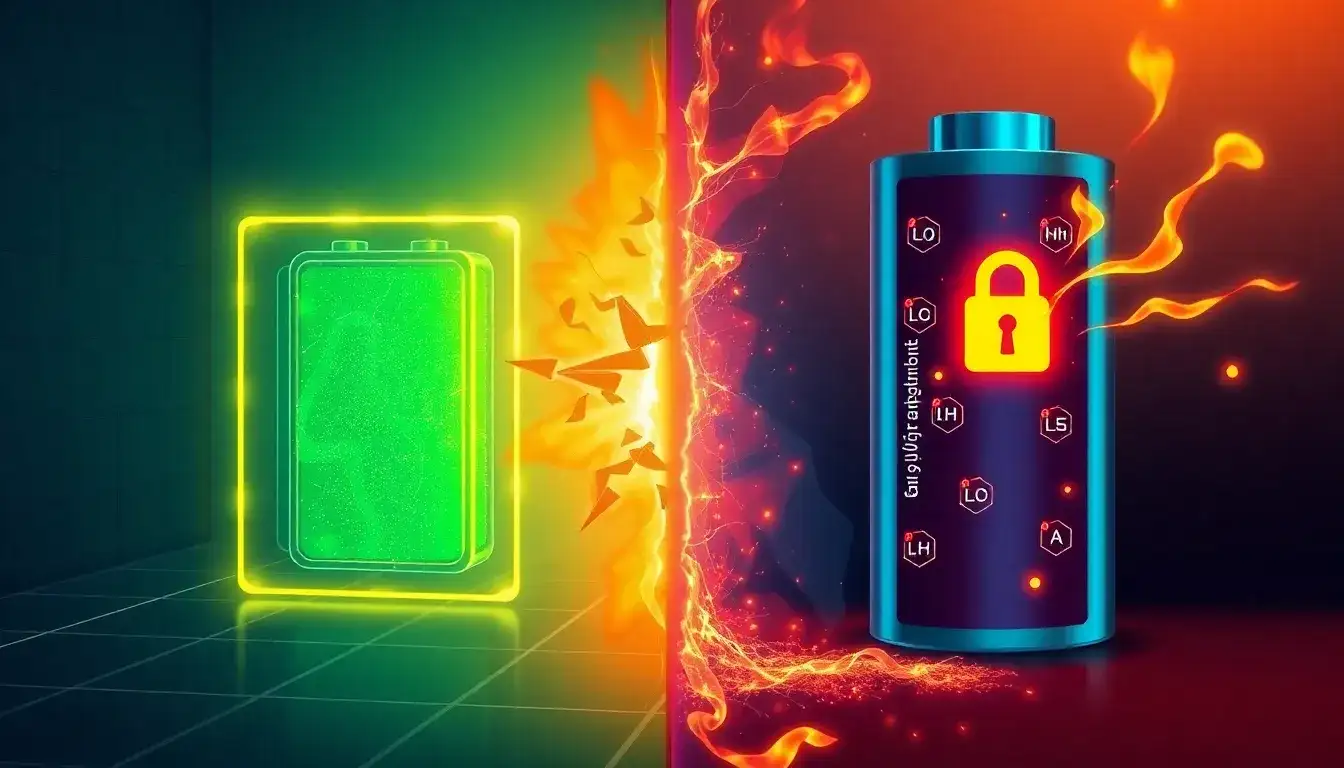
Solid-state batteries offer several safety advantages over lithium-ion batteries, primarily due to their non-flammable solid electrolyte. Here are some key benefits:
- Reduced Fire Risk: Lithium-ion batteries contain a volatile, flammable liquid electrolyte that can cause fires, especially in cases of thermal runaway. Solid-state batteries use a solid electrolyte, which is non-flammable and greatly reduces the risk of battery fires.
- Higher Thermal Stability: Solid-state batteries can tolerate higher temperatures and have a broader operating temperature range compared to lithium-ion batteries, making thermal runaway less likely.
- Improved Resistance to Physical Damage: Even if damaged, solid-state batteries are less prone to leakage or explosion because they lack a liquid component, which reduces the risk of fire.
- Enhanced Charging Safety: Solid-state batteries enable faster charging with high-voltage cathode materials without risking violent reactions with the electrolyte, as seen in lithium-ion batteries.
- Longer Cycle Life: Solid-state batteries have a longer cycle life due to reduced material degradation and fewer lithium ions being trapped during charging, which contributes to increased safety over time.
However, solid-state batteries are not entirely risk-free and may face challenges such as dendrite formation and interfacial issues, which can lead to short circuits or efficiency loss over time. Additionally, while safer in many scenarios, they may still require thermal management in certain conditions.
Original article by NenPower, If reposted, please credit the source: https://nenpower.com/blog/what-are-the-safety-advantages-of-solid-state-batteries-over-lithium-ion-batteries/

