

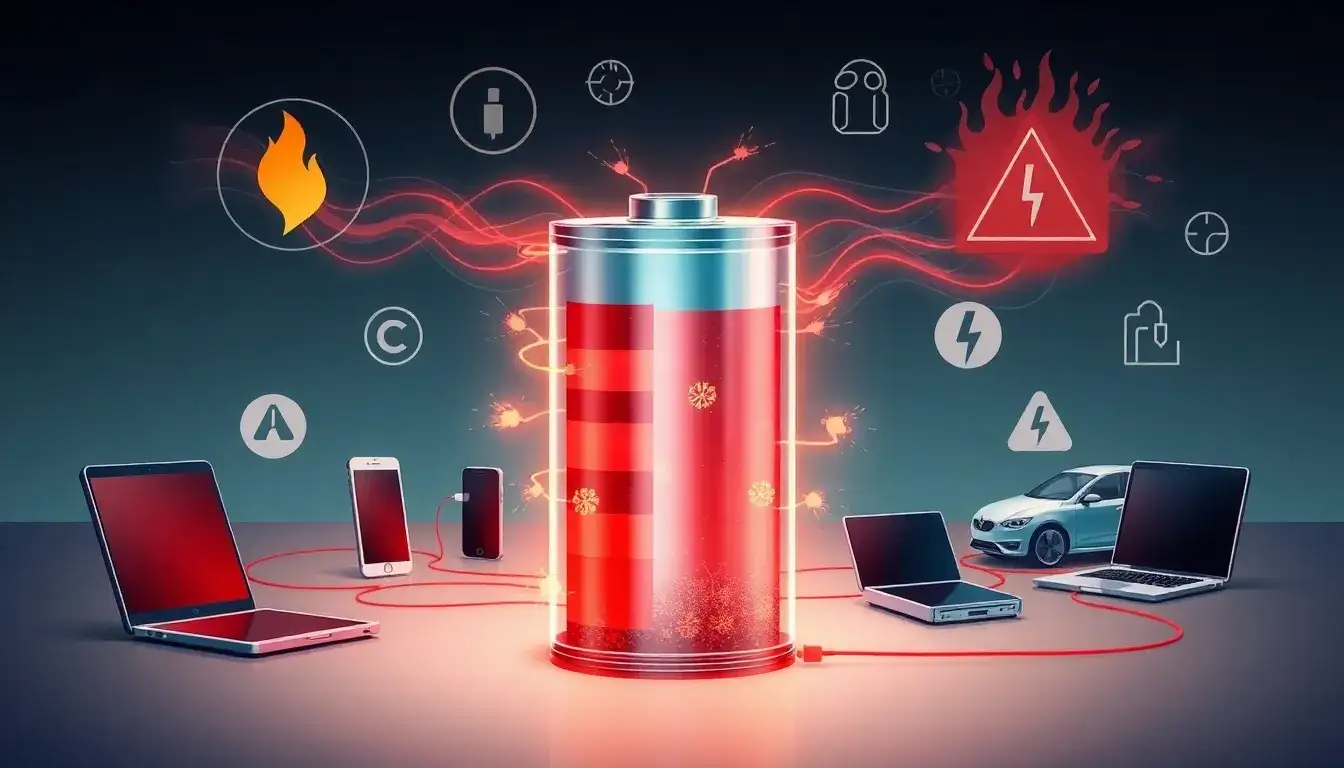
Keeping a lithium-ion battery fully charged for extended periods can pose several risks. Here are some of the key concerns:
- Overcharging and Dendrite Formation: Overcharging a lithium-ion battery can lead to the formation of dendrites, which are tiny, tree-like structures of lithium metal. These dendrites can pierce the separator inside the cell, causing a chain reaction that may result in a fire or explosion.
- Heat Generation and Fire Risk: Fully charged lithium-ion batteries can generate excessive heat if not monitored properly. This heat can lead to overheating, which might trigger a battery fire. These fires are difficult to extinguish and can be extremely dangerous.
- Battery Degradation: Keeping a battery fully charged can accelerate its degradation. Lithium-ion batteries have a limited number of charge cycles they can handle safely before they start to deteriorate. Prolonged full charge states can reduce the battery’s lifespan and increase the risk of overheating.
- Safety Precautions: It’s crucial to follow safety guidelines, such as keeping batteries away from heat sources, avoiding overcharging, and not leaving them to charge unattended.
In summary, the risks associated with keeping a lithium-ion battery fully charged include the potential for overheating, fire, and degradation of the battery itself. It’s advisable to keep batteries at a partial charge when they’re not being used for extended periods and to avoid overcharging them.
Original article by NenPower, If reposted, please credit the source: https://nenpower.com/blog/what-are-the-risks-of-keeping-a-lithium-ion-battery-fully-charged/

