

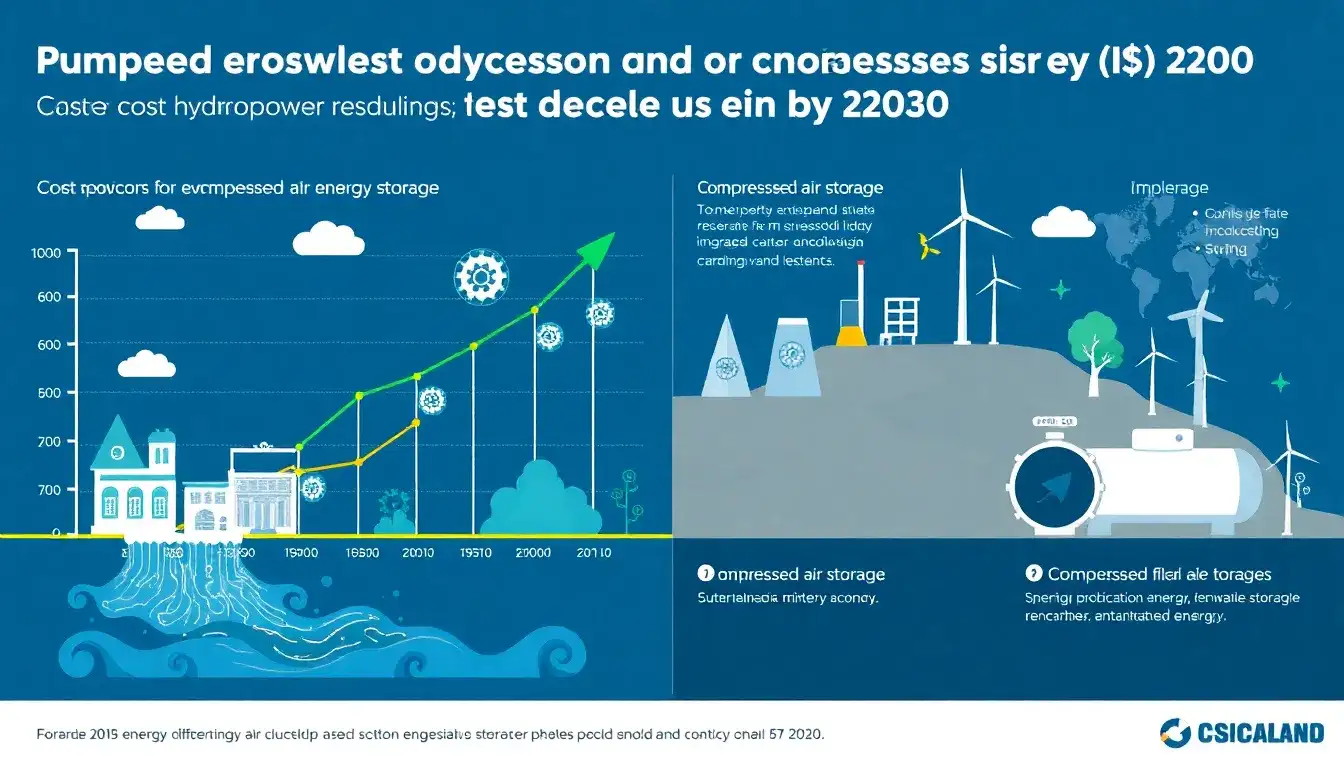
The U.S. Department of Energy (DOE) projects that implementing cost-effective innovations could reduce the levelized cost of pumped hydropower storage (PHS) and compressed air energy storage (CAES) to below $0.05/kWh by 2030. These innovations include:
- For PHS: Modular construction (prefabricated reservoirs), advanced excavation techniques (roadheaders, oscillating disc machines), hybrid projects with renewables/desalination, and adoption of adjustable-speed generator technology as power electronics costs decline.
- For CAES: Specific innovations are not detailed in the provided sources, but the DOE’s Long Duration Storage Shots initiative aims for a 90% cost reduction in long-duration storage technologies, including CAES, by 2030.
Current projections indicate that without accelerated innovation, most long-duration storage technologies (including PHS and CAES) will exceed the $0.05/kWh target. However, the DOE’s Technology Strategy Assessments outline pathways to achieve this goal through prioritized R&D.
PHS capacity is expected to grow by ~78,000 MW globally by 2030, driven by its critical role in grid stability and renewable integration. Cost reductions will be essential to maintain competitiveness against alternatives like flow batteries and lithium-ion storage.
Original article by NenPower, If reposted, please credit the source: https://nenpower.com/blog/what-are-the-projected-cost-reductions-for-pumped-hydropower-and-compressed-air-storage-by-2030/

