

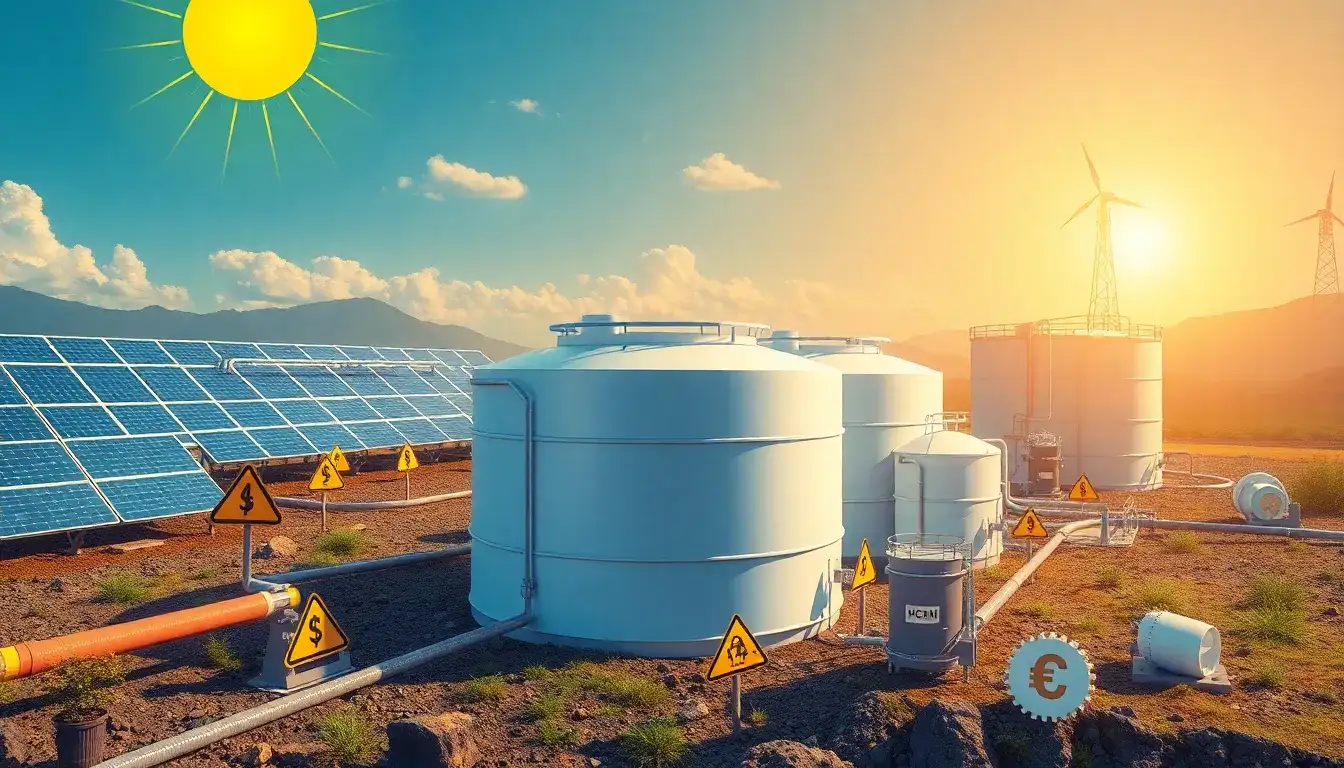
Hydrogen storage faces several critical challenges when integrated with solar energy systems:
Low Volumetric Energy Density
Hydrogen’s energy per unit volume is significantly lower than fossil fuels, requiring four times the storage space of gasoline for equivalent energy content. This complicates mobile applications (e.g., vehicles) and increases infrastructure footprints for solar-to-hydrogen projects.
High Infrastructure Costs
Specialized storage systems, including cryogenic tanks for liquid hydrogen (-253°C) or high-pressure vessels (350-700 bar), demand substantial upfront investments. Ancillary costs for compressors, safety systems, and monitoring further escalate expenses.
Energy-Intensive Storage Processes
Liquid hydrogen storage requires ~30% of its energy content for liquefaction, reducing overall efficiency. Similarly, compressing hydrogen to high pressures consumes significant energy, undermining the sustainability of solar-derived hydrogen.
Material and Safety Concerns
Hydrogen causes embrittlement in metals, risking leaks or structural failures. Its high flammability (4-75% concentration in air) necessitates stringent safety protocols, adding complexity to storage facility design.
Scalability Limitations
While projects like salt cavern storage (e.g., HyGéo pilot) show promise for bulk hydrogen storage, most existing solutions lack the scalability needed to match solar energy’s intermittent production peaks. This mismatch hinders renewable energy buffering during low-generation periods.
These challenges collectively increase the levelized cost of hydrogen from solar, requiring breakthroughs in materials engineering, storage density optimization, and infrastructure standardization.
Original article by NenPower, If reposted, please credit the source: https://nenpower.com/blog/what-are-the-primary-challenges-in-implementing-hydrogen-storage-for-solar-energy/

