

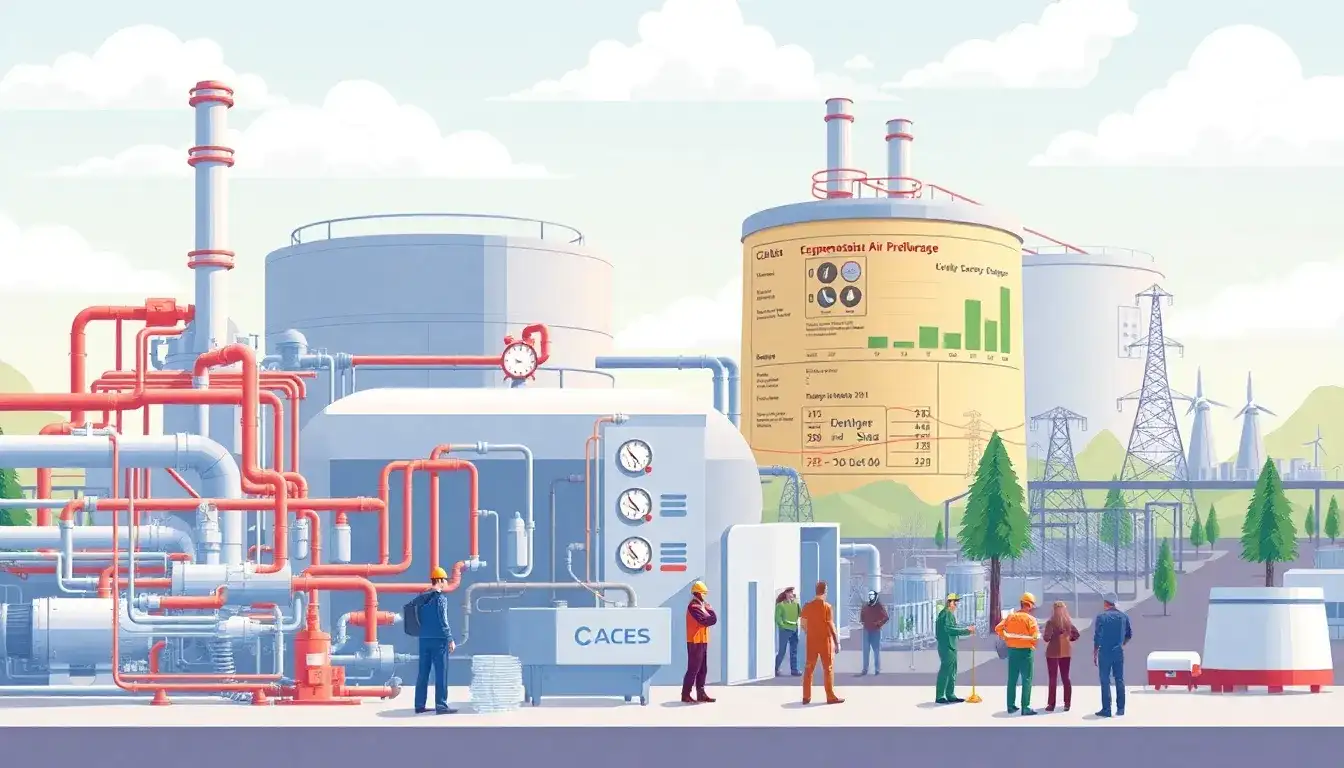
- Efficiency and Energy Loss: CAES systems suffer from lower round-trip efficiency due to energy losses during the compression and expansion phases. The theoretical efficiency limit is determined by the efficiency of compressors and expanders, and including additional energy inputs for heating during the expansion phase.
- High Upfront Costs: CAES systems have significant initial investment requirements, which include the cost of creating underground storage facilities and purchasing necessary equipment like compressors and turbines.
- Technological and Geological Challenges:
- Geological Storage: The suitability of underground storage sites is crucial. While salt caverns are proven, using depleted natural gas reservoirs poses safety risks like potential ignition and explosions due to the mixture of air and residual gas.
- Siting and Permitting: Finding suitable sites and navigating permitting processes can be challenging, leading to increased project timelines and costs.
- Standardization and Benchmarking: There is variability in estimating round-trip efficiency, emphasizing the need for standardized metrics to evaluate CAES systems effectively.
- Dependence on External Energy for Heating: While CAES is more efficient than conventional fossil fuel generation, it often relies on fossil fuels (like natural gas) for heating the compressed air before expansion, which may not align well with the goal of cleaner energy systems.
- Market Incentives and Investments: CAES does not represent a large market for individual components, reducing industry incentives for significant technological improvements or cost reductions. However, recent incentives like tax credits have encouraged renewed interest in CAES.
Original article by NenPower, If reposted, please credit the source: https://nenpower.com/blog/what-are-the-primary-challenges-in-implementing-caes-systems/

