

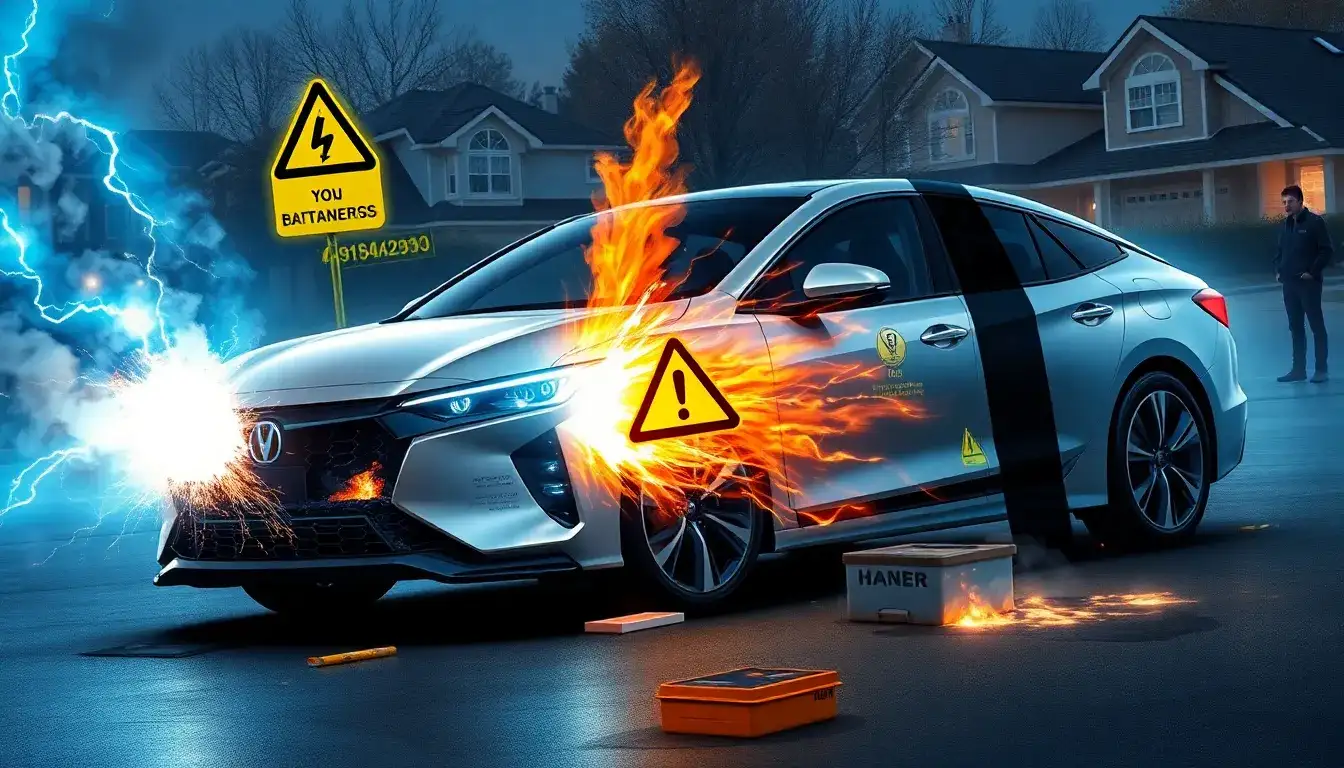
A failing hybrid battery presents several potential safety risks mainly related to its chemical and electrical nature:
- Thermal Runaway: One of the most serious risks is thermal runaway, where the battery overheats and becomes unstable. This can lead to a rapid increase in temperature and pressure inside the battery cells, potentially causing fires or explosions.
- Short Circuits: Internal damage or deterioration in the battery can cause short circuits, leading to rapid discharge and the risk of fire.
- Chemical Leaks: Although rare, if the battery casing is damaged, it may leak harmful chemicals, posing environmental and health hazards.
- Electric Shock Hazard: Hybrid batteries operate at high voltages, and damage or failure can expose high-voltage components, posing electrocution risks especially during accidents or improper handling.
- “Limp Mode” Vehicle Operation: A failing battery may cause the vehicle to enter a reduced power mode (“limp mode”) to maintain safe operation, which can affect driving safety.
- Hydrogen Gas Build-Up and Explosion: Batteries may release small amounts of hydrogen and oxygen gases through vents; under failure or damage conditions, these gases can accumulate and ignite, leading to fire or explosion.
- Fire and Reignition Risk: After a crash or damage, damaged cells can reignite due to residual or “stranded” energy within the battery, complicating emergency response and posing ongoing fire risks.
In summary, the main safety concerns with a failing hybrid battery include thermal runaway with fire risk, short circuits, chemical leaks, electric shock, gas explosions, and potential vehicle power loss affecting safe operation. Proper handling, storage, maintenance, and professional inspection are critical to mitigating these risks.
Original article by NenPower, If reposted, please credit the source: https://nenpower.com/blog/what-are-the-potential-safety-risks-of-a-failing-hybrid-battery/

