

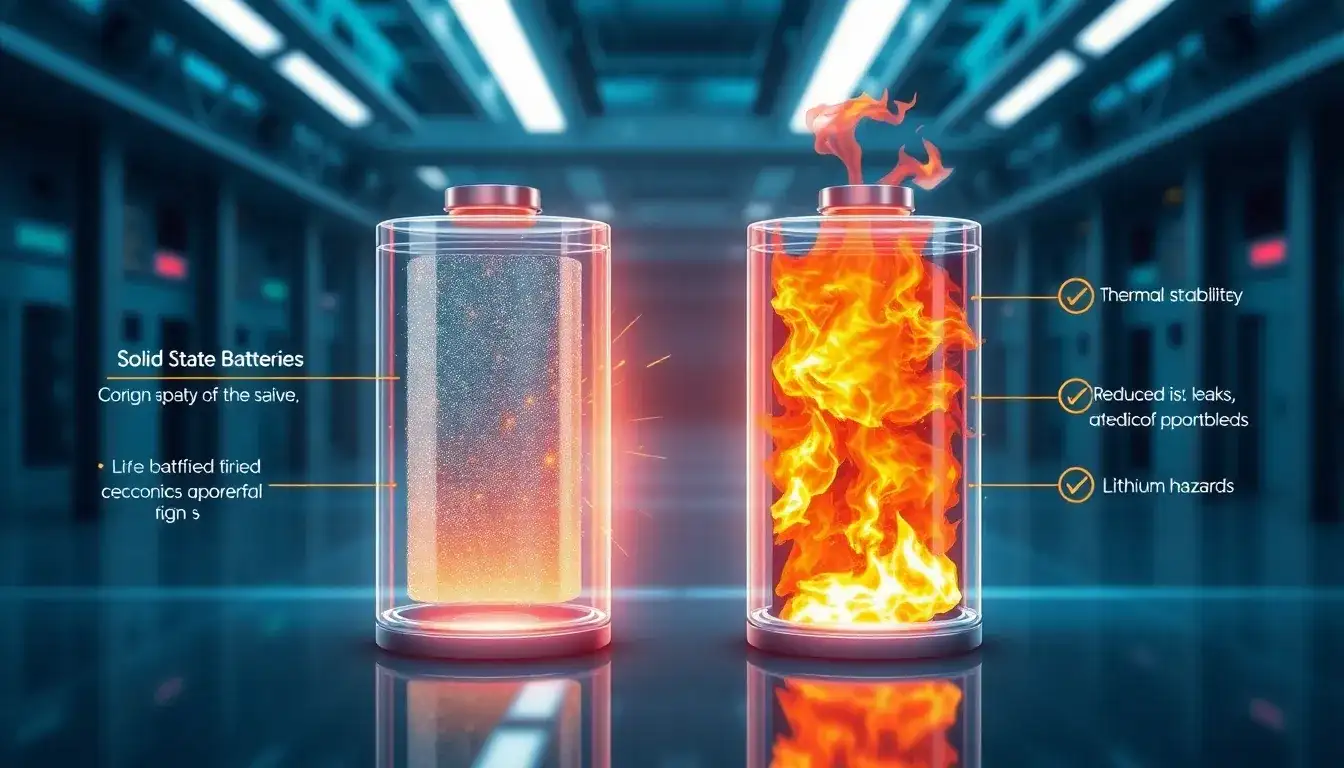
Solid-state batteries offer several important safety benefits compared to traditional lithium-ion batteries, mainly due to their different electrolyte design:
- Non-flammable solid electrolyte: Unlike lithium-ion batteries, which use a volatile, flammable liquid electrolyte that poses a fire risk, solid-state batteries replace this with a stable solid electrolyte. This significantly reduces the chance of battery fires or explosions caused by electrolyte leakage or thermal runaway.
- Higher thermal stability and wider operating temperature range: Solid electrolytes can tolerate higher temperatures without degrading or catching fire. This makes solid-state batteries safer in extreme heat or during rapid charging/discharging cycles, where lithium-ion batteries are more prone to overheating.
- Reduced risk of short circuits: The solid electrolyte physically blocks dendrite growth and internal short circuits, which are common failure modes in lithium-ion batteries and can lead to catastrophic failures.
- Enhanced mechanical robustness: Solid-state cells tend to be less sensitive to physical damage because the solid electrolyte is more stable and less likely to leak harmful or flammable substances, further improving safety.
In summary, solid-state batteries improve safety by eliminating flammable liquid electrolytes, reducing the risk of thermal runaway, allowing operation over a wider temperature range, and minimizing internal shorts. These improvements make them a promising safer alternative for electric vehicles and other high-energy applications.
Original article by NenPower, If reposted, please credit the source: https://nenpower.com/blog/what-are-the-potential-safety-benefits-of-solid-state-batteries-over-lithium-ion-batteries/

