

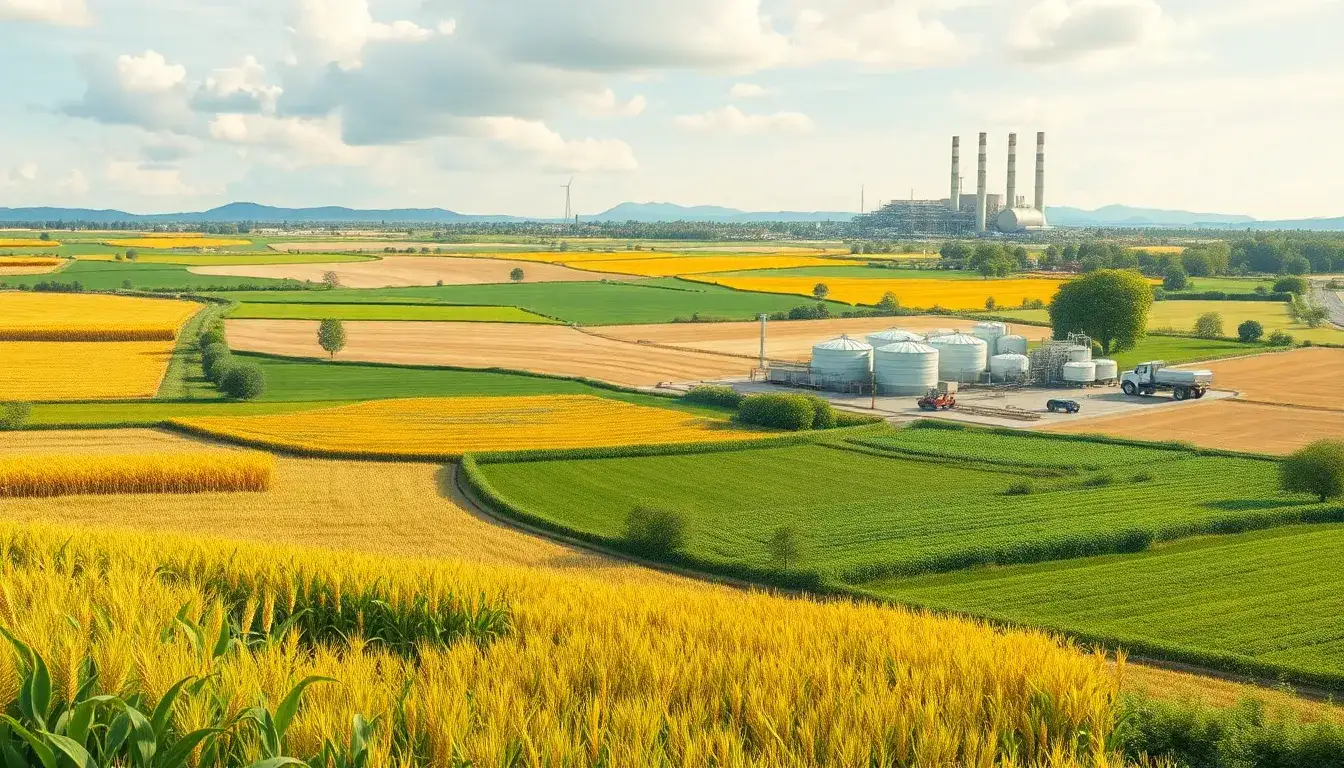
The potential land use changes associated with increased biofuel production include both direct and indirect effects, with significant environmental and policy implications:
Direct Land Conversion
Biofuel feedstock cultivation often converts existing cropland or natural ecosystems (e.g., grasslands, forests) to grow crops like corn, soybeans, or sugarcane. In the U.S., soybean-based biodiesel expansion has led to noncropland conversion, including Conservation Reserve Program (CRP) acreage and pastures, particularly in states like Iowa, Minnesota, and North Dakota.
Indirect Land Use Change (ILUC)
Biofuel demand can displace existing agricultural activities, driving land-use changes elsewhere. For example:
- Deforestation: Cropland expansion for biofuels in one region may push food production into forests or grasslands globally, releasing stored carbon.
- Carbon stock losses: Conversions reduce above-ground biomass and soil organic carbon, exacerbating greenhouse gas emissions.
Scale and Elasticity
Land-use intensity varies by biofuel type:
| Biofuel Type | Land Use Change (2018, acres per billion gallons) |
|---|---|
| Soybean Biodiesel | 0.78–1.5 million |
| Corn Ethanol | 0.57–0.75 million |
Biodiesel exhibits lower elasticity to land rent changes compared to ethanol, reflecting stiffer competition for limited arable land.
Regional Hotspots
Key areas experiencing cropland expansion include the U.S. Midwest (Iowa, Minnesota) and Plains states (Kansas, North Dakota), as well as Mississippi and Michigan. These shifts often involve marginal lands less suited to intensive agriculture, increasing erosion and nutrient runoff risks.
Policy Challenges
ILUC remains contentious due to uncertainty in causal linkages and measurement, complicating regulations like the EU’s Renewable Energy Directive and U.S. Renewable Fuel Standard. Models such as BEPAM highlight the nonlinear effects of adding biodiesel to existing land demands.
Mitigating these impacts requires targeted sourcing (e.g., waste-based feedstocks) and safeguards against ecosystem conversion.
Original article by NenPower, If reposted, please credit the source: https://nenpower.com/blog/what-are-the-potential-land-use-changes-associated-with-increased-biofuel-production/

