

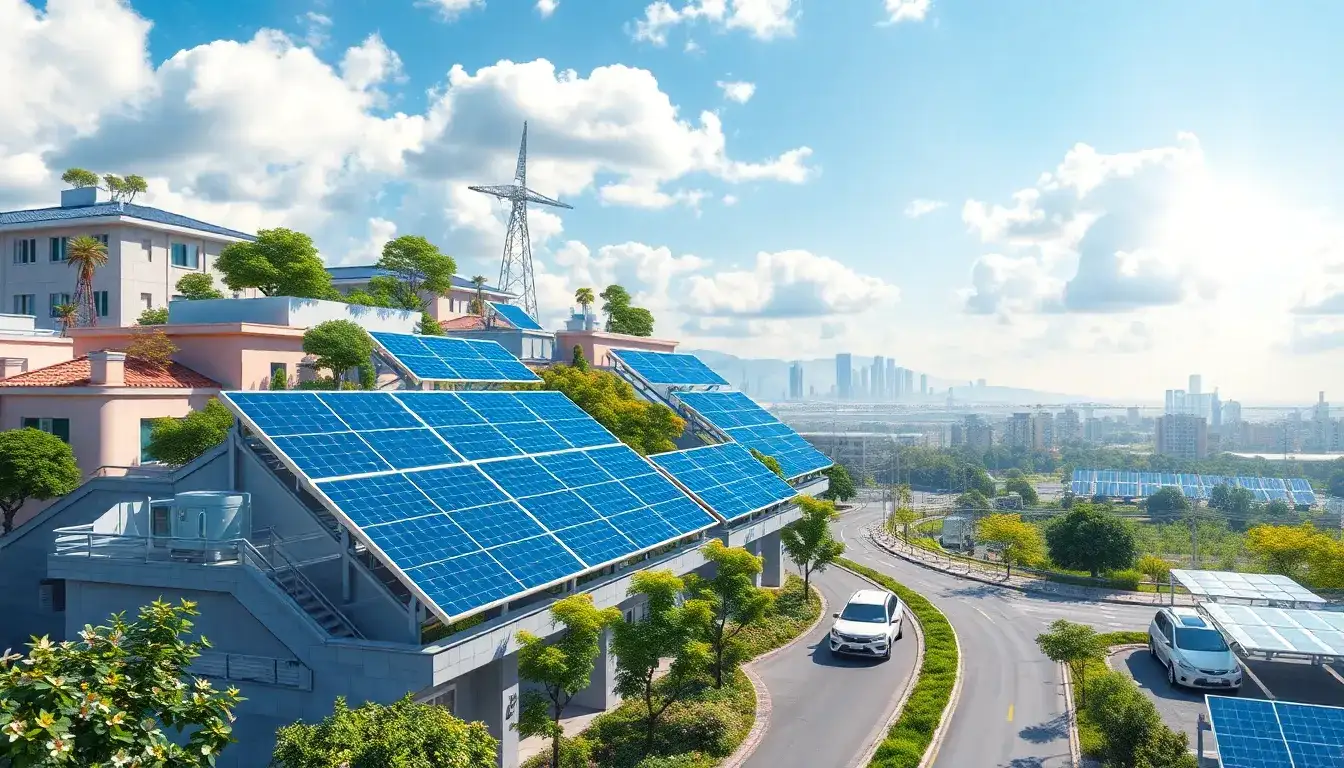
Potential Future Improvements in Solar Panel Efficiency
Solar panel technology is rapidly advancing, with several innovations poised to significantly enhance efficiency in the future. Key developments include:
1. Perovskite and Tandem Cells
- Efficiency Gains: Perovskites are promising because they can be layered with silicon cells to surpass traditional single-junction efficiencies. For example, LONGi has achieved a certified efficiency of 33.9% with perovskite-silicon tandem cells, exceeding the theoretical limits of single-junction cells.
- Manufacturing Advantages: Perovskites are easier to manufacture and less expensive than silicon, which could make them more cost-effective.
2. Bifacial Solar Panels
- Increased Energy Output: Bifacial panels capture sunlight from both the front and back sides, increasing energy production by up to 25% compared to traditional panels.
- Wider Adoption Expected: As costs decrease, bifacial panels are likely to become more common in both residential and commercial installations.
3. Multi-Junction Cells
- Higher Efficiency Potential: Researchers predict that multi-junction cells could achieve efficiencies exceeding 50%, allowing for more energy production per unit area.
- Technical Challenges: Despite their potential, multi-junction cells require more complex manufacturing processes, which could be a barrier to widespread adoption.
4. Smart Solar Technologies and AI Integration
- Optimized Performance: Smart solar panels integrate sensors and AI to optimize energy production and predict grid performance, enhancing overall efficiency and reliability.
- Real-Time Adaptation: AI can adjust panel orientation and address production issues in real-time, maximizing output and system reliability.
5. Flexible and Transparent Solar Panels
- Versatility: Flexible solar panels can be applied to curved surfaces, expanding their use in portable devices, vehicles, and wearable electronics.
- Aesthetic Integration: Transparent solar panels offer aesthetic appeal and can be integrated into building materials like windows, contributing to urban energy generation.
6. Quantum Computing in Solar Cell Design
- Advanced Design Capabilities: Quantum computing may help in designing more efficient solar cells by optimizing materials and architectures, though this area is still in early stages of development.
These advancements are set to make solar energy more efficient, cost-effective, and widely available, positioning it as a leading sustainable energy source for the future.
Original article by NenPower, If reposted, please credit the source: https://nenpower.com/blog/what-are-the-potential-future-improvements-in-solar-panel-efficiency/

