

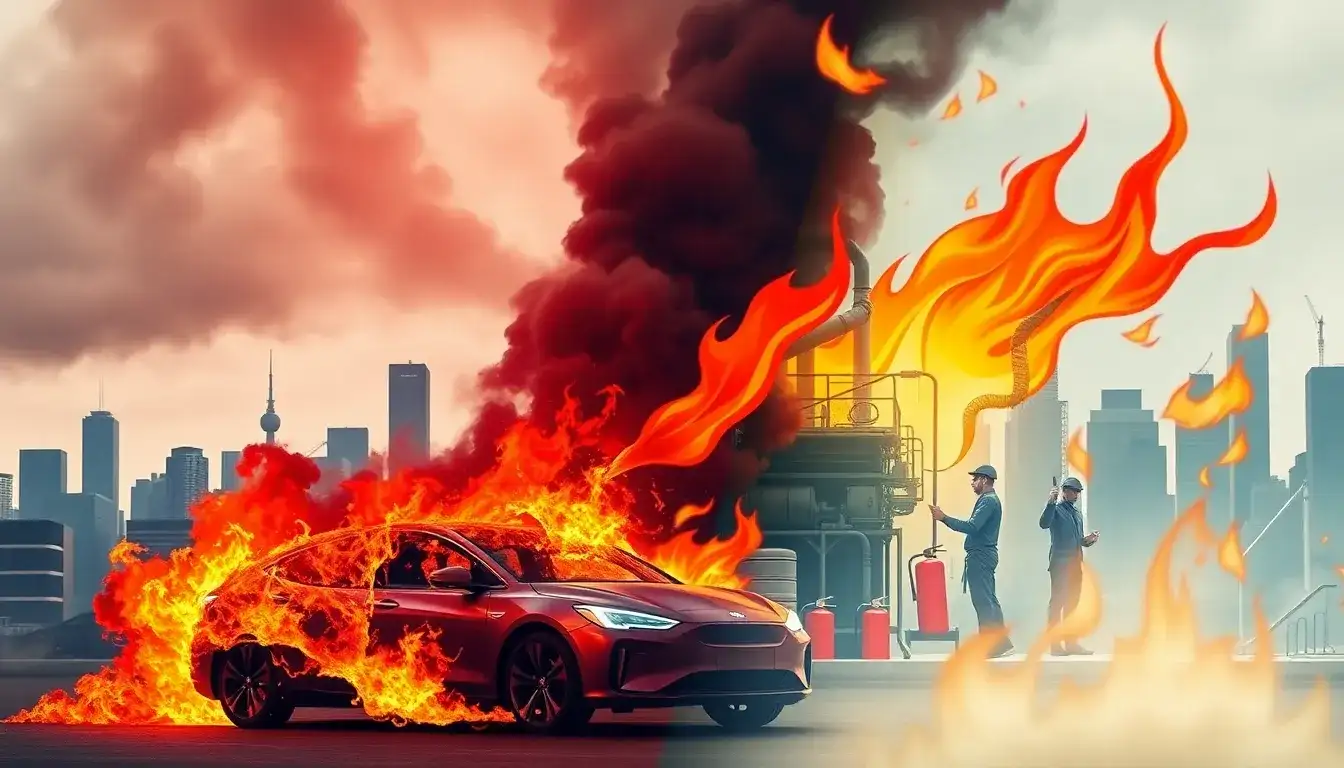
The potential financial impacts of lithium-ion battery fires are substantial and multifaceted, affecting various sectors such as motor traders, waste management, businesses, and public services.
Key Financial Impacts
1. Direct Costs to Businesses and Motor Traders
– Lithium-ion battery fires can cause extensive damage to electric vehicles (EVs) and related assets, leading to costly repairs or total losses. Allianz UK has warned motor traders about the high risks and associated costs of EV battery fires, indicating significant financial liabilities for those involved in the sale and servicing of EVs.
2. Costly Fire Incident Cleanup and Disposal
– Fire incidents involving lithium-ion batteries create highly flammable and toxic debris that requires specialized handling and disposal. For example, after wildfires in Los Angeles County, more than 1 million pounds of damaged lithium-ion batteries had to be carefully sifted, crushed, and disposed of to prevent secondary fires, incurring high cleanup costs.
3. Insurance and Compensation Claims
– Injuries or damages caused by lithium-ion battery fires can lead to product liability claims and compensation costs. Those harmed by such fires may seek compensation based on claims against battery manufacturers or distributors, imposing financial burdens on involved parties.
4. Business Disruption and Losses
– A single lithium-ion battery fire has the potential to cripple business operations due to property damage, lost inventory, and interrupted services. The U.S. Consumer Product Safety Commission reports about 5,000 lithium-ion battery fires annually, and the National Fire Protection Association estimates the total yearly cost of commercial fires in the U.S. at $15.9 billion, with battery fires contributing significantly.
5. Financial Impact on Waste Management and Public Services
– In the UK, lithium-ion battery fires cost the economy around £158 million annually, impacting waste operators, fire services, and the environment. Fires often occur when damaged batteries enter the waste stream and are exposed to high temperatures or punctured during disposal, raising significant public sector expenditures.
Summary Table of Financial Impacts
| Impact Area | Description | Example Costs/Estimates |
|---|---|---|
| Motor Traders & EV Industry | Damage to vehicles, repair/replacement costs | High repair and replacement costs |
| Cleanup & Hazardous Disposal | Specialized handling and disposal of flammable debris | Multi-million dollar wildfire cleanup |
| Compensation & Liability Claims | Legal claims and compensation payouts | Varies by incident severity |
| Business Disruption | Operational losses, inventory/property damage | Part of $15.9B commercial fire costs |
| Waste Management & Public Sector | Firefighting, cleanup, environmental remediation | £158 million annually in UK |
Conclusion
Lithium-ion battery fires present significant financial risks due to their explosive nature, difficulty in extinguishing, and toxic emissions. Costs arise not only from direct damage to property and vehicles but also from extensive cleanup, legal liabilities, business interruptions, and burdens on public fire services. With growing usage of lithium-ion batteries worldwide, these financial impacts are expected to increase without improved safety measures and waste management strategies.
Original article by NenPower, If reposted, please credit the source: https://nenpower.com/blog/what-are-the-potential-financial-impacts-of-lithium-ion-battery-fires/

