

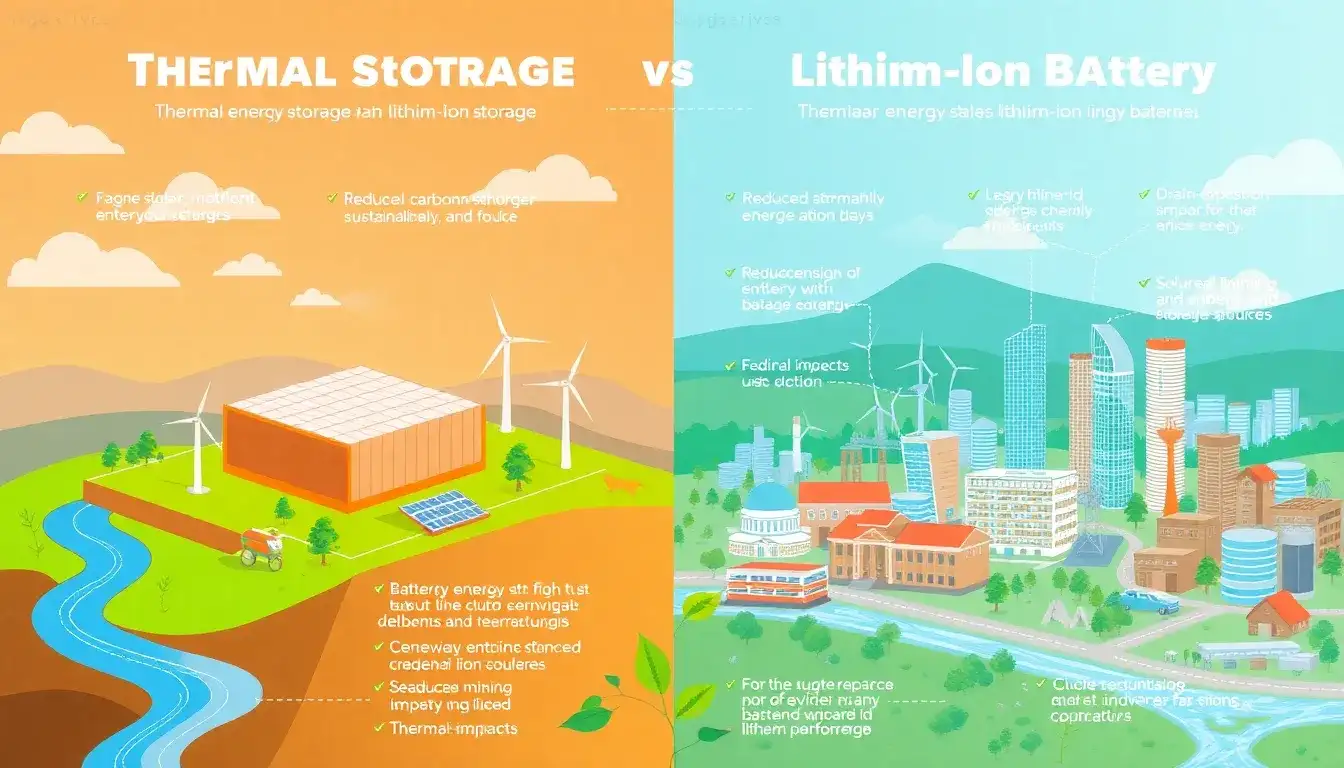
The potential environmental benefits of using thermal energy storage (TES) over lithium-ion batteries are substantial and multifaceted:
Energy Efficiency and Reduced Emissions
- TES stores thermal energy (heat or cooling) rather than electrical energy, enabling it to save energy at the source by shifting energy use to off-peak times when power plants operate more efficiently and cleaner, reducing greenhouse gas emissions significantly compared to peak-time electricity use.
- By reducing peak electricity demand—particularly for cooling—TES decreases reliance on aging, dirtier “peaker” fossil fuel power plants that run only during high demand periods, which emit more pollutants per unit of electricity generated.
- TES can facilitate renewable energy integration by storing excess or low-cost renewable electricity (like wind or solar at night) as thermal energy to be used later during peak demand times, improving renewable capacity utilization and reducing fossil fuel use.
Avoidance of Additional Fossil Fuel Infrastructure
- Lowering peak demand through TES delays or eliminates the need for constructing expensive new power plants and upgrading transmission infrastructure, which in turn reduces land use, resource extraction, and emissions associated with power plant construction and operation.
- TES’s ability to enable more buildings to be cooled or heated without adding new power plants (e.g., cooling five buildings using TES instead of four without it) leads to cumulative environmental benefits through reduced fossil fuel dependency and associated pollution.
Lower Environmental Impact in Materials and Lifecycle
- TES systems, especially those using sensible (water, rock) or latent (phase change materials) heat storage, typically have lower environmental footprint regarding resource extraction and manufacturing compared to lithium-ion battery production, which involves mining critical and sometimes toxic materials like lithium, cobalt, and nickel.
- Lifecycle assessments of TES in solar thermal plants show TES can reduce greenhouse gas emissions up to 7% relative to no storage and over 200% compared to natural gas backup systems, demonstrating TES’s potential for cleaner energy solutions in industrial settings.
Grid Stability and Resilience
- TES enhances grid flexibility and resilience by decoupling energy generation from consumption timeframes, which can reduce curtailment of renewable generation and support cleaner grid operations without the need for rapid battery cycling.
Summary Table of Environmental Benefits: Thermal Energy Storage vs. Lithium-Ion Batteries
| Aspect | Thermal Energy Storage (TES) | Lithium-Ion Batteries |
|---|---|---|
| Storage Medium | Heat or cooling stored in water, rocks, or materials | Electrical energy stored chemically in cells |
| Emission Reduction | Shifts load to off-peak, cleaner power; reduces fossil fuel peaker plant use | Helps enable renewables but production has embedded emissions from mining and manufacturing |
| Resource Extraction | Mainly common materials (water, rock, salts) | Relies on critical minerals with environmental and ethical concerns |
| Infrastructure Impact | Can reduce need for new power plants and grid upgrades | Battery production energy-intensive; recycling challenges |
| Integration with Renewables | Enables better renewable utilization by thermal load shifting | Enables electrical energy storage but limited by capacity degradation |
| Lifespan and Recycling | Long-lasting simple materials; easier recycling | Limited cycle life; recycling infrastructure still developing |
In conclusion, thermal energy storage offers significant environmental advantages over lithium-ion batteries by reducing greenhouse gas emissions through more efficient energy use, lowering peak demand to avoid additional fossil fuel power plants, facilitating higher renewable energy penetration, and avoiding some of the resource and lifecycle impacts associated with battery production and disposal. TES can be particularly beneficial in building cooling/heating applications and industrial heat processes, complementing battery storage in a decarbonized energy system.
Original article by NenPower, If reposted, please credit the source: https://nenpower.com/blog/what-are-the-potential-environmental-benefits-of-using-thermal-energy-storage-over-lithium-ion-batteries/

