

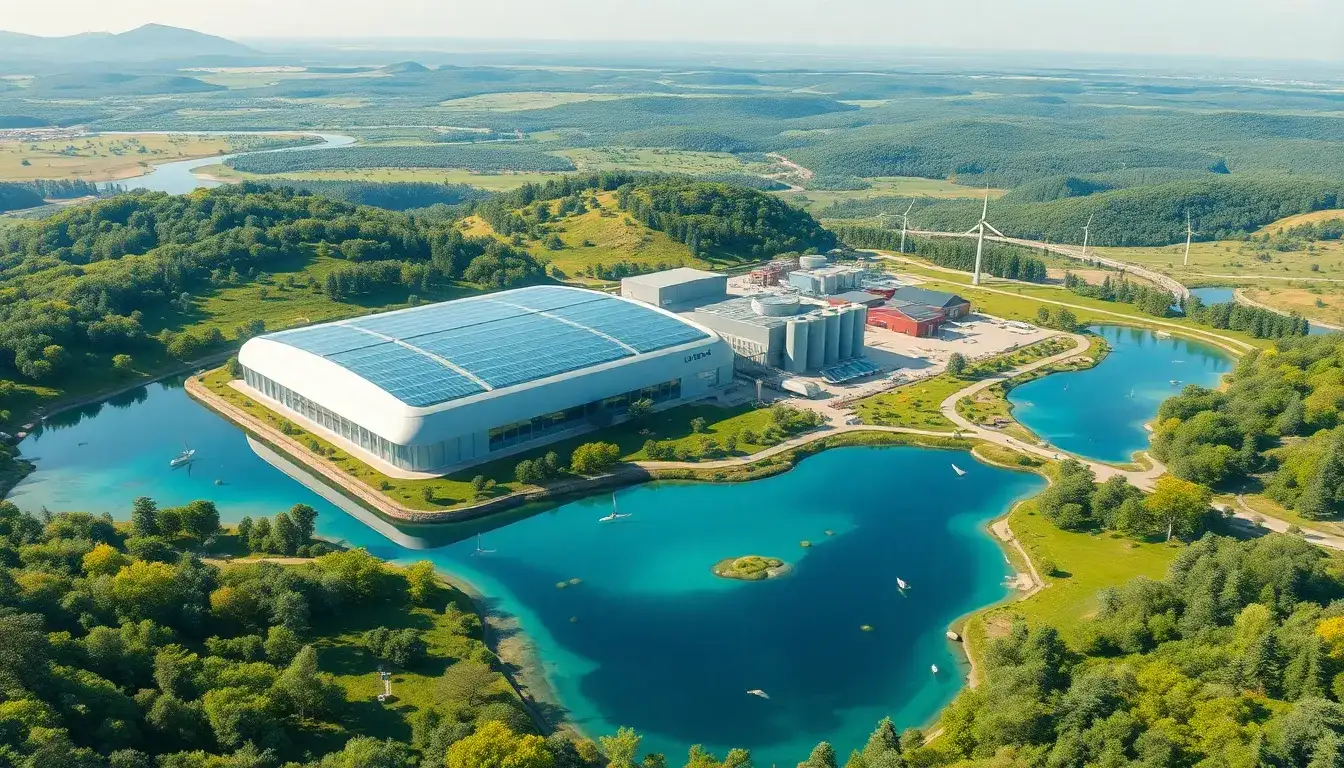
The potential environmental benefits of adopting Liquid Air Energy Storage (LAES) include the following:
- Zero Carbon Emissions during Operation: LAES technology produces no carbon emissions while operating, contributing to a cleaner energy storage process and enabling support for a low-carbon energy transition.
- Reduction of Fossil Fuel Reliance: By enabling efficient storage of renewable energy, LAES helps reduce dependence on fossil fuel generation, leading to lower overall greenhouse gas emissions.
- Use of Abundant, Non-Toxic Materials: LAES relies on air as the storage medium, which is abundant and non-toxic, avoiding the environmental and social impacts associated with mining rare earth minerals required by lithium-ion batteries such as lithium, cobalt, and nickel.
- Utilization of Waste Heat to Boost Efficiency: LAES systems can capture waste heat from nearby industrial processes to improve energy efficiency during the re-gasification phase, effectively integrating industrial synergies and reducing wasted energy.
- Reduction of Renewable Energy Curtailment: LAES can reduce wasted renewable energy generation by storing excess power that would otherwise be curtailed, improving renewable energy utilization by over 40% in some scenarios.
- Significant CO2 Emission Reductions: Modeling for grids such as Spain shows that large-scale deployment of LAES can reduce CO2 emissions by up to 21%, with some scenarios showing reductions as high as 78% compared to systems without LAES.
- Scalability and Geographic Flexibility: Unlike technologies like pumped hydro, LAES is not constrained by geography, allowing widespread deployment without environmental disruption associated with large water reservoirs or landscape alteration.
- Durability and Lack of Capacity Degradation: LAES systems have long operational lifetimes without the capacity degradation issues seen in battery technologies, reducing waste and resource demand over time.
In summary, LAES offers a clean, flexible, and sustainable energy storage solution with substantial environmental advantages including zero emissions, use of abundant resources, higher renewable energy utilization, and significant greenhouse gas reductions, making it a promising technology for supporting the energy transition.
Original article by NenPower, If reposted, please credit the source: https://nenpower.com/blog/what-are-the-potential-environmental-benefits-of-adopting-laes/

