

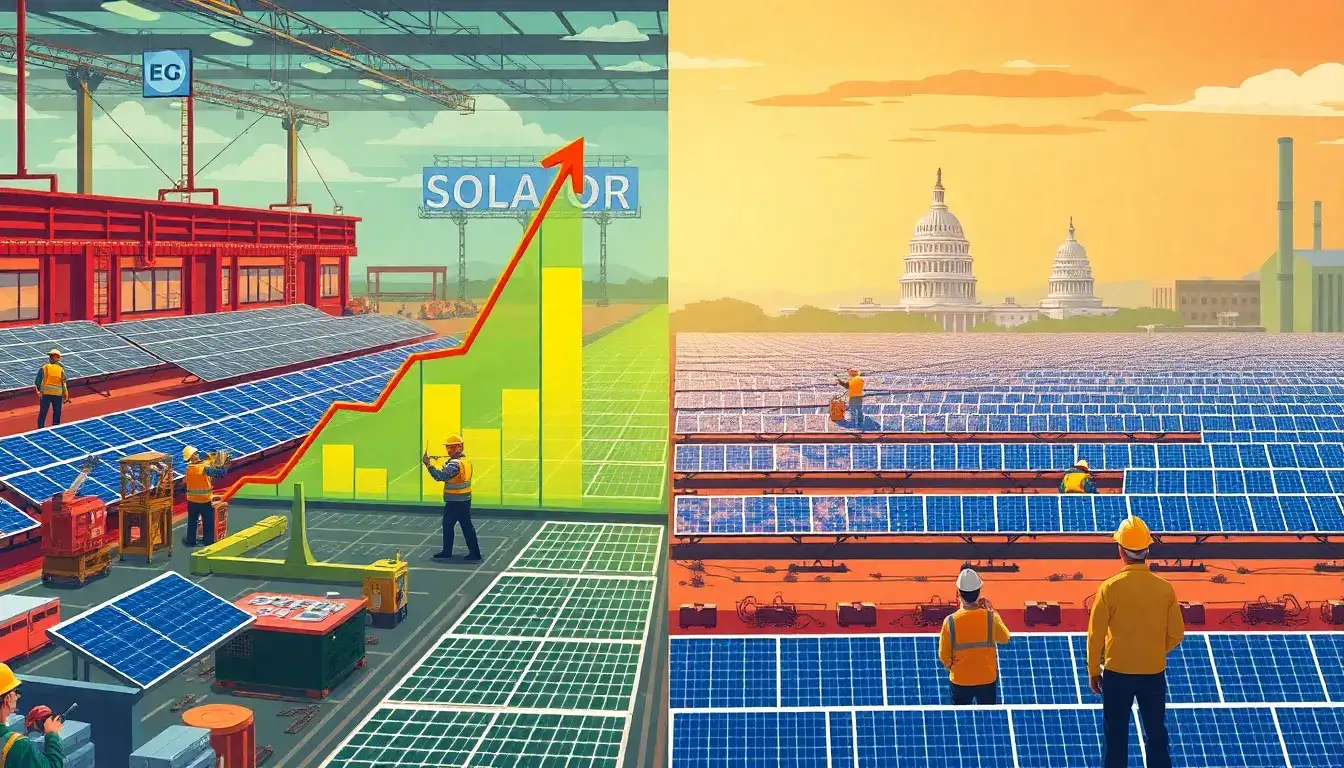
The phase-out of the solar tax credit, which currently offers a 30% incentive on residential and commercial solar installations through 2032, is expected to have significant economic impacts on the solar industry. The tax credit has been a major driver for solar adoption by making installations more affordable, encouraging renewable energy use, supporting job growth, and advancing solar technology development.
Potential Economic Impacts of the Tax Credit Phase-Out:
- Reduced Affordability and Slower Adoption: As the tax credit phases out (starting around 2033), the upfront cost of solar installations effectively increases for consumers, which may slow the rate of new solar system installations and reduce overall demand.
- Industry Growth and Job Market Slowdown: The solar installer market, which has expanded due to the credit, could face slower growth or contraction, potentially leading to job losses or reduced hiring in the sector as economic incentives diminish.
- Investment Uncertainty and Planning Challenges: The phase-out timeline creates uncertainty for both homeowners and installers, complicating long-term financial planning and project development decisions. This uncertainty may delay investments and project starts.
- Investor Confidence Impact: Any early or abrupt changes to the tax credit could disrupt investor confidence, not only in solar but across related clean energy sectors, since the credit underpins hundreds of billions in industry investments and supports hundreds of thousands of jobs.
- Shift Towards More Cost-Competitive Solar: Despite the phase-out, economic fundamentals remain strong. Optimized distributed energy systems can still deliver attractive returns (e.g., 14% IRR projected without incentives), indicating solar’s viability even without tax credits, though growth rates may moderate.
- Potential Policy Adjustments: There is uncertainty about possible Republican-led modifications or repeal of the Inflation Reduction Act (IRA) that provides the credit. Changes could include phased reductions starting 2026-27 or tying credits to domestic content requirements, likely causing market disruptions if implemented.
Summary:
The solar tax credit phase-out will likely lead to higher net costs for solar projects, dampening demand growth and impacting industry expansion and job creation. It could also introduce market uncertainty, affecting investment and planning in the near term. Nonetheless, solar economics remain fundamentally sound, suggesting the industry will continue but potentially at a slower growth pace unless new supportive policies emerge.
Original article by NenPower, If reposted, please credit the source: https://nenpower.com/blog/what-are-the-potential-economic-impacts-on-the-solar-industry-due-to-the-tax-credit-phase-out/

