

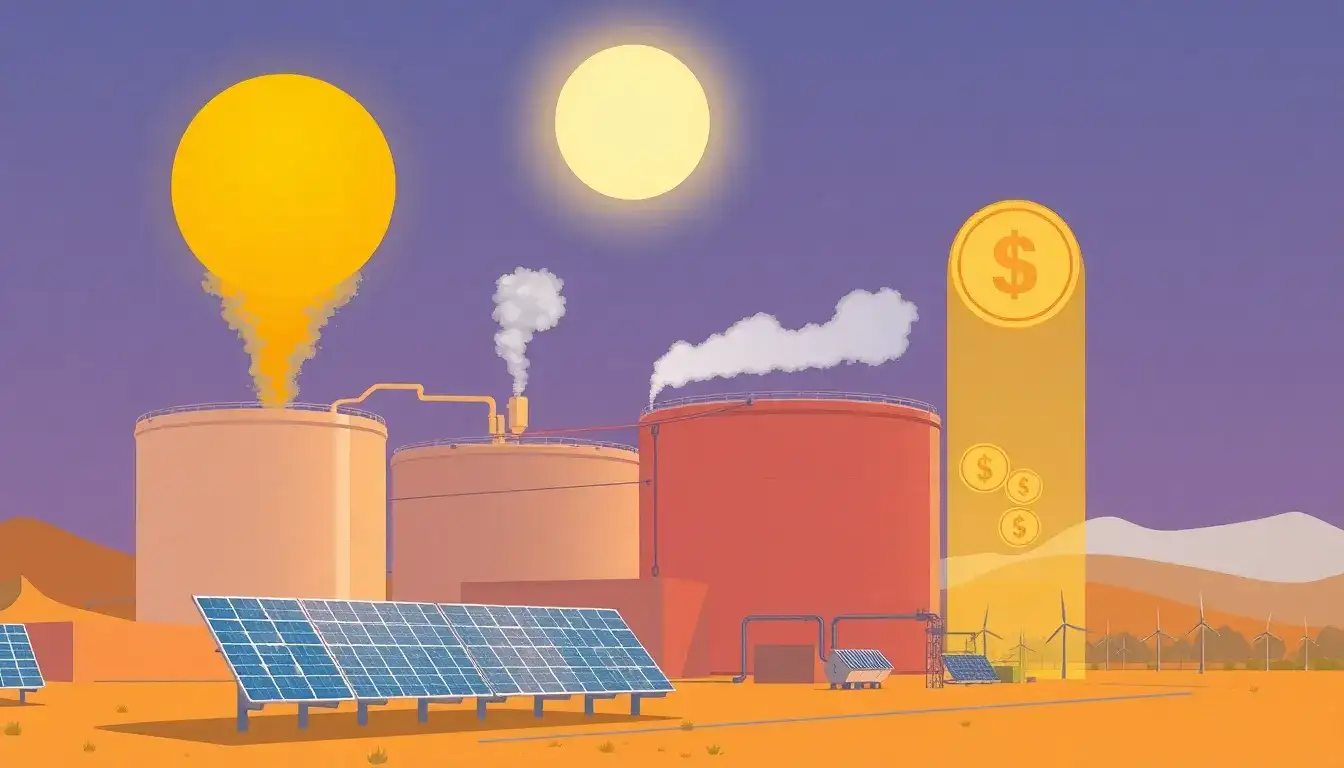
The potential drawbacks of using thermal energy storage in solar power plants primarily stem from the nature of solar thermal technology and the storage mechanisms involved. Key disadvantages include:
1. High Capital Costs
- Solar thermal plants with thermal energy storage require significant upfront investment for the infrastructure, including collectors, storage tanks, and auxiliary systems. These high initial costs can be a barrier to development and widespread adoption.
2. Land and Space Requirements
- Solar thermal systems, especially Concentrated Solar Power (CSP) plants with thermal storage, need large land areas for both the solar collectors and the thermal storage units. This can limit deployment in areas with land scarcity or high competition for space.
3. Water Consumption
- Many solar thermal plants using thermal energy storage rely on water for cooling or steam generation, which can be problematic in arid or water-scarce regions. This creates an environmental and resource-use challenge that can complicate site selection and operation.
4. Intermittency and Weather Dependence
- Despite thermal storage extending the usable hours of solar energy beyond daylight, solar thermal plants are still affected by weather variability and seasonal changes, which can impact the efficiency and reliability of energy storage and supply.
5. Environmental Impacts
- Large-scale solar thermal installations with storage can disrupt local habitats and ecosystems due to land use. Additionally, some plants have been associated with bird mortality issues, which raises ecological concerns.
6. Complexity and Technology Limitations
- Thermal storage systems add complexity to plant design and operation. Some thermal storage technologies are still developing and can face technical challenges related to heat retention efficiency, material durability, and integration with the power cycle.
7. Infrastructure and Transmission Needs
- Often located in remote sunny areas, solar thermal plants require extensive transmission infrastructure to deliver stored energy to end users, which adds to costs and logistical challenges.
In summary, while thermal energy storage enhances the dispatchability of solar thermal power, the drawbacks include high upfront investment, large land and water needs, environmental impacts, weather dependence, and technological complexity. These factors must be carefully considered in the planning and deployment of solar power plants with thermal energy storage.
Original article by NenPower, If reposted, please credit the source: https://nenpower.com/blog/what-are-the-potential-drawbacks-of-using-thermal-energy-storage-in-solar-power-plants/

