

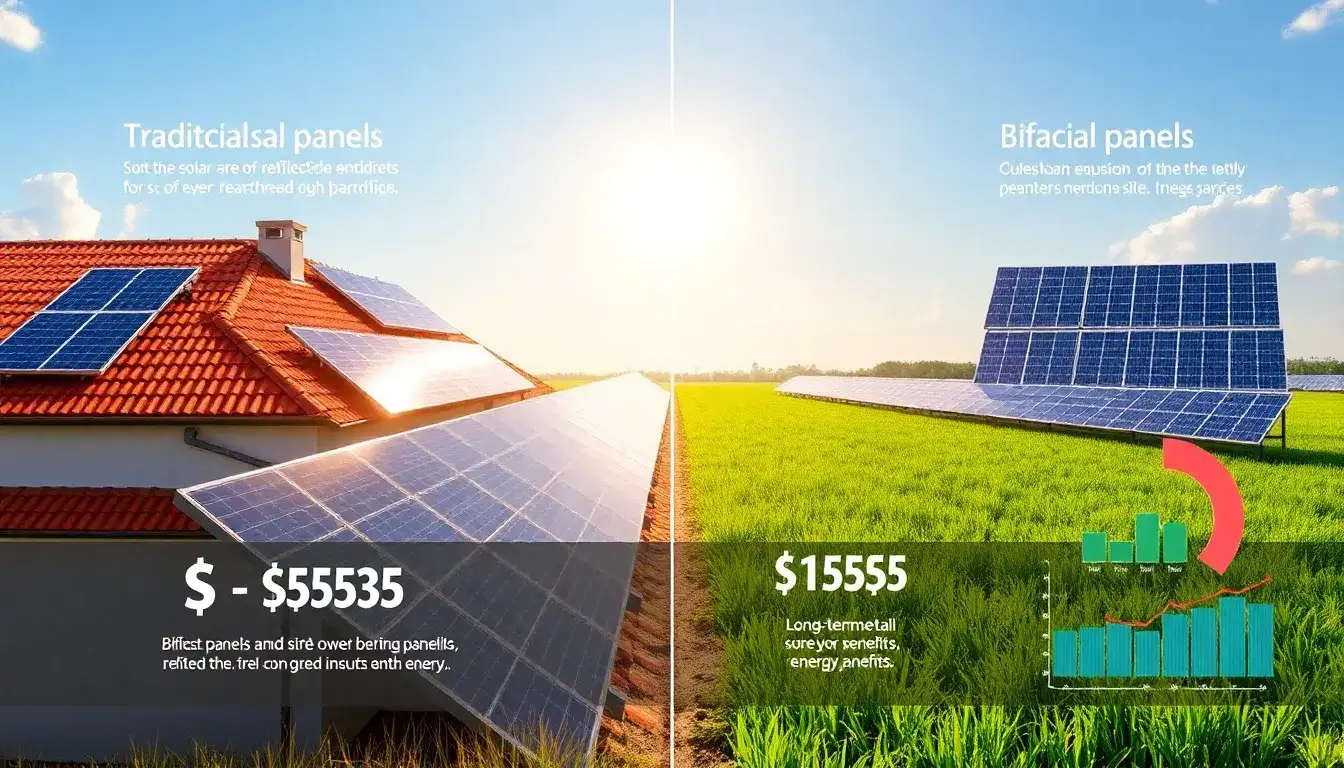
Bifacial solar panels offer potential cost savings primarily through increased energy yield and improved efficiency, which translate into lower levelized costs of electricity (LCOE) and faster return on investment (ROI) compared to traditional monofacial panels.
Key Cost Savings Factors of Bifacial Solar Panels
- Higher Energy Output: Bifacial panels capture sunlight on both the front and rear surfaces, increasing energy yield by approximately 10-25% depending on the installation environment. For example, in ideal conditions such as reflective ground surfaces, bifacial panels were found to generate about 15% more electricity than single-sided panels under the same conditions.
- Lower Cost per kWh Generated: The increased efficiency reduces the LCOE. One commercial solar installation in Arizona recorded an 18% decrease in LCOE by switching from standard monofacial panels to bifacial modules.
- Faster Payback Period: Despite higher initial costs, bifacial panels can have a payback period as short as around 3.4 years in good conditions, making them economically beneficial over time.
- Long-Term ROI: Their higher energy production especially benefits large-scale solar farms, commercial and industrial roofs, floating solar systems (where water reflection enhances output), and snowy environments where ground reflectivity improves performance. This results in a higher return on investment in the long run despite the upfront premium.
Summary of Cost vs. Benefits
| Feature | Bifacial Solar Panels | Monofacial Solar Panels |
|---|---|---|
| Efficiency | 10-30% more energy capture | Standard efficiency |
| Initial Cost | Higher upfront investment | Lower upfront cost |
| Energy Absorption | Both front and rear surfaces | Front surface only |
| LCOE | Reduced by up to 18% in some cases | Standard LCOE |
| Payback Period | Potentially ~3.4 years or less in ideal setups | Typically longer |
| Ideal Installation | Reflective surfaces (e.g., snow, water, light-colored ground) | Any surface |
| ROI | Higher in the long run due to better energy yield | Moderate ROI |
In conclusion, the potential cost savings of bifacial solar panels come from their ability to generate significantly more electricity per panel, reducing the cost per unit of energy and shortening the payback period, which ultimately leads to better cost-effectiveness over their operational lifespan.
Original article by NenPower, If reposted, please credit the source: https://nenpower.com/blog/what-are-the-potential-cost-savings-of-using-bifacial-solar-panels/

