

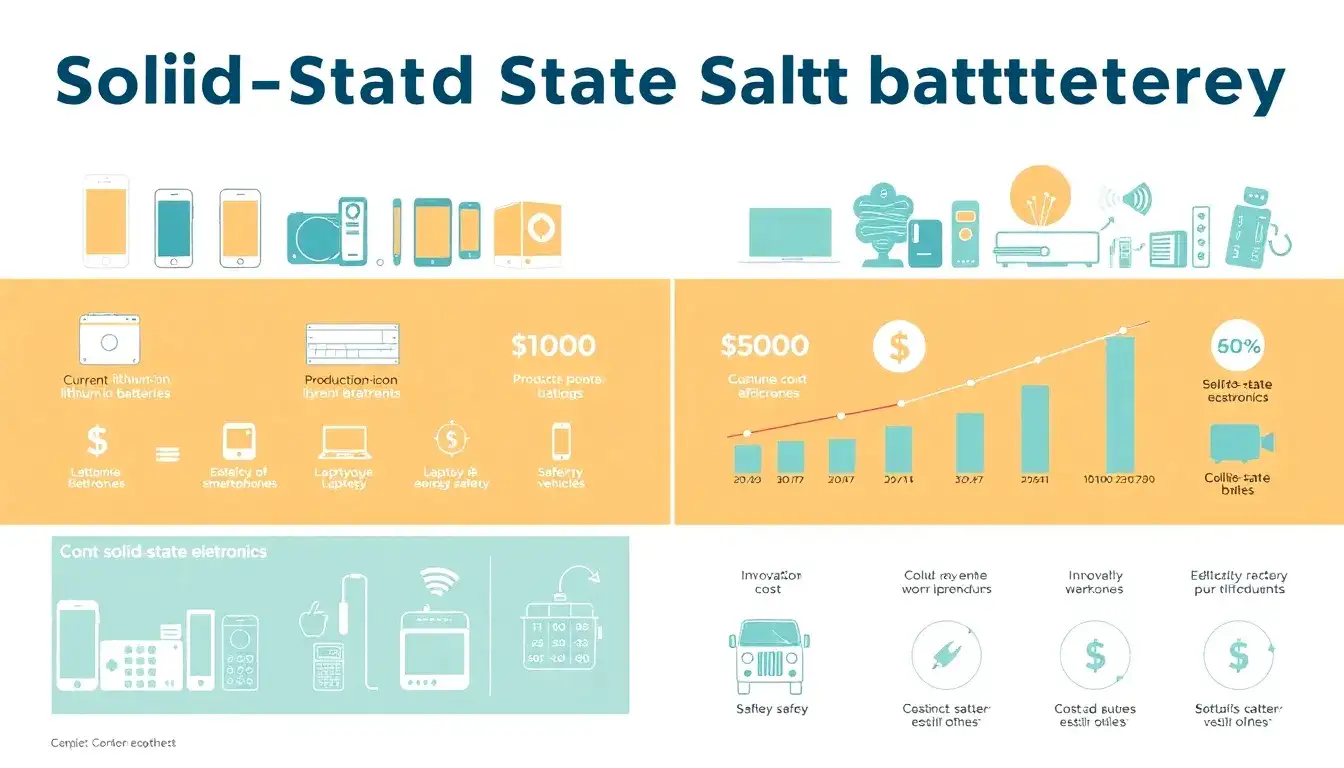
Switching to solid-state batteries in consumer electronics involves several potential cost implications:
Higher Initial Manufacturing Costs
- As of 2024, solid-state batteries are significantly more expensive than conventional lithium-ion batteries, with costs estimated at $400-800 per kWh compared to lithium-ion’s $100-150 per kWh range. This represents roughly a 4 to 8 times higher cost.
- The high initial cost stems from complex manufacturing processes, expensive raw materials, and low production yields due to the technology being in an early development and scale-up phase.
Impact of Scale and Technological Maturity
- Costs are expected to decrease with economies of scale, production optimization, and ongoing technological improvements, similar to the price trajectory lithium-ion batteries experienced over the last decade (from around $469 per kWh in 2013 to $101 per kWh in 2021).
- Over time and with successful scaling and process improvements, some forecasts predict solid-state battery costs could approach or even become competitive with lithium-ion batteries, potentially dropping to around $75-$100 per kWh depending on design specifics.
Lifecycle and Ownership Cost Benefits
- Despite higher upfront costs, solid-state batteries promise longer lifespans, greater safety, and improved reliability, which can reduce total cost of ownership for consumer electronics by lowering replacement frequency and potential warranty claims.
- Enhanced energy density and faster charging capabilities may also add value for manufacturers and consumers, potentially justifying higher prices in premium devices.
Supply Chain and Material Considerations
- The availability and cost of specialized materials for solid-state electrolytes and electrodes influence production expenses. Research into alternative materials and recycling methods aims to mitigate these impacts.
- Transitioning to solid-state technology could necessitate retooling manufacturing lines, incurring capital expenditures that add to short-term costs.
Market Transition and Strategic Implications
- Given the cost premium, early adoption in high-value or niche consumer electronics may be more feasible initially, expanding to broader consumer markets as costs decline.
- Companies should consider hybrid strategies incorporating both lithium-ion and solid-state batteries during the transition period to manage risk and maintain competitiveness.
Summary Table of Cost Implications
| Factor | Impact on Consumer Electronics Costs |
|---|---|
| Initial Production Cost | 4-8x higher than lithium-ion ($400-800/kWh vs. $100-150/kWh) |
| Scale Economies & Technological Maturity | Expected cost decline over time; potential parity with lithium-ion |
| Material Costs & Supply Chain | Higher due to specialized materials, but research is mitigating this |
| Lifecycle Cost | Potentially lower due to longer battery life and reliability |
| Manufacturing Infrastructure | Re-tooling and R&D investments increase short-term expenses |
| Market Adoption Strategy | Likely phased with mixed battery offerings during transition |
In conclusion, switching to solid-state batteries currently entails higher upfront costs largely due to manufacturing complexity and materials, but these costs are expected to reduce significantly with scale and innovation. Long-term benefits in lifespan and performance may offset initial expenses, making solid-state batteries a promising but presently premium option for consumer electronics.
Original article by NenPower, If reposted, please credit the source: https://nenpower.com/blog/what-are-the-potential-cost-implications-of-switching-to-solid-state-batteries-in-consumer-electronics/

