

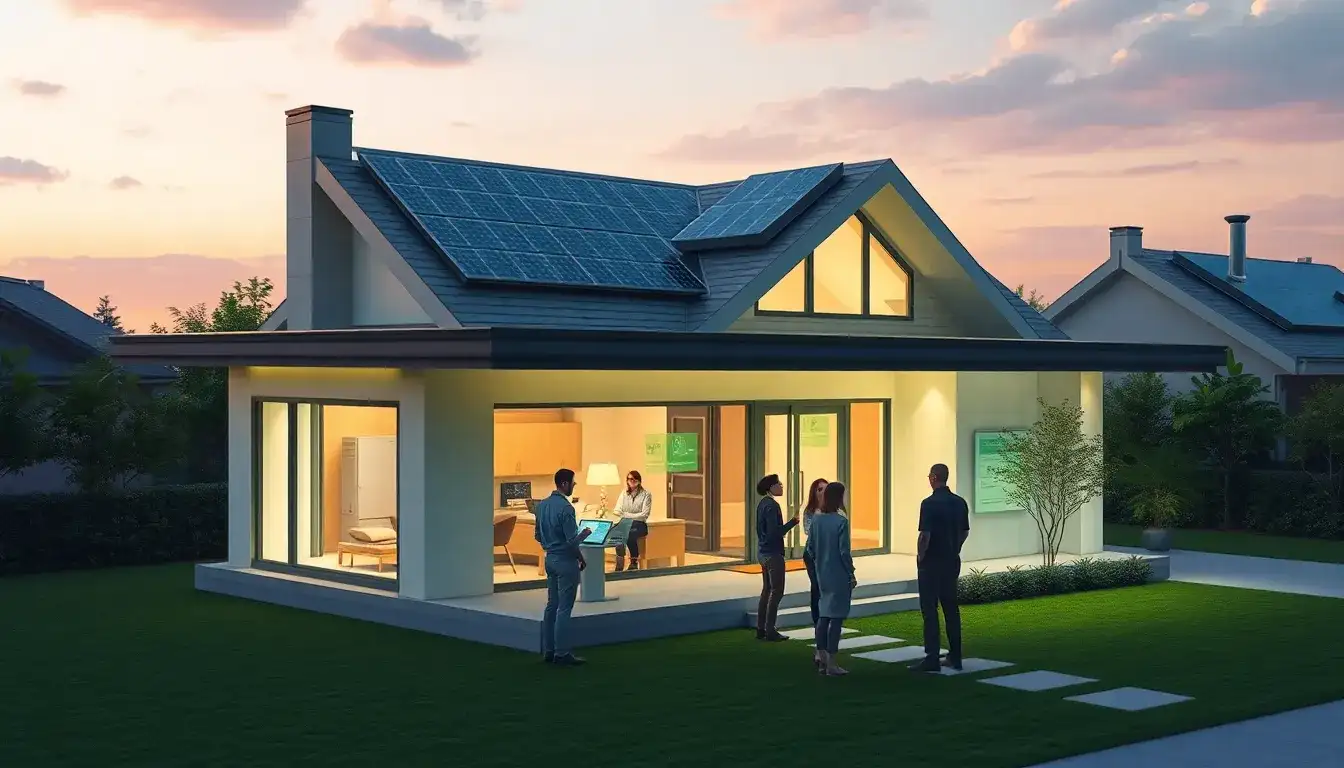
Integrating Perovskite Solar Panels into Smart Home Systems
Integrating perovskite solar panels into existing smart home systems presents several potential challenges primarily related to the material and technological characteristics of perovskite solar cells (PSCs):
Key Challenges
1. Stability and Durability Issues
Perovskite materials tend to degrade when exposed to environmental factors such as humidity, temperature fluctuations, and prolonged light exposure. While lab-scale PSCs have demonstrated operational lifespans roughly around one year, this is significantly shorter than the longevity of established silicon solar panels typically used in smart homes. This lack of long-term stability could impair consistent energy supply and increase maintenance or replacement needs in smart home applications.
2. Balancing Efficiency with Longevity
Efforts to increase the power conversion efficiency of perovskite cells often come at the cost of their stability. High-efficiency perovskite cells may degrade faster, making it difficult to achieve an optimal balance suitable for reliable smart home energy systems that require sustained performance over time.
3. Scaling from Laboratory to Practical Use
Efficiency losses tend to occur when PSCs are scaled from small laboratory samples to the larger panel sizes needed for home installations. Maintaining uniformity and material quality over large areas is challenging and can reduce overall energy output, affecting the viability of perovskite panels for generating consistent power in a smart home context.
4. Energy Supply Consistency and Storage Needs
While perovskite solar cells perform well in low-light and indoor conditions, powering smart home IoT devices or smart meters still demands reliable energy. There are instances where daily energy yield may not suffice to sustain all devices without supplementary energy storage, introducing complexity and cost to integration efforts.
5. Integration with Existing Smart Home Infrastructure
Smart home systems rely on stable and predictable power sources to run sensors, controllers, and communication devices. Variability in PSC output due to orientation, environmental conditions, and aging could complicate seamless integration without advanced power management and storage solutions.
Summary Table of Potential Challenges
| Challenge | Details | Impact on Smart Home Integration |
|---|---|---|
| Stability and Durability | Degradation from humidity, temperature, light exposure | Reduced lifespan and reliability |
| Efficiency vs. Longevity Trade-off | High efficiency cells may have shorter lifespans | Compromises long-term energy supply |
| Scaling Issues | Efficiency loss in large-area applications | Lower total energy generation than expected |
| Energy Supply Consistency | Variations in daily output; need for energy storage | Necessitates battery/storage solutions to ensure uptime |
| Compatibility with Smart Systems | Variability in power output; orientation sensitivity | Requires advanced energy management and system design |
In conclusion, the main challenges when integrating perovskite solar panels into smart homes are the relatively short-term durability of the materials, difficulties in maintaining efficiency at scale, and ensuring consistent, stable energy supply compatible with smart home device demands. Overcoming these challenges will require advances in material stability, panel manufacturing processes, and integration with energy storage and smart power management systems to match or exceed the robustness of traditional silicon-based solar installations.
Original article by NenPower, If reposted, please credit the source: https://nenpower.com/blog/what-are-the-potential-challenges-of-integrating-perovskite-solar-panels-into-existing-smart-home-systems/

