

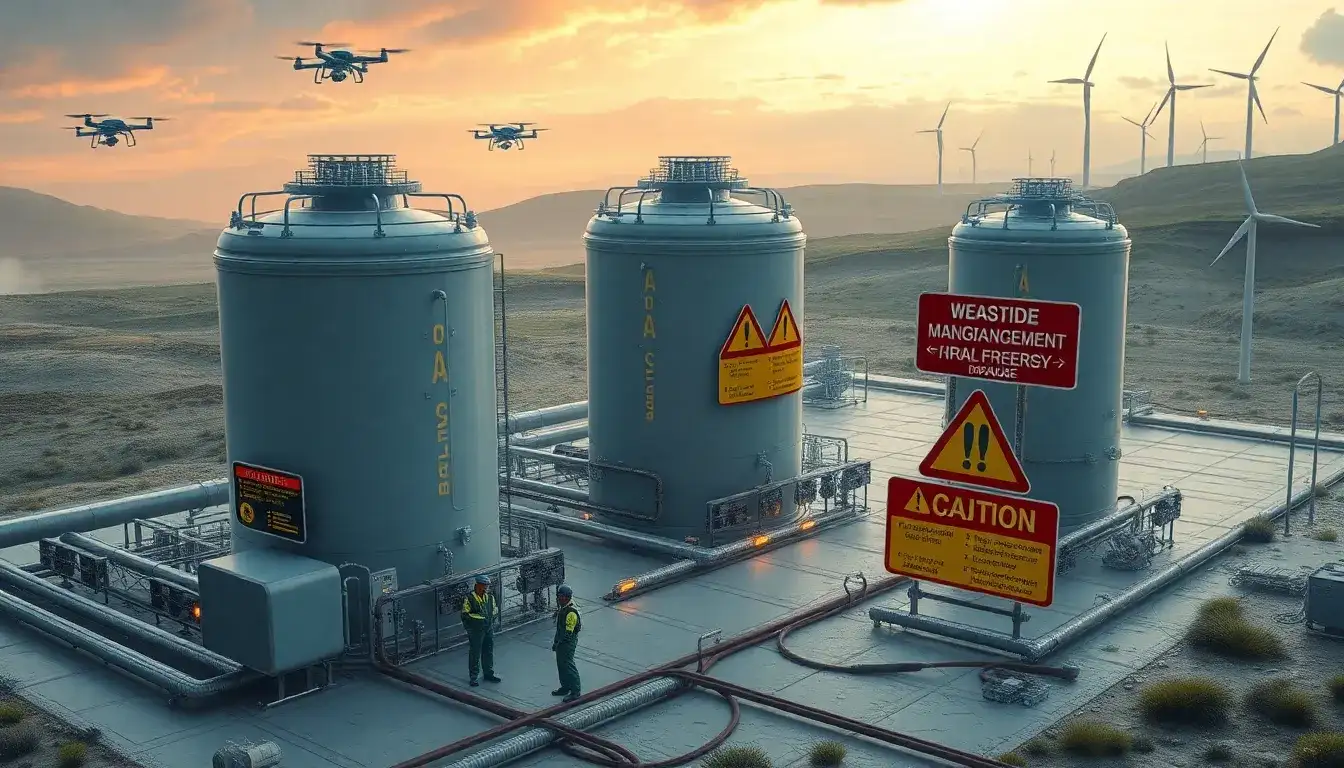
Implementing Liquid Air Energy Storage (LAES) on a large scale poses several potential challenges:
Key Challenges
- Efficiency Concerns
- Low Round-Trip Efficiency: LAES systems typically have a round-trip efficiency of about 50-60%, which is lower compared to other energy storage methods like pumped hydro storage (PHS) and compressed air energy storage (CAES).
- Improvement Efforts: Enhancing efficiency requires integrating external thermal systems or using high-temperature and cryogenic heat systems, which can limit system flexibility and require adjacent facilities.
- Economic Viability
- Financial Incentives Needed: Despite technical improvements, financial incentives such as subsidies are crucial to make LAES economically viable. Subsidies of 40-60% on capital expenditures can significantly enhance its economic feasibility.
- High Capital Costs: The initial investment for establishing an LAES system is substantial, which can deter investors without adequate financial support.
- Operational and Environmental Considerations
- Geographic Independence: While LAES systems can be installed independently of geography, they require specific conditions for optimal efficiency, such as access to waste heat or integration with thermal systems.
- CO2 Emissions: Using external fuels to improve efficiency can lead to CO2 emissions, which undermines the sustainability goals of renewable energy systems.
- Scalability and Technological Hurdles
- Technological Optimization: Achieving scalability requires overcoming technological challenges, including optimizing the liquefaction and expansion processes to enhance overall efficiency.
- Pilot Scale to Commercial Scale: Transitioning from pilot-scale to commercial-scale operations involves significant technological and operational hurdles.
Addressing these challenges will be essential for the widespread adoption of LAES as a viable grid-scale energy storage solution.
Original article by NenPower, If reposted, please credit the source: https://nenpower.com/blog/what-are-the-potential-challenges-in-implementing-liquid-air-energy-storage-on-a-large-scale/

