

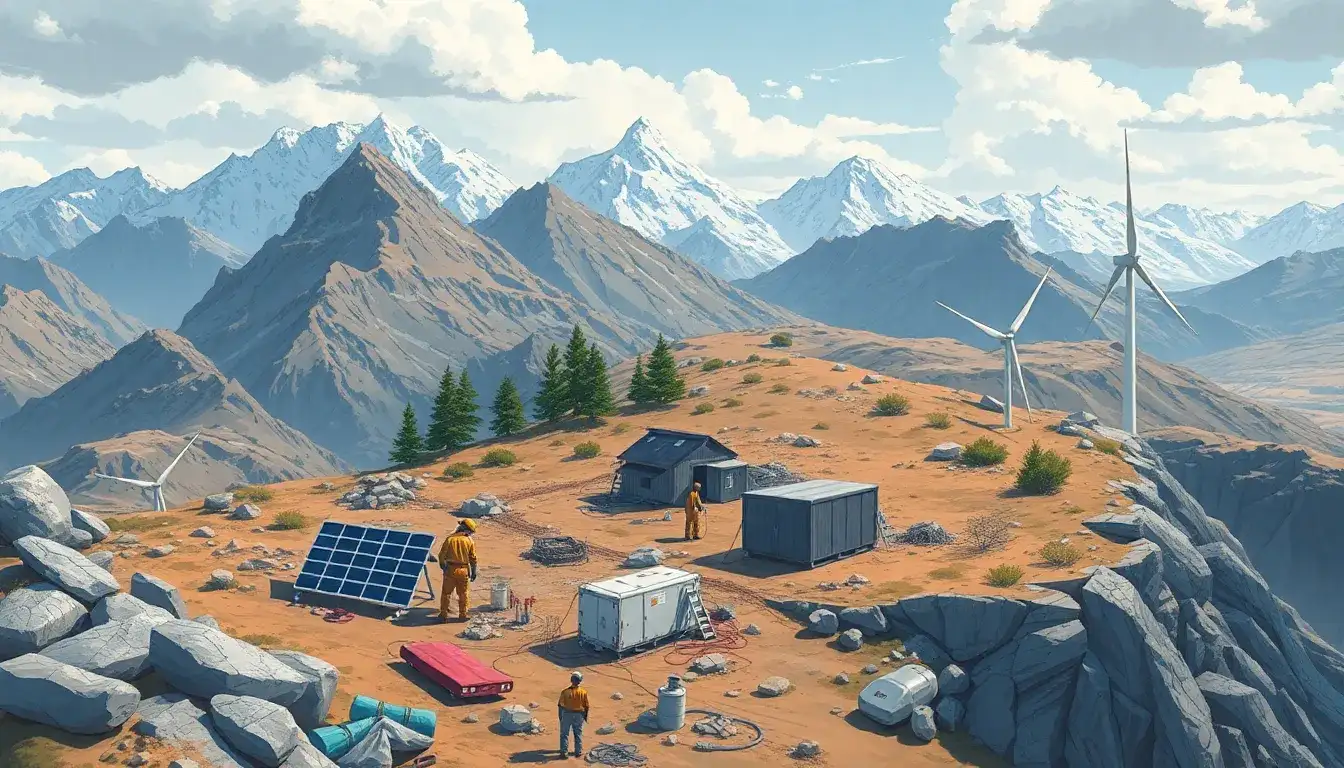
Deploying flow batteries in remote or off-grid locations presents several challenges:
Challenges
1. Logistical and Transportation Challenges
- Remote Locations: Flow batteries require large tanks and pumps, which are bulky and heavy, leading to higher transportation costs and logistical complexities in remote locations. This can significantly increase the initial setup costs per megawatt-hour.
- Infrastructure Needs: Remote sites often lack the necessary infrastructure (e.g., roads, storage facilities), which must be established before deploying flow batteries.
2. Environmental Adaptability
- Climate Conditions: Flow batteries may require added heaters and insulation to prevent freezing in cold climates, which can increase costs and system complexity.
- Operational Environments: While flow batteries can self-heat, their operation in extreme temperatures (e.g., below -40°C) needs careful management to maintain efficiency.
3. Regulatory and Permitting Challenges
- Unfamiliarity with Flow Batteries: Authorities may be unfamiliar with flow batteries, leading to challenges in securing necessary permits for first-time installations.
- Need for Standardization: The lack of standard regulatory frameworks can complicate the permitting process, though this is improving with more deployments.
4. Initial Capital Costs and System Complexity
- High Upfront Costs: The initial capital cost of flow batteries is high due to the need for complex infrastructure like tanks and pumps.
- Specialized Maintenance: The system requires specialized knowledge for maintenance, which can increase operational costs over time.
5. Energy Density and Physical Space Requirements
- Lower Energy Density: Flow batteries have lower energy density compared to lithium-ion batteries, requiring more space to store the same amount of energy. This can be a significant factor in remote locations where space might be limited or valuable.
Mitigating Measures
To overcome these challenges, several strategies can be employed:
- Modular Systems: Using fully containerized, modular systems can minimize on-site installation requirements and reduce costs.
- Planning and Local Engagement: Engaging with local authorities early in the development process can streamline the permitting process and ensure compliance with regulations.
- Technological Advancements: Ongoing research into new materials and more efficient systems could reduce costs and improve performance over time.
Original article by NenPower, If reposted, please credit the source: https://nenpower.com/blog/what-are-the-potential-challenges-in-deploying-flow-batteries-in-remote-or-off-grid-locations/

