

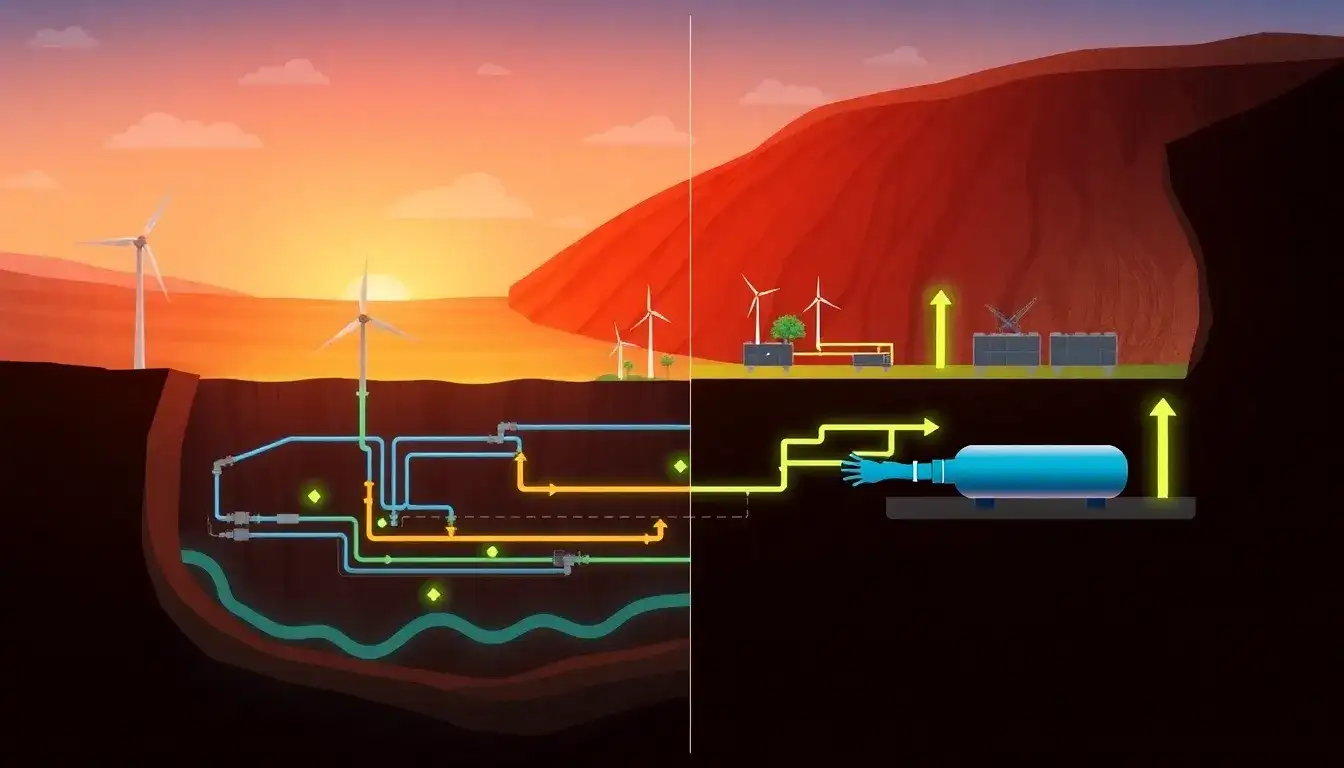
Using depleted natural gas reservoirs for Compressed Air Energy Storage (CAES) offers several benefits compared to using salt caverns, highlighted below:
Advantages of Depleted Natural Gas Reservoirs Over Salt Caverns
- Existing Infrastructure:
- Depleted gas fields: These often have existing infrastructure such as wells and pipelines, which can be repurposed for CAES, reducing upfront costs and the time needed to implement the facility.
- Salt caverns: Typically require new infrastructure development, including drilling and dissolving salt layers, which can be more expensive and time-consuming.
- Geological Conditions:
- Depleted gas fields: They have well-characterized pressure and gas flow histories, which helps in assessing and managing the storage capacity and potential risks associated with air storage.
- Salt caverns: While they are generally leak-tight and offer good storage properties, they can require significant upfront work to create suitable caverns and may have limited capacity compared to large depleted reservoirs.
- Cushion Gas:
- Depleted gas fields: Any remaining unproduced natural gas can be used as cushion gas, which is necessary for maintaining pressure in the reservoir during air injection and withdrawal phases.
- Salt caverns: Typically do not have natural cushion gas available, requiring additional gas to be pumped in for this purpose.
- Environmental Impact:
- Depleted gas fields: Repurposing these fields can help mitigate some environmental impacts of abandoned wells by reusing existing infrastructure and preventing potential well abandonment issues.
- Salt caverns: Do not inherently address similar environmental concerns as the creation of new caverns might involve separate environmental considerations.
- Storage Capacity and Potential Energy Output:
- Depleted gas fields: Large-scale depleted reservoirs can potentially store more energy, thanks to their extensive volume and permeable nature, allowing for significant CAES facilities like the 600 MW/7.2 GWh facility envisioned by Denison.
- Salt caverns: Generally offer smaller capacities compared to large depleted gas fields, though they are reliable for short to medium-term storage needs.
Overall, depleted natural gas reservoirs provide a promising option for large-scale energy storage with existing infrastructure, known geological conditions, and potential environmental benefits, compared to the smaller, more specialized capabilities of salt caverns.
Original article by NenPower, If reposted, please credit the source: https://nenpower.com/blog/what-are-the-potential-benefits-of-using-depleted-natural-gas-reservoirs-for-caes-compared-to-salt-caverns/

