

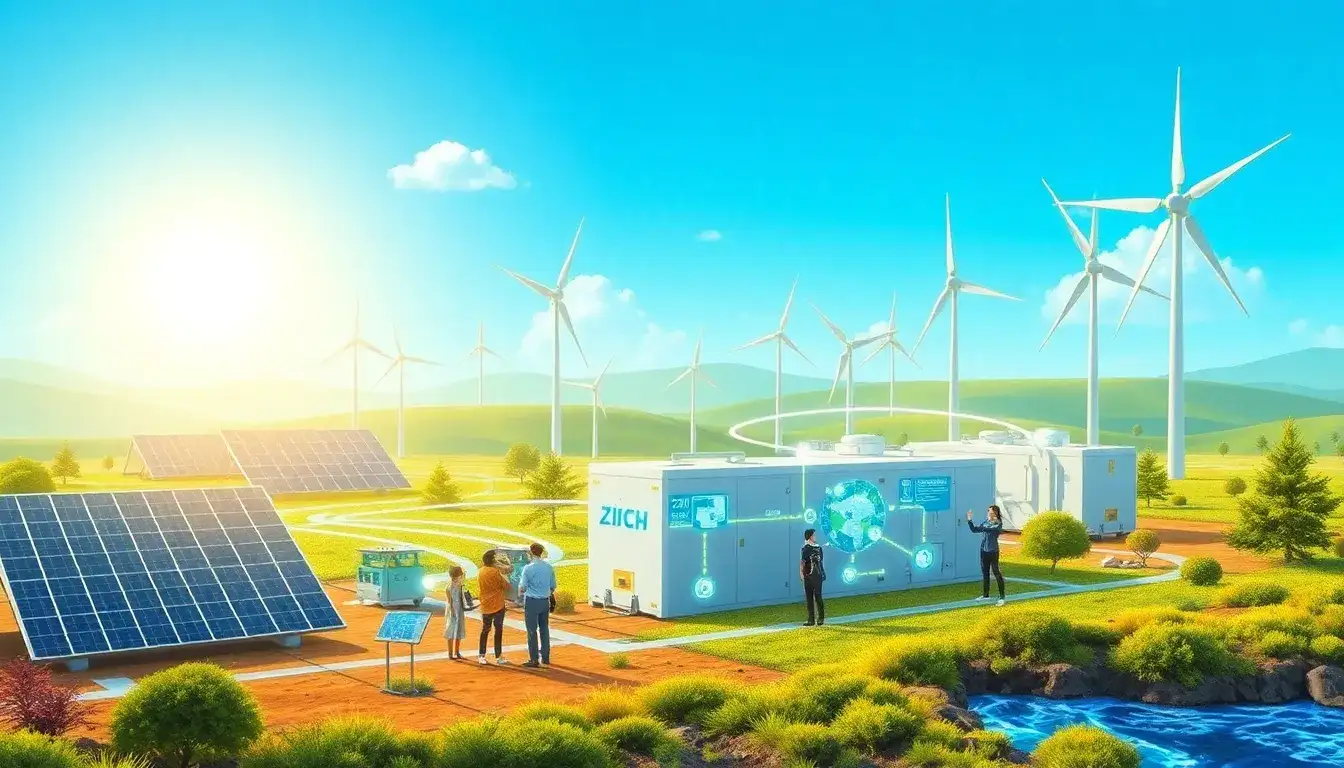
Potential Applications of Zinc-Based Batteries in Renewable Energy Systems
Zinc-based batteries, including zinc-ion (ZIBs), zinc-bromine, zinc-sulfur, and nickel-zinc batteries, are emerging as significant contributors to renewable energy systems. These batteries offer several benefits, such as cost-effectiveness, safety, and eco-friendliness, making them attractive for various applications:
Applications:
- Medium- and Long-Duration Energy Storage:
- Zinc-ion batteries, particularly those using manganese dioxide, are ideal for medium- and long-duration energy storage, which is crucial for balancing the intermittent nature of solar and wind power. These batteries can store energy for extended periods, supporting infrastructure that requires reliable, consistent power.
- Renewable Energy Coupling and Grid Support:
- Zinc-bromine batteries have been successfully used for power quality control and renewable energy integration, helping stabilize the grid by storing excess energy generated during peak production times. This application ensures that renewable energy sources can integrate smoothly into existing electricity grids.
- Electric Vehicles and Portable Electronics:
- Aqueous zinc-sulfur batteries are being developed to power a wide range of devices, from portable electronics to electric vehicles, offering higher energy density and reduced environmental impact compared to lithium-ion batteries. These batteries promise a safer and more sustainable option for mobile applications.
- Stationary Energy Storage Solutions:
- Nickel-zinc batteries, enhanced by zinc sponge anodes, provide high-performance, recyclable options for stationary energy storage, addressing safety and environmental concerns associated with traditional batteries.
Advantages:
- Cost-effectiveness: Zinc-based batteries are generally cheaper than lithium-ion batteries, with projected costs below $100 per kWh.
- Sustainability: They use more abundant and environmentally friendly materials, supporting a greener energy infrastructure.
- Safety: Zinc-based systems mitigate risks like dendrite growth and thermal runaway, common in lithium-ion batteries.
These advantages position zinc-based batteries as critical components in transitioning to renewable energy systems by providing reliable, efficient, and scalable energy storage solutions.
Original article by NenPower, If reposted, please credit the source: https://nenpower.com/blog/what-are-the-potential-applications-of-zinc-based-batteries-in-renewable-energy-systems/

