

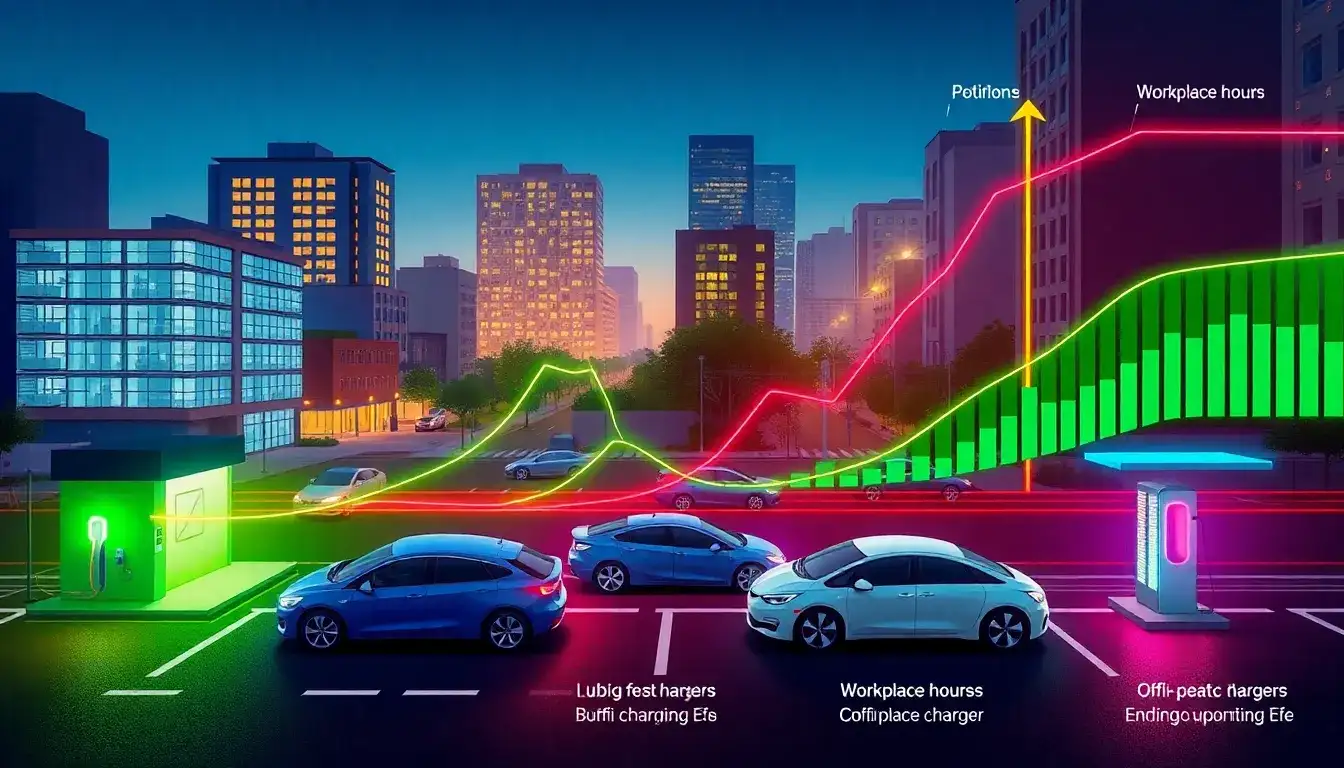
The peak load impacts of different electric vehicle (EV) charging behaviors significantly affect power grid stability, demand, and infrastructure.
Key Peak Load Impacts of EV Charging Behaviors
1. Timing of Charging and Coincidence With Existing Peaks
- EV charging that coincides with existing peak demand periods—typically late afternoon to early evening (12:00 to 18:00)—can sharply increase peak power demand on the distribution grid. This is when building air conditioning loads are also at their highest, creating compounded strain.
- Charging EVs overnight (e.g., between 20:00 and 6:00) when building loads are low can greatly reduce the peak electricity demand, alleviating stress on the grid and potentially avoiding costly infrastructure upgrades.
2. Charging Speed and Power Level
- Fast charging stations substantially raise peak power demand at sites, sometimes increasing monthly peak loads by over 250%. Although fast charging doesn’t significantly impact total monthly energy use, it spikes demand over short periods.
- Higher per-port power levels amplify these peak demand effects, increasing stress on local transformers and other distribution equipment.
3. Distribution System Stress and Equipment Overloading
- Unregulated or simultaneous EV charging can overload critical distribution components like transformers and cables. This overloading reduces equipment lifespan and efficiency, increases maintenance costs, and risks reliability issues.
- Single-phase chargers can cause phase unbalance in the distribution network, leading to voltage drops on heavily loaded phases and overvoltages on others. This imbalance raises power losses and may breach operational voltage limits.
4. Power Losses and Efficiency
- EV integration increases current flow through the distribution system, causing higher I²R losses (resistive losses). Studies observe up to a threefold increase in transformer power losses due to EV charging loads, reducing overall network efficiency.
5. Impact on Electricity Bills and Rate Structures
- Areas with cold climates and high demand charges are particularly vulnerable to large electricity bill increases (up to 88%) when EV charging overlaps with peak loads.
6. Mitigation Through Controlled Behavior
- Workplace charging can spread out the demand, reducing evening peak loads while making use of solar generation during the day, thus benefiting the power system overall.
- Incentivizing off-peak charging through rate structures encourages load shifting, which can minimize peak impacts and the need for costly grid upgrades.
In summary, EV charging behavior critically influences peak grid loads primarily through the timing and power level of charging events. Fast, unregulated charging during peak demand periods strains distribution infrastructure and increases power losses. Conversely, shifting charging to off-peak hours and leveraging workplace or managed charging can mitigate these peak impacts, enhancing grid reliability and efficiency.
Original article by NenPower, If reposted, please credit the source: https://nenpower.com/blog/what-are-the-peak-load-impacts-of-different-ev-charging-behaviors/

