

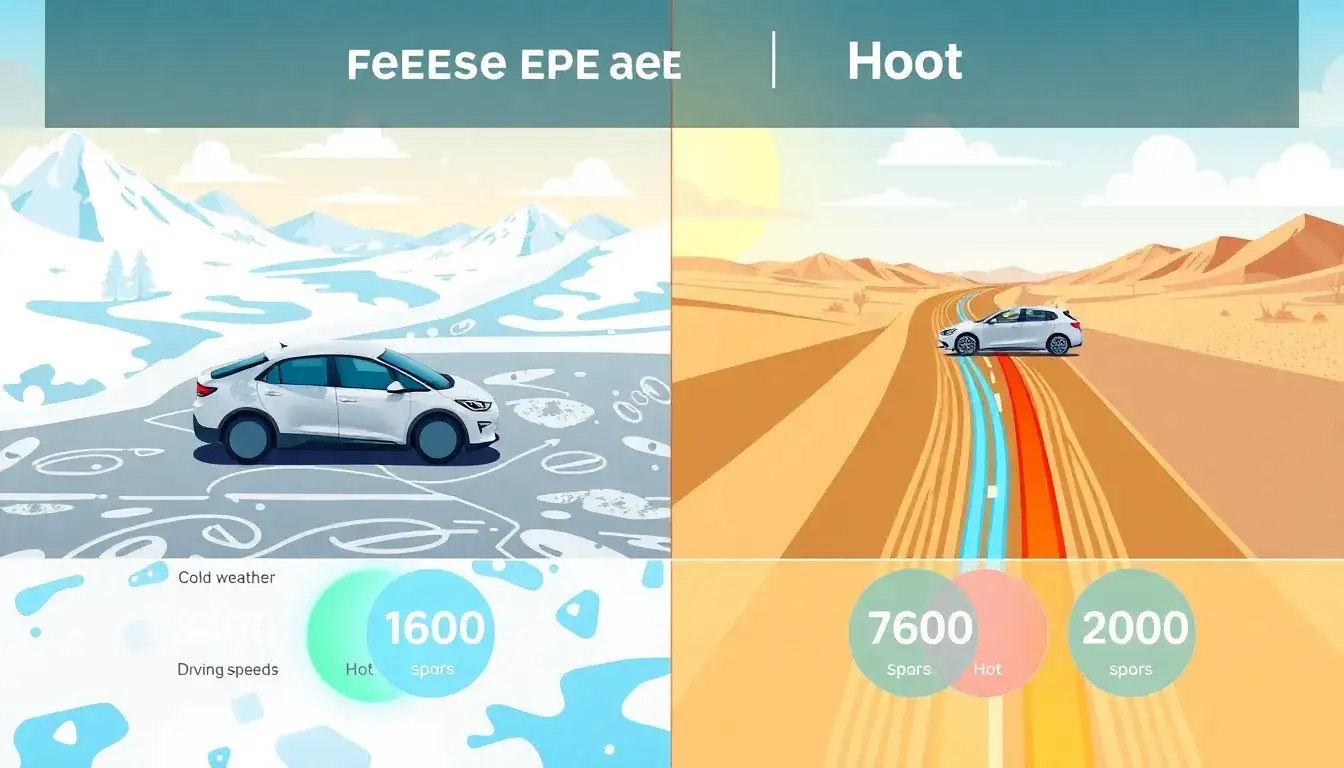
The optimal driving speeds for electric vehicles (EVs) vary depending on the temperature, with both cold and hot weather influencing these speeds due to impacts on battery efficiency and energy consumption.
Optimal Driving Speeds in Cold Weather
- At freezing temperatures, the optimal driving speed to maximize range is approximately 25 mph for a typical EV sedan, based on aggregated telematics data analysis. This speed balances the energy needed to overcome aerodynamic drag and the higher energy consumption required to heat the cabin and battery in cold conditions. Driving faster than this increases drag energy consumption, while driving slower can increase energy use due to longer HVAC operation times.
- Cold weather can reduce EV range by about 10 to 25 percent, depending on factors such as outside temperature and use of cabin heating. For example, at very cold temperatures (around 12°F), range losses of around 24 percent were observed during highway driving at about 75 mph, demonstrating the importance of adjusting speed and preconditioning strategies to optimize performance.
- Preconditioning the EV (warming the battery and cabin before driving, while still plugged in) is highly recommended to improve battery performance and reduce the need for energy-intensive heating while driving in cold weather, indirectly helping maintain better range at practical speeds.
Optimal Driving Speeds in Hot Weather
- EVs perform best at moderate temperatures around 68°F (20°C to 21°C), where the ideal speeds for maximizing range are slightly lower due to reduced HVAC energy demand. For a small sedan, the most efficient speed is around 16 mph at this ideal temperature, though this is impractical for typical driving. For light cargo vans, the ideal speed is even slower due to greater drag.
- At hotter temperatures, similar trade-offs exist: faster speeds reduce time spent running climate control but increase drag energy consumption. Optimal speeds tend to be lower than highway speeds to balance these factors for maximum range.
Summary
| Temperature Condition | Optimal Speed Range (approx.) | Key Considerations |
|---|---|---|
| Cold (near freezing) | ~25 mph | Balance drag and heating energy; preconditioning essential |
| Ideal (around 68°F) | 16-20 mph | Minimum energy to overcome drag and HVAC; impractical for highway |
| Hot (above 68°F) | Similar or slightly lower speeds | HVAC for cooling reduces range; balance speed and climate control energy |
In practical terms, while very slow speeds maximize range, real-world driving requires higher speeds. Drivers can improve efficiency in cold weather by preconditioning the vehicle and moderating speed, ideally around 25 mph if conditions allow, to partially offset range losses.
Overall, EVs are shown to work well in both cold and hot weather, but the range and optimal speeds are both temperature dependent, requiring adjustments for best efficiency and driving practicality.
Original article by NenPower, If reposted, please credit the source: https://nenpower.com/blog/what-are-the-optimal-driving-speeds-for-evs-in-cold-and-hot-weather/

