

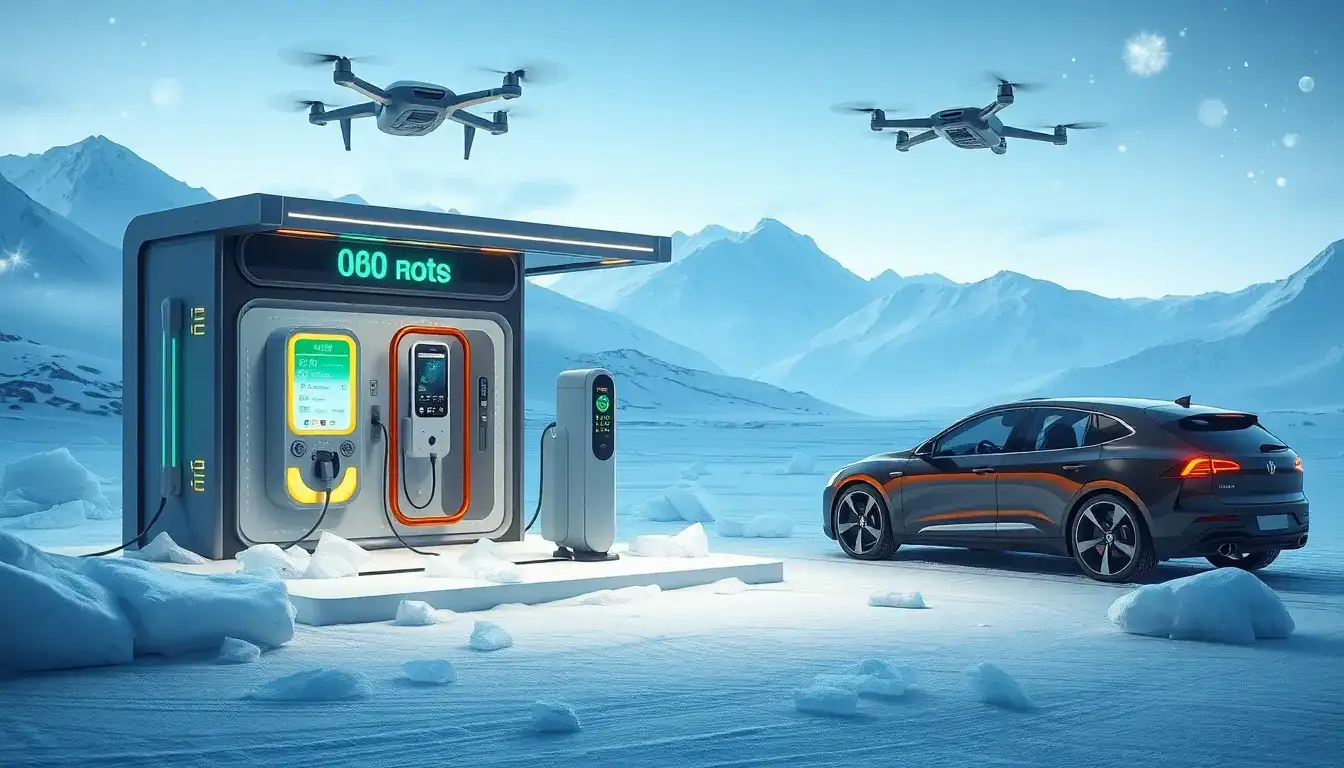
Optimal charging strategies for batteries in freezing conditions primarily revolve around controlling the temperature and charge rate to prevent damage and ensure safety.
General Guidelines
- Charging below freezing (0°C or 32°F) is generally discouraged because chemical reactions inside the battery slow down, reducing efficiency and increasing risk of damage.
- Batteries perform best when charged between 10°C and 30°C (50°F to 86°F).
- If charging must occur at low temperatures, the charge current should be significantly reduced to minimize internal stresses and prevent gas pressure buildup or lithium plating.
Battery Type Specific Strategies
Nickel-Based Batteries (NiMH, NiCd)
- Fast charging is recommended only down to about 5°C (41°F).
- Charging below this temperature should narrow to 10°C to 30°C for best results.
- When charging below freezing, reduce charge current to about 0.1C to avoid pressure buildup and venting caused by poor gas recombination at low temperatures.
- Some industrial batteries use thermal blankets or chargers that dynamically adjust charge rate based on temperature to enable safe charging in cold environments.
Lithium-Ion Batteries
- Charging lithium-ion batteries below freezing can cause lithium plating on the anode surface, which reduces capacity and increases risk of sudden failure.
- To mitigate damage when charging between 0°C and about -10°C (32°F to 14°F), charge rates should not exceed 0.1C.
- Between about -10°C and -20°C (14°F to -4°F), the recommended charge rate drops further to 0.05C.
- Charging at too high a rate in cold conditions leads to mechanical instability and permanent damage.
- Slow charging rates drastically increase charge time and complicate practical use, so avoiding charging in freezing temperatures is advised unless temperature control or specialized chargers are available.
Additional Practical Recommendations
- Avoid charging batteries that are physically frozen; let them thaw at room temperature before charging to prevent internal damage.
- Use smart chargers with temperature compensation capabilities to adjust the charging current automatically based on battery temperature, helping to safely charge batteries in colder environments.
- Bringing batteries indoors or to sheltered warmer environments before charging in winter improves safety and charging efficiency.
- Maintaining battery charge with trickle chargers during cold storage can prevent freezing damage.
Summary Table
| Battery Type | Charge Temp Range | Charge Current Recommendation at Freezing Temps | Notes |
|---|---|---|---|
| Nickel-based | Preferably >10°C (50°F) | Reduce to 0.1C below 0°C | Avoid fast charging below 5°C; use thermal management if possible. |
| Lithium-ion | Ideally >0°C (32°F) | <0.1C between 0°C to -10°C; <0.05C below -10°C | Risk of lithium plating; avoid charging frozen batteries. |
In conclusion, the optimal strategy for charging batteries in freezing conditions is to avoid charging below freezing when possible. If charging is necessary, use smart, temperature-compensating chargers, reduce the charge current significantly, ensure the battery is not frozen, and consider thermal management techniques to warm the battery. This approach maximizes battery life and safety during cold weather charging.
Original article by NenPower, If reposted, please credit the source: https://nenpower.com/blog/what-are-the-optimal-charging-strategies-for-batteries-in-freezing-conditions/

