

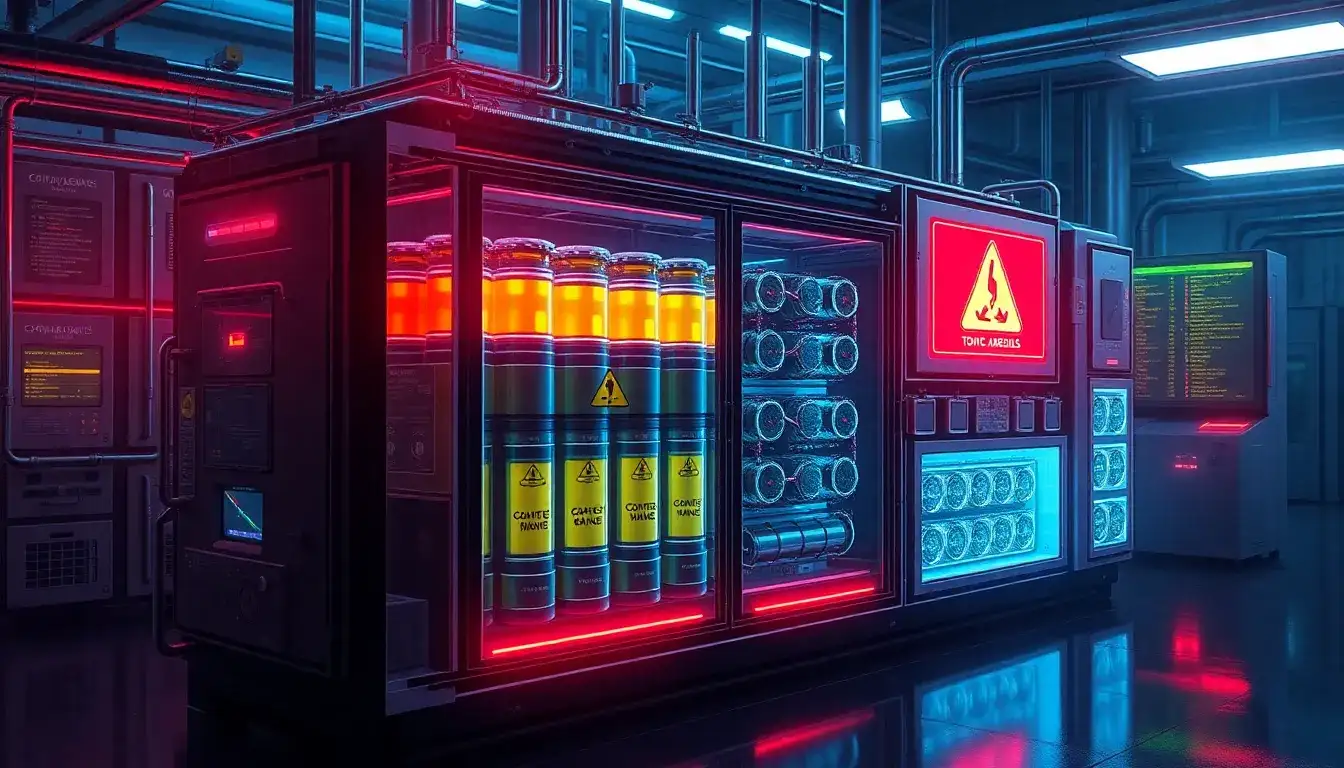
Battery storage systems play a crucial role in energy management, but certain materials used in these systems can pose significant health and environmental risks. Here are some of the most toxic materials associated with different types of battery technologies:
Lead-Acid Batteries
- Lead: This heavy metal is a neurotoxin that can cause a range of health issues, particularly with long-term exposure. Lead-acid batteries are made from lead metal or lead oxide paste which can leak harmful substances if the batteries are damaged or improperly disposed of.
- Sulfuric Acid: This strong acid serves as the electrolyte in lead-acid batteries. It is highly corrosive and can cause severe burns if it comes into contact with skin or bodily tissues. In cases of overheating or overcharging, it can also release toxic fumes, posing chemical hazard risks.
- Additional Toxic Elements: Beyond lead and sulfuric acid, lead-acid batteries can also contain antimony, arsenic, and cadmium, all of which are toxic or harmful to human health and the environment.
Lithium-Ion Batteries
- Lithium Hexafluorophosphate (LiPF6): This compound is commonly used as an electrolyte in lithium-ion batteries. While lithium itself is not toxic, LiPF6 can become dangerous when it undergoes hydrolysis, producing hydrofluoric acid (HF), a highly corrosive and toxic compound that can cause severe damage to respiratory and skin tissues.
- Flammable and Toxic Gases: During normal operation, lithium-ion batteries can emit gases such as carbon monoxide, carbon dioxide, hydrogen, methane, and other hydrocarbons, especially in the event of thermal runaway, which can occur due to overheating or overcharging.
Nickel-Cadmium Batteries
- Cadmium: This heavy metal is highly toxic and can cause serious health problems, including kidney damage and bone disease. Nickel-cadmium batteries, classified as hazardous waste, also contain nickel hydroxide and cobalt hydroxide, which are considered toxic and corrosive.
General Hazards
- Flammable Materials: Many battery systems can release flammable gases under certain conditions, leading to fire and explosion risks. The gases emitted are not only toxic but can also create hazardous environmental conditions during battery failures, including leaking chemicals that contaminate soil and water.
- Chemical Reactions: Improper handling or damage to battery casings can lead to chemical leaks, resulting in harmful reactions with moisture or air, thus escalating the risk of fire and toxic exposure.
In summary, while battery storage systems are vital for energy management, distinct materials used, especially in lead-acid and lithium-ion batteries, present significant health and environmental hazards that must be managed through proper handling and disposal practices.
Original article by NenPower, If reposted, please credit the source: https://nenpower.com/blog/what-are-the-most-toxic-materials-used-in-battery-storage-systems/

