

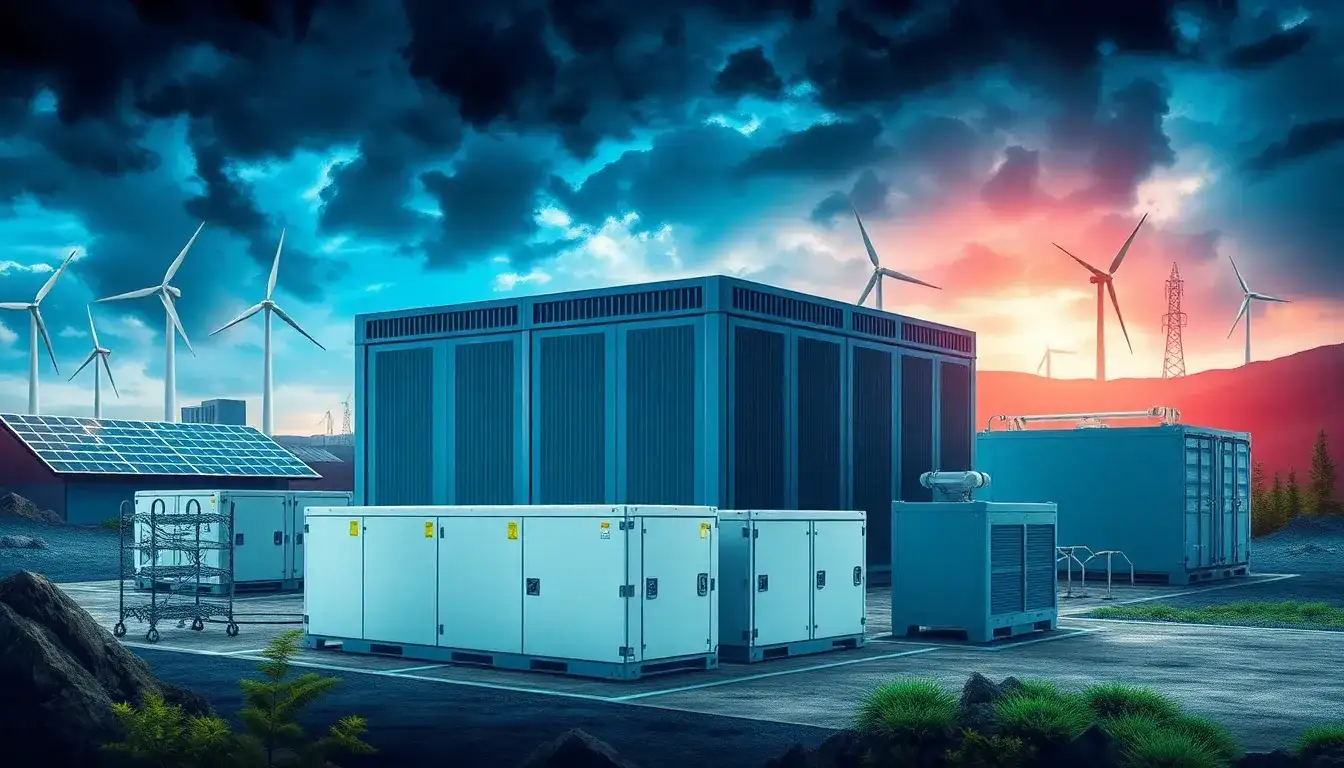
The most reliable energy storage technologies for emergency situations are those that have proven long-term operational stability, rapid response capabilities, and availability under a range of conditions. Based on current knowledge and recent assessments, the following stand out:
Most Reliable Energy Storage Technologies for Emergency Use
1. Pumped Hydropower Storage (PHS)
- PHS is the most widely used and mature large-scale energy storage technology globally, accounting for over 90% of energy storage capacity worldwide.
- It works by moving water between two reservoirs at different elevations to store and generate electricity.
- PHS offers high reliability, large capacity, and the ability to discharge power quickly when needed, making it ideal for emergencies.
- Its main limitation is the need for suitable topography (availability of higher and lower reservoirs).
2. Mechanical Storage (Gravity and Kinetic Energy)
- Mechanical storage methods that harness gravitational or kinetic energy (such as gravity batteries or flywheels) are emerging as reliable, long-lasting solutions.
- These technologies are appreciated for quick response times and durability with low degradation over many cycles.
3. Hydrogen Storage
- Hydrogen energy storage involves converting excess electricity into hydrogen via electrolysis, which can then be stored and reconverted to electricity when required.
- While hydrogen technologies are still emerging, they offer potentially large storage capacity and long-duration storage, useful for extended emergencies or backup power.
- Fuel cells powered by hydrogen provide clean and reliable energy but currently have some barriers in terms of infrastructure and cost.
4. Advanced Batteries (e.g., Iron-Air, Zinc, and Other Long-Duration Batteries)
- New battery technologies such as iron-air and zinc batteries are gaining attention for long-duration energy storage with improved reliability and cost-effectiveness compared to traditional lithium-ion batteries.
- These batteries might be more suitable for emergency storage due to their scalability and potentially longer cycle life.
Summary Table
| Technology | Reliability | Capacity | Response Time | Suitability for Emergencies | Limitations |
|---|---|---|---|---|---|
| Pumped Hydropower Storage | High | Very Large | Fast | Ideal for large-scale, grid-level backup | Requires suitable geography |
| Mechanical Storage | High | Moderate | Very Fast | Good for rapid response and repeated cycles | Emerging technology, scaling |
| Hydrogen Storage | Moderate-High | Very Large | Moderate | Long-duration storage, flexible usage | Infrastructure and cost barriers |
| Advanced Batteries | Moderate-High | Moderate | Fast | Scalable for varied emergency demands | Some new tech, commercial maturity |
Conclusion
For emergency situations, pumped hydropower storage stands out as the most reliable and proven large-scale technology when geography permits. Mechanical storage and advanced batteries offer fast response and growing reliability, while hydrogen storage presents promising long-term and large-capacity solutions as infrastructure develops. Each technology’s suitability depends on the scale, duration, and location-specific requirements of the emergency scenario.
Original article by NenPower, If reposted, please credit the source: https://nenpower.com/blog/what-are-the-most-reliable-energy-storage-technologies-for-emergency-situations/

