

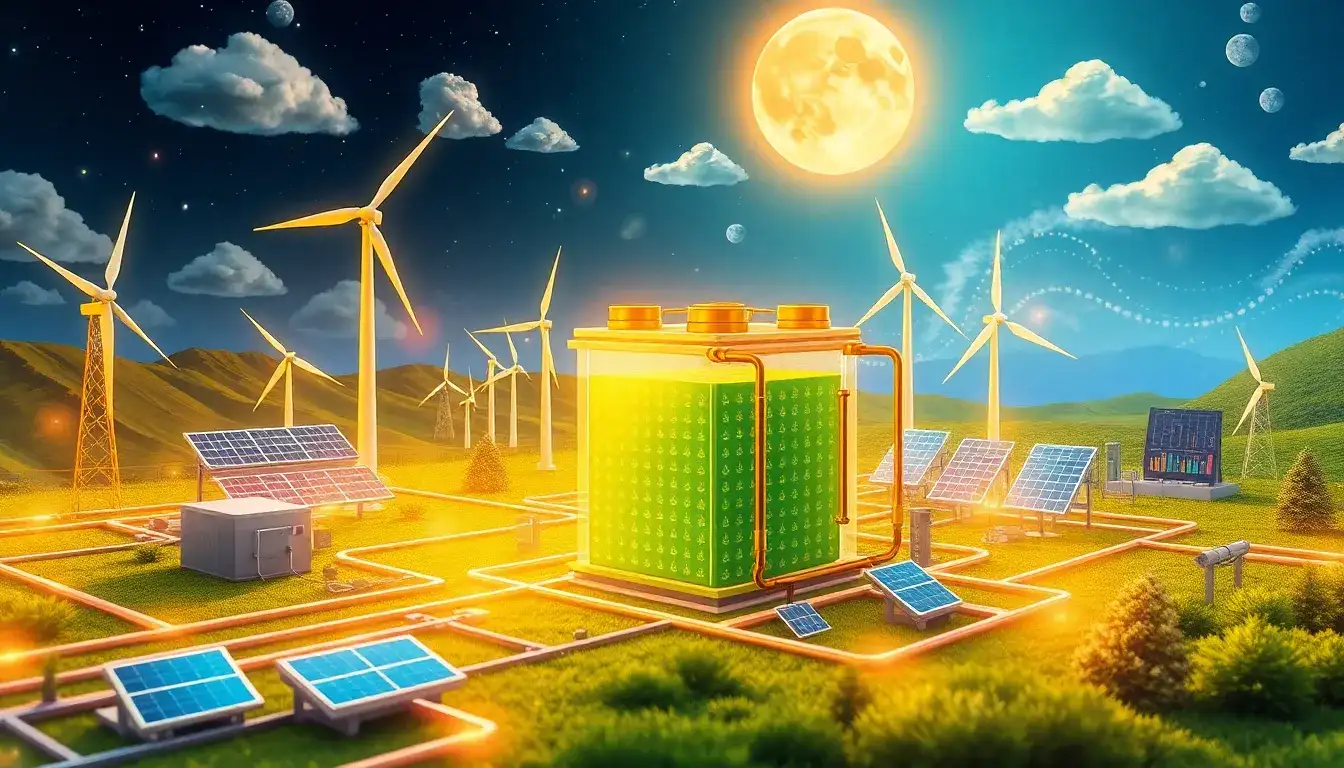
Reducing battery storage costs is crucial for the widespread adoption of renewable energy systems. Here are some of the most promising technologies for cost reduction:
Promising Technologies
- Sodium-ion Batteries: These batteries use abundant, non-toxic materials like sodium and have the potential for significant cost reductions, estimated at around $0.31/kWh. Their lower raw material costs compared to lithium-ion batteries make them a promising alternative.
- Lead-Acid Batteries: Also projected to have substantial cost reductions, similar to sodium-ion batteries, with estimates of around $0.31/kWh. Innovations in lead-acid technology could make them more viable for long-duration storage.
- Flow Batteries (FBs): Known for their scalability and potential cost-effectiveness, flow batteries can achieve a 66% cost reduction, with top innovation portfolios potentially lowering the levelized cost of storage (LCOS) to between $0.052/kWh and $0.057/kWh. Key innovations include novel active electrolytes and manufacturing improvements.
- Solid-State Batteries: These batteries replace liquid electrolytes with solid materials, enhancing energy density, safety, and lifespan. While not primarily focused on cost reduction, solid-state batteries could indirectly reduce costs by improving overall system efficiency and longevity.
- Lithium-ion Innovations: Changes in lithium-ion chemistry, such as reducing or eliminating cobalt, can lower costs. Advancements in materials science and manufacturing processes are also crucial for cost reduction.
- Artificial Intelligence and Machine Learning: AI-driven optimization of battery performance, predictive maintenance, and supply chain management can lead to significant cost savings by maximizing efficiency and reducing waste.
- Vehicle-to-Grid (V2G) Systems: Utilizing electric vehicle batteries as grid storage can extend the lifespan and cost-effectiveness of batteries by allowing them to perform multiple roles. This approach can also provide backup power during outages and help balance grid demand.
Key Innovations
- Novel Electrolytes: Both for sodium-ion and flow batteries, developing more efficient electrolytes is crucial for performance and cost improvements.
- Scalable Manufacturing: Enhancements in manufacturing techniques can reduce production costs across various battery technologies.
- Smart Grid Integration: Integrating battery storage with grid networks via technologies like IoT and blockchain can enhance efficiency and provide additional revenue streams through services like energy trading.
These technologies, combined with ongoing research and development, are set to play a significant role in achieving cost-effective battery storage solutions for a sustainable energy future.
Original article by NenPower, If reposted, please credit the source: https://nenpower.com/blog/what-are-the-most-promising-technologies-to-reduce-battery-storage-costs-further/

