

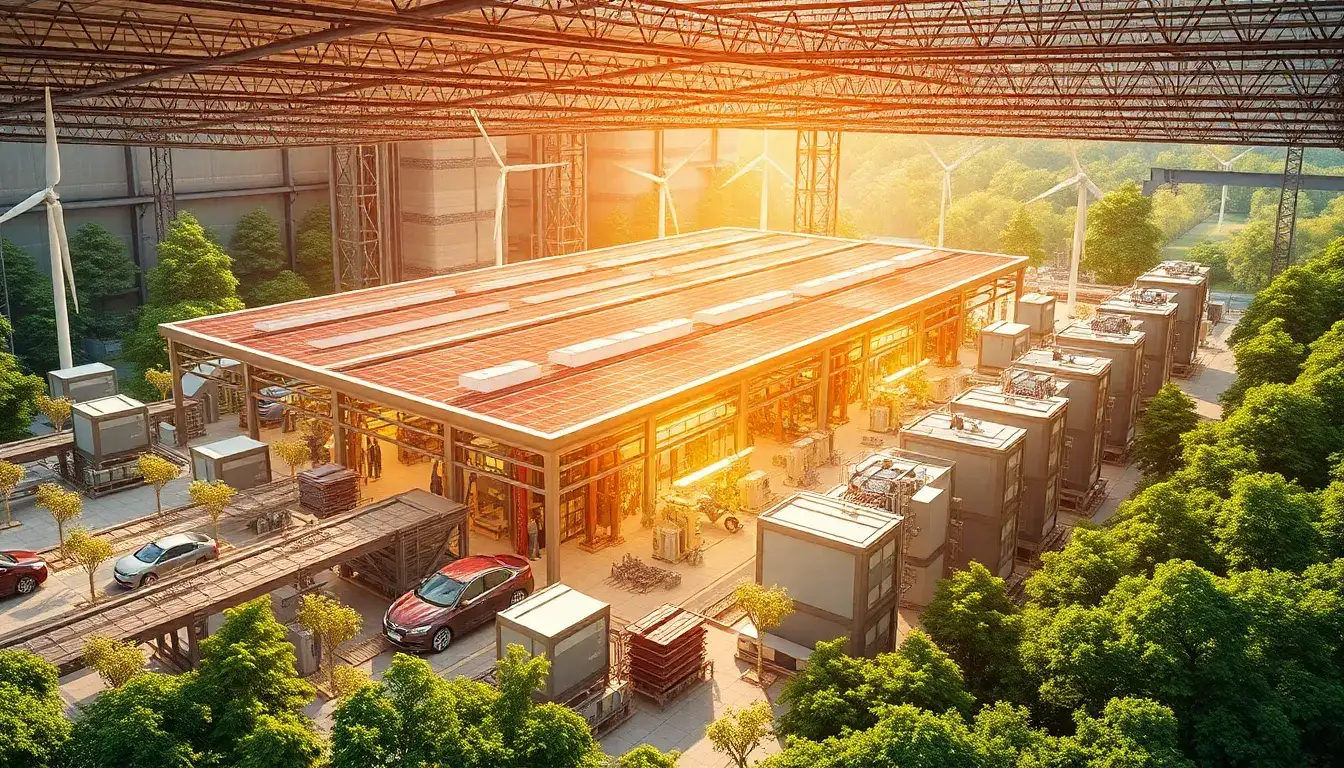
The most promising technologies and strategies for reducing emissions in electric vehicle (EV) battery production focus primarily on decarbonizing energy use and improving manufacturing efficiency. Key approaches include:
Electrification of Production Processes
- Transitioning from fossil fuel-powered machinery and heating to electric-powered equipment in battery manufacturing, such as coating, drying, and clean room operations, significantly lowers carbon emissions if the electricity comes from low-carbon or renewable sources. Electrification can improve energy performance by over 10% while cutting emissions associated with thermal processes.
Use of Low-Carbon or Renewable Electricity
- Sourcing electricity from low-carbon or renewable sources for all stages of battery production is critical. Currently, electricity accounts for about 20-25% of the lifecycle emissions for common battery chemistries like NMC (nickel manganese cobalt) and LFP (lithium iron phosphate). Increasing electrification beyond current rates (20-25%) combined with cleaner grids can reduce these emissions substantially.
Increasing Battery Energy Density and Material Efficiency
- Improving battery chemistry and design to increase energy density reduces the amount of material needed per unit of battery capacity, which in turn cuts emissions from raw material extraction and processing. Higher energy density batteries require less active material, decreasing the overall carbon footprint of battery production.
Recycling and Circular Economy Integration
- Incorporating recycled cathode materials into battery manufacturing can reduce the need for new raw material extraction and related emissions. Recycling initiatives are expected to contribute to around 20% of cathode active material supply by 2035, aiding lifecycle emission reductions by about 35%.
Innovations in Battery Chemistry and Manufacturing Processes
- Research into new battery chemistries that rely on more abundant and less carbon-intensive materials is ongoing. Novel manufacturing processes designed to be less energy-intensive or to operate with lower emissions also hold promise in the longer term.
Commitment from Industry Players and Supply Chain Management
- Major OEMs and battery suppliers are committing to science-based targets to reduce emissions, which drives adoption of cleaner energy sourcing, process electrification, and material efficiency improvements across the supply chain.
In summary, combining process electrification powered by renewable energy, higher energy density designs, enhanced recycling, and cleaner supply chain practices represents the most effective current strategy to reduce emissions in EV battery production. These advances could enable steep emissions cuts over the next five to ten years, making the overall lifecycle emissions of EVs more sustainable.
Original article by NenPower, If reposted, please credit the source: https://nenpower.com/blog/what-are-the-most-promising-technologies-for-reducing-emissions-in-ev-battery-production/

