

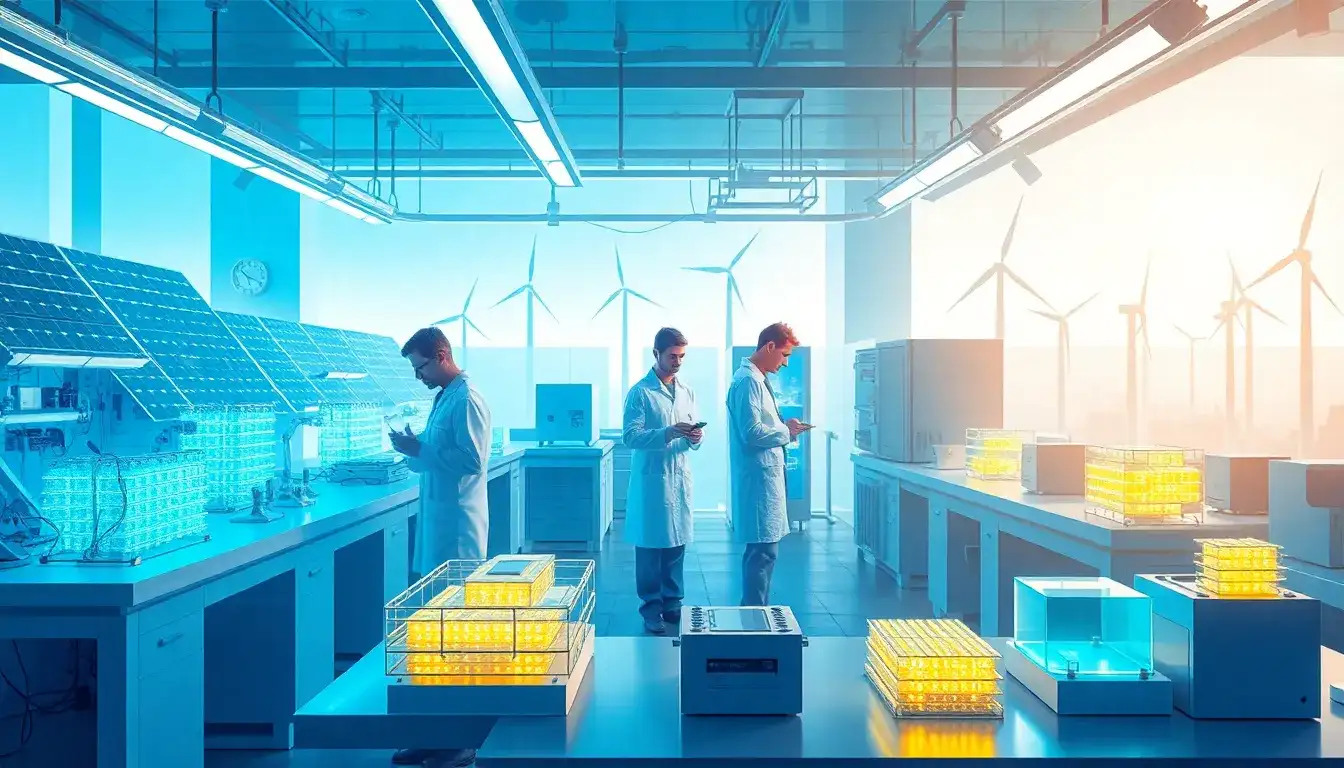
The most innovative energy storage solutions currently being developed in 2025 focus on addressing limitations of traditional batteries, improving efficiency, and enabling rapid response for grid stability. Key technologies and trends include:
Advanced Battery Technologies
- Enhanced Lithium-Ion Variants: While lithium-ion remains dominant, innovations like Li-Polymer, Li-Air, and Li-Sulfur batteries are emerging to improve energy density, safety, and lifespan. Recycling technologies are also advancing to improve lithium cathode purity and promote sustainability.
- Lithium Alternatives: To reduce reliance on lithium and its environmental impact, alternative chemistries are being developed:
- Sodium-Sulfur batteries offer long lifespans and cost-efficiency.
- Zinc-Air batteries provide high stability and environmentally friendly operation.
- Nickel-Zinc and Magnesium-ion batteries focus on sustainability and efficiency. Companies like Altris (Sweden) are producing sodium-ion battery cathodes to reduce impact.
Rapid Discharge and Grid Stability Solutions
- Supercapacitors: These store energy electrostatically and can charge and discharge almost instantly, making them ideal for stabilizing power grids and supplementing battery systems, especially in electric vehicles. Advances in energy density are improving their viability as battery complements.
- Short-Term Response Energy Storage (STRES): Technologies such as supercapacitors and flywheels provide rapid energy discharge to balance grid fluctuations caused by renewable energy sources.
Emerging Large-Scale and Specialized Storage Technologies
- Compressed Air Energy Storage (CAES): This system compresses air and stores it in underground caverns or tanks, releasing it to generate power when needed. Modern CAES is becoming more efficient through isothermal compression methods that reduce energy losses.
- Superconducting Magnetic Energy Storage (SMES): SMES stores energy in magnetic fields with near-instant response and very high efficiency. Though historically costly, advances in superconducting materials are making SMES more feasible for grid stabilization, industrial applications, and critical backup power.
Industry and Market Trends
- Large-scale battery storage systems integrated with wind and solar projects are being pushed by companies like NextEra Energy Resources, leading innovation in utility-scale storage.
- Emerging markets such as Saudi Arabia are expanding solar and wind energy infrastructure, which drives demand for advanced storage solutions.
- Startups such as Antora, Budderfly, and Infinitum are recognized for pioneering innovative approaches in energy storage technologies in 2025.
In summary, the forefront of energy storage innovation in 2025 involves a diversified approach: advanced and alternative battery chemistries to overcome lithium-ion limitations, rapid-response devices like supercapacitors for grid stability, and large-scale solutions like CAES and SMES to store and dispatch energy efficiently. These innovations are crucial to support the growing penetration of renewable energy and ensure stable, sustainable power systems worldwide.
Original article by NenPower, If reposted, please credit the source: https://nenpower.com/blog/what-are-the-most-innovative-energy-storage-solutions-currently-being-developed/

