

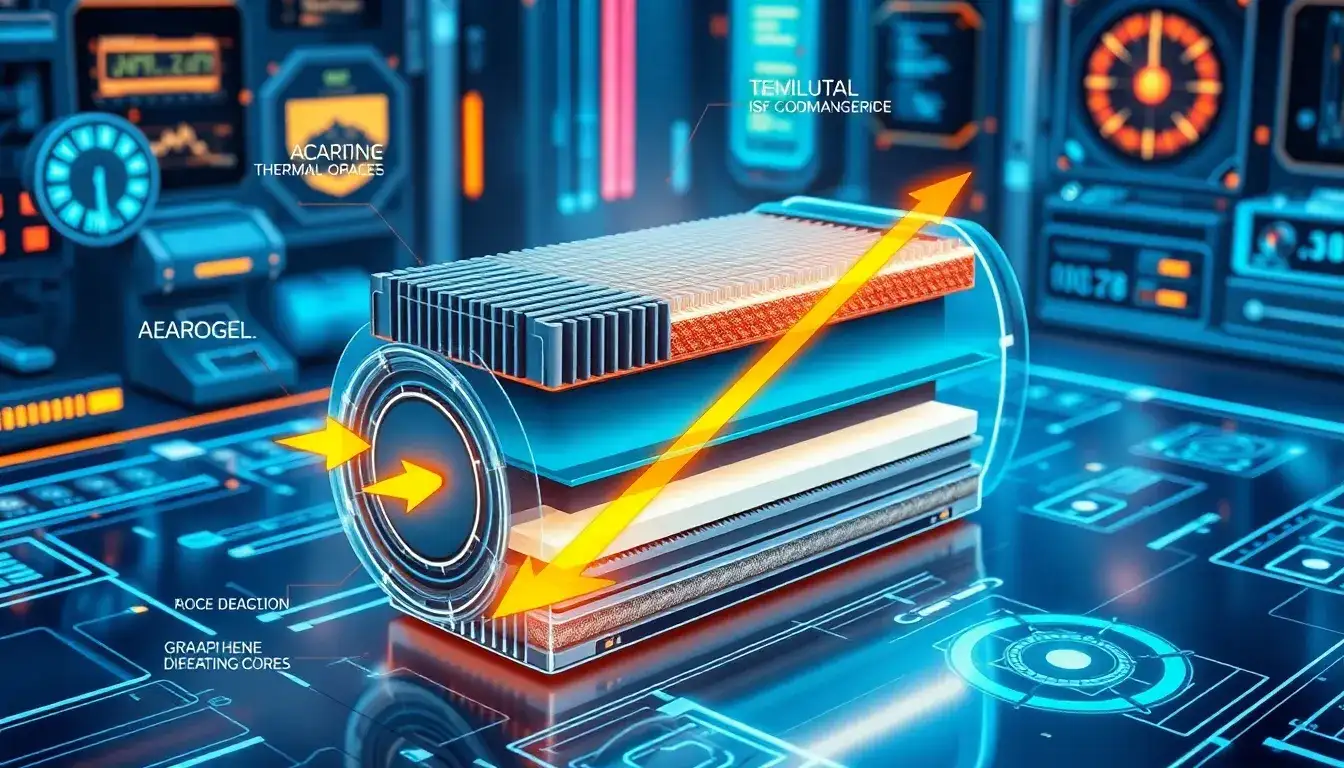
Effective thermal barriers for lithium-ion batteries play a crucial role in preventing thermal runaway by isolating cells, managing heat transfer, and enhancing safety. Some of the most effective materials and technologies include:
Effective Thermal Barrier Materials and Technologies
- Go-Therm Systems:
- Go-Therm 150: A glass one-sided silicone laminate used to line battery packs and act as a barrier between prismatic cells.
- Go-Therm 315: A fiberglass dual-backed insulation providing thermal runaway barriers within modules or between them.
- Pyrel-Therm Materials:
- Pyrel-Therm EIG 1000 and ES 1100: Exhibit excellent thermal resistance, low shrinkage, and compression resistance.
- Pyrel-Therm RMC Mica Heat Shield: Offers low heat transfer and acts as an effective dielectric and gas barrier.
- Endothermic Intumescent Thermal Barriers:
Used in electric vehicle batteries, these barriers contain materials that expand as temperatures rise, absorbing heat and preventing further transfer. - Aerogel-based Thermal Barriers (e.g., ENTERA® Aerogel):
Offers superior insulation performance with extremely low thermal conductivity, making it ideal for cell-to-cell thermal management in electric vehicles. - LithiumPrevent:
A highly effective thermal barrier for isolating cells or modules, providing passive fire protection.
Key Features of Effective Thermal Barriers:
- High Thermal Resistance: Materials should be able to withstand high temperatures without degradation.
- Low Thermal Conductivity: Reduces heat transfer between cells.
- Non-Flammability: Critical to prevent the spread of fire in case of thermal runaway.
- Ability to Absorb or Dissipate Heat: Helps in managing temperature increases.
These materials and technologies are crucial for ensuring the safety and efficiency of lithium-ion batteries in various applications.
Original article by NenPower, If reposted, please credit the source: https://nenpower.com/blog/what-are-the-most-effective-thermal-barriers-for-lithium-ion-batteries/

