

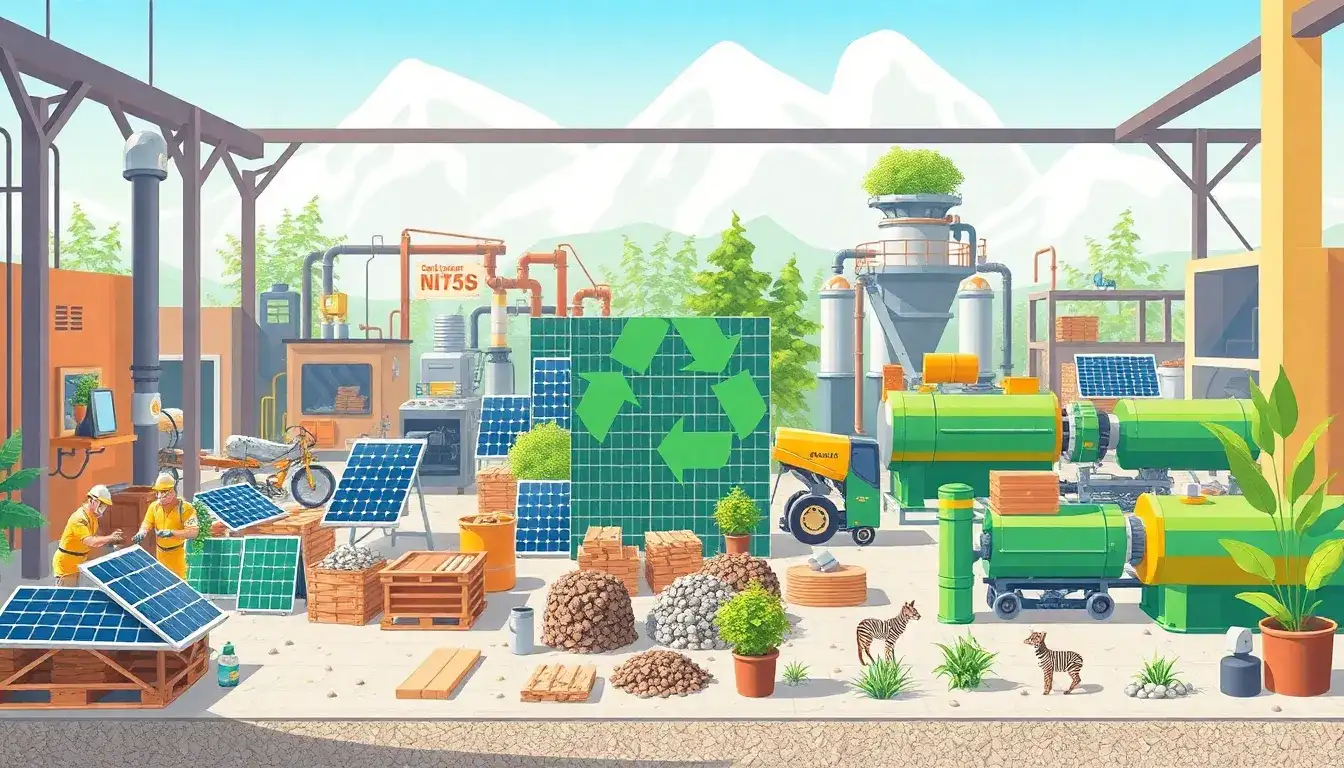
Effective Recycling Strategies for Decommissioned Solar Panels
1. Initial Disassembly
– The process begins with removing the aluminum frame and the junction box from the solar panel. These parts are relatively easy to recycle and are separated to streamline further processing.
2. Mechanical Separation
– After disassembly, the glass is separated from the solar laminate through mechanical or automated processes. For crystalline silicon panels, advanced automated tools cleanly remove glass without damaging solar cells.
– Shredding is often used to break down the remaining laminate, which contains solar cells, encapsulant layers, and backsheet materials, to facilitate material separation.
3. Thermal Delamination
– Thermal processing involves subjecting panels to pyrolysis at temperatures between 300°C and 650°C to decompose adhesives and release glass and silicon cells. This is one of the most cost-effective and common methods but requires careful management of energy consumption and fume emissions.
– The evaporated encapsulating plastics can be reused as a heat source within the process, enhancing energy efficiency.
4. Chemical Delamination
– Chemical recycling uses organic solvents and inorganic acids or bases to dissolve adhesives without damaging glass or solar cells. Though this method preserves material integrity, it has drawbacks such as high costs, long processing times (up to 10 days), and handling of chemical waste.
5. Material Recovery and Refinement
– Valuable metals such as silver, copper, and silicon are recovered through multi-step proprietary recycling processes after mechanical and thermal treatments.
– Silicon wafers can be etched using acids and remelted to manufacture new modules, achieving up to 85% recycling of silicon material.
– Nearly 95% of glass and all external metal parts can be reused for new solar panel frames or other manufacturing uses, significantly reducing landfill waste.
6. Specialized Handling for Thin-Film Panels
– Thin-film panels require more intensive processing involving shredding and hammer milling to break down lamination, allowing recovery of internal materials distinct from crystalline silicon panels.
Summary Table of Key Recycling Methods
| Strategy | Description | Pros | Cons |
|---|---|---|---|
| Mechanical Separation | Disassemble, remove aluminum, separate glass | High recovery of glass and metals | Requires specialized equipment |
| Thermal Delamination | Pyrolysis at 300-650°C to decompose adhesives | Cost-effective, reuses heat | Energy-intensive, toxic fumes |
| Chemical Delamination | Solvent-based removal of adhesives | Preserves glass and cells | Expensive, slow, chemical waste |
| Material Refinement | Acid etching, melting to recover silicon and metals | High material recovery rates | Complex processing |
| Thin-Film Shredding | Shred and hammermill to break lamination | Enables material separation | More drastic than silicon methods |
Additional Considerations
- Recycling processes aim to recover up to 95% of the value of retired panels, aiding in circular economy efforts and supporting domestic solar manufacturing industries.
- Proper collection and transportation infrastructure, combined with regulatory frameworks like those promoted by the EPA, are also vital to facilitate effective recycling and prevent landfill accumulation of solar panel waste.
In conclusion, the most effective strategies for managing decommissioned solar panels combine mechanical disassembly, thermal and chemical delamination, and sophisticated material recovery techniques to maximize reusability, minimize environmental harm, and support sustainable solar industry growth. These integrated methods can recycle the majority of panel components, including glass, metals, and silicon, thus transforming solar waste into valuable resources.
Original article by NenPower, If reposted, please credit the source: https://nenpower.com/blog/what-are-the-most-effective-strategies-for-recycling-and-managing-waste-from-decommissioned-solar-panels/

