

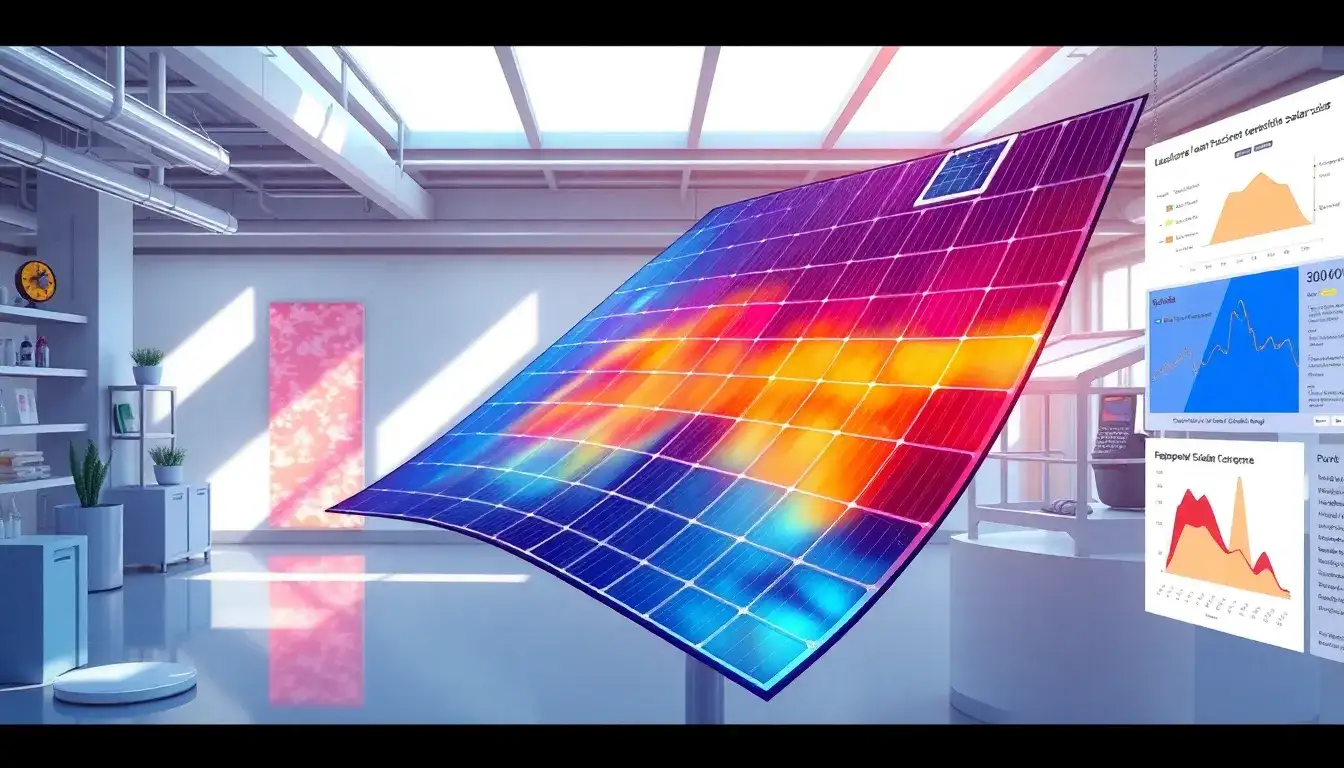
Causes of Hot Spots in Flexible Solar Panels
Hot spots occur due to localized overheating, often caused by:
- Partial shading leading to reverse bias on shaded cells
- Faulty or absent bypass diodes
- Cell mismatch or defective cells
- Poor airflow and heat accumulation
- Thermal expansion and contraction causing microcracks.
Solutions for Reducing Hot Spots
1. Use of High-Quality Materials and Panel Construction
- Flexible panels made with heat-resistant materials like advanced polymers or graphene-enhanced layers improve thermal conductivity, reducing temperature by 10-15% and extending lifespan.
- Panels manufactured with ETFE instead of PET coatings resist UV degradation and delamination, which contribute to hot spot formation in flexible panels.
- Ensuring high-performance solar cells with lower temperature sensitivity helps maintain efficiency and reduces hotspot severity.
2. Proper Installation Techniques
- Install panels to maximize uniform sunlight exposure, minimizing shading and hot spot triggers.
- Orientation and tilt adjustments prevent uneven light distribution and localized overheating.
- Avoid mounting flexible panels directly on heat-retentive surfaces (such as metal roofs); instead, allow air circulation beneath and around them to enhance cooling.
- Maintain adequate spacing and ventilation to prevent heat buildup, as restricted airflow exacerbates hot spots.
3. Incorporation of Bypass Diodes and Electrical Optimizers
- Built-in bypass diodes are crucial as they allow current to bypass shaded/damaged cells, preventing thermal accumulation and damage.
- Power optimizers or maximum power point tracking (MPPT) technology reduce stress on shaded areas, helping avoid hot spots and increasing system stability.
4. Active and Passive Cooling Solutions
- Use reflective surfaces or coatings around or below the panels, such as white gravel or reflective paint, to lower ambient temperature by up to 5°C, improving panel efficiency by ~3%.
- Enhance panel design for better air circulation using heat pipes or elevated mounts to facilitate faster heat dissipation and 3-4% efficiency gains.
- Integrate active cooling systems like embedded cooling channels circulating coolant (water or glycol) can reduce panel temperatures by up to 15-20°C and increase power output by 10% or more, though at higher cost.
- Liquid cooling methods including phase-change materials or direct liquid immersion cooling absorb and dissipate heat efficiently; immersion cooling can lower temperatures by up to 25°C.
5. Regular Maintenance and Monitoring
- Keep panels clean from dirt, debris, and foliage to prevent shading and hotspots.
- Perform periodic infrared inspections to detect hot spots early and take corrective actions.
- Use string monitoring systems in larger installations to quickly identify underperforming sections.
Summary Table of Hot Spot Reduction Solutions
| Solution Category | Key Features and Benefits | Notes on Effectiveness |
|---|---|---|
| High-Quality Materials | Heat-resistant polymers, graphene layers, ETFE coatings | 10-15% cooler panels, UV resistance |
| Proper Installation | Optimal orientation, ventilation, spacing, avoid heat-retentive surfaces | Prevent shading, improve airflow |
| Electrical Components | Built-in bypass diodes, power optimizers, MPPT technology | Prevent reverse bias heating in shaded cells |
| Cooling Technologies | Reflective surfaces, heat pipes, embedded cooling channels, liquid cooling | Reduce temps by 5-25°C, increase efficiency 3-15% |
| Maintenance & Monitoring | Regular cleaning, infrared inspection, string monitoring | Early detection, prevention of hotspot damage |
Implementing these combined strategies results in significantly reduced hot spots, enhanced efficiency, and extended lifespan for flexible solar panels, particularly in hot and challenging environments. High-quality materials and thoughtful design paired with proper installation and cooling are the cornerstone approaches to mitigating hot spot issues effectively.
Original article by NenPower, If reposted, please credit the source: https://nenpower.com/blog/what-are-the-most-effective-solutions-for-reducing-hot-spots-in-flexible-solar-panels/

