

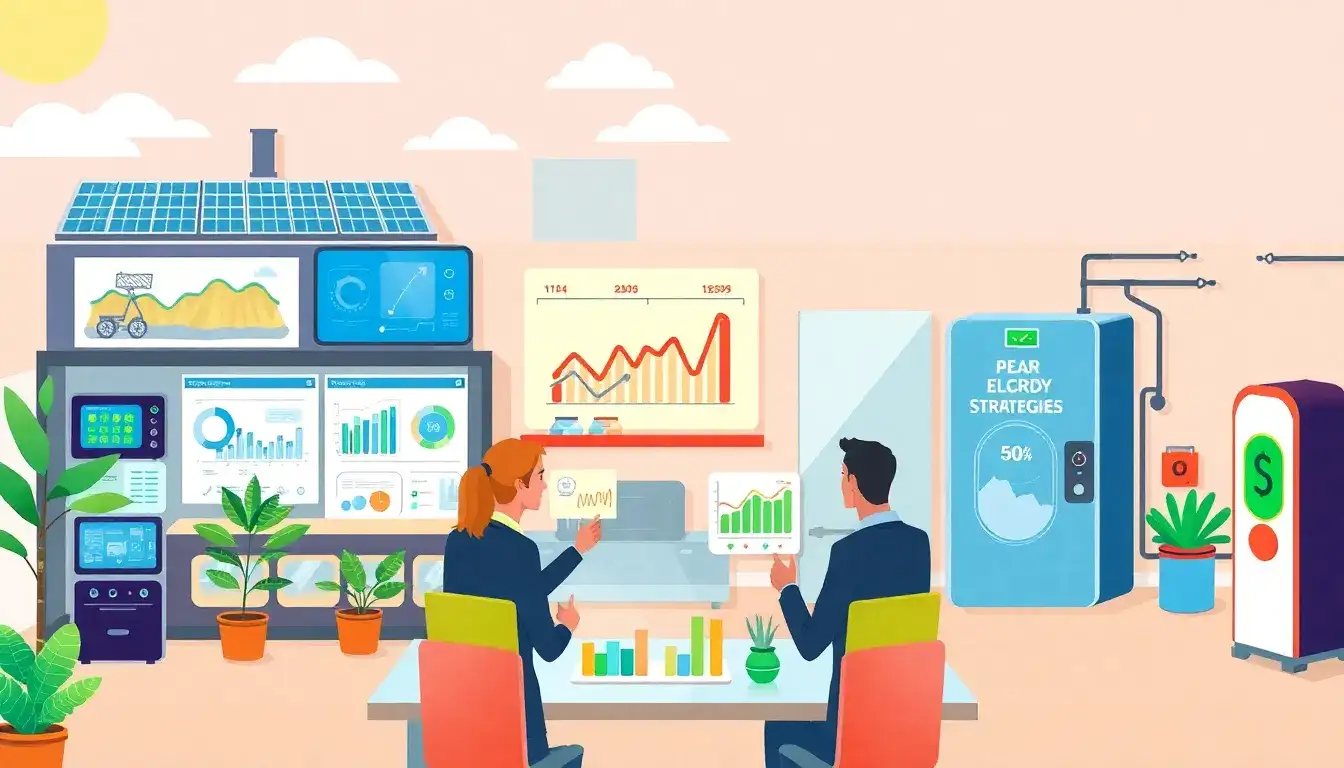
Most Effective Peak Shaving Strategies for Small Businesses
Peak shaving is a crucial strategy for small businesses to reduce electricity expenses by lowering peak demand. Here are some of the most effective strategies:
1. Utilizing On-Site Renewable Energy
- Solar Power: Install solar panels to generate electricity during the day, which can be stored for use during peak hours.
- Wind Turbines: If feasible, wind turbines can provide additional on-site power.
2. Battery Energy Storage Systems (BESS)
- Implement a BESS to store excess energy generated from renewables or off-peak periods for use during peak times. This is a flexible strategy that can quickly adjust to changes in demand.
3. Smart Energy Management Systems
- Use IoT technology to monitor energy consumption in real-time, enabling automated adjustments in operations based on current demand and pricing.
4. Load Optimization
- Identify non-essential loads and temporarily curtail them during peak hours to reduce strain on the grid.
5. Energy Efficiency Measures
- Implement energy-efficient lighting, HVAC systems, and machinery to naturally reduce energy consumption.
6. Electric Vehicle Charging Management
- For small businesses using electric vehicles, smart charging systems can optimize EV charging to avoid peak grid demand.
Implementation Benefits
- Cost Savings: Reducing peak demand charges leads to significant cost savings on utility bills.
- Environmental Impact: Peak shaving can reduce greenhouse gas emissions by lowering overall energy consumption.
- Competitive Advantage: Demonstrating energy efficiency can attract environmentally conscious customers and investors.
Original article by NenPower, If reposted, please credit the source: https://nenpower.com/blog/what-are-the-most-effective-peak-shaving-strategies-for-small-businesses/

