

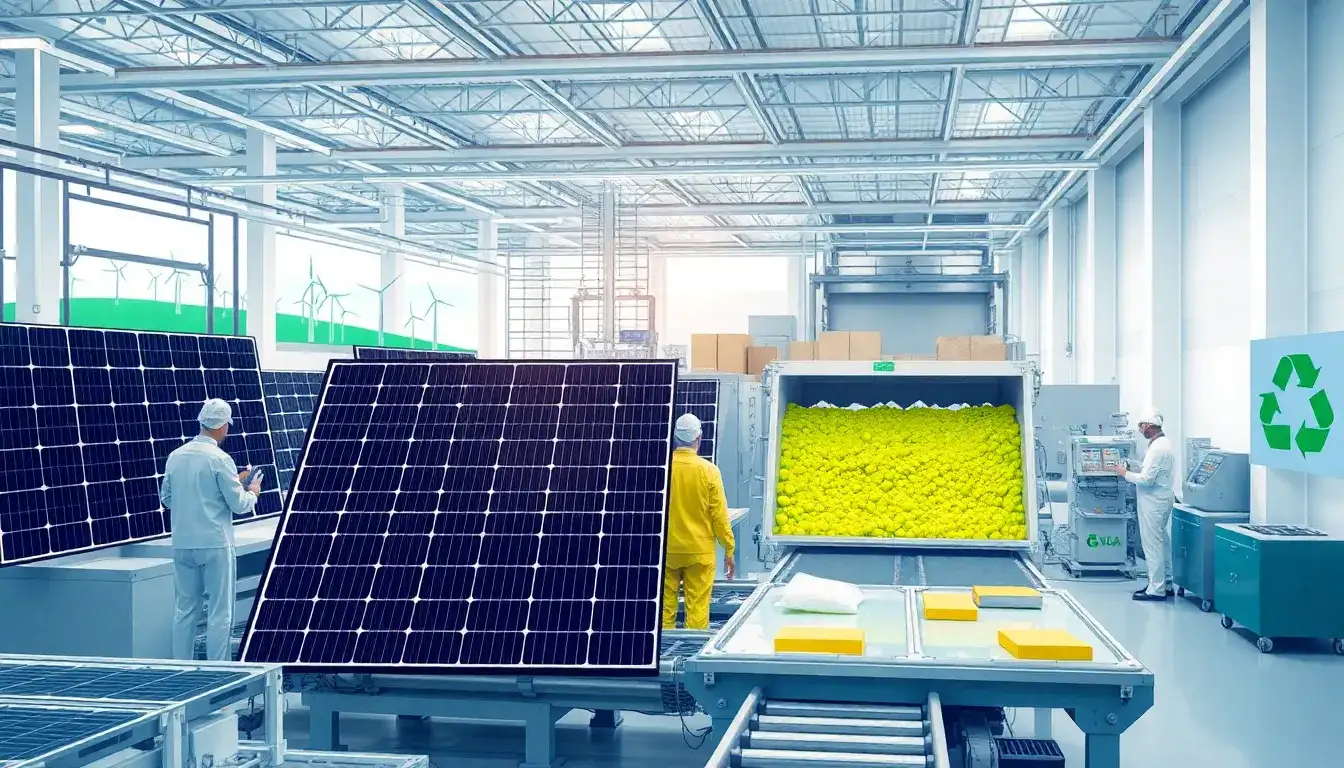
The most effective methods currently used to recycle the polymer layers in solar panels, particularly the encapsulant materials like ethylene vinyl acetate (EVA) and polymer substrates found in organic solar panels, involve a combination of thermal, chemical, and physical separation techniques tailored to the panel type.
Recycling Methods for Polymer Layers in Solar Panels
Silicon-Based Solar Panels
- Thermal Processing: The polymer encapsulant (typically EVA) is removed by heating the solar panels at around 500°C. This process causes the polymer to evaporate, leaving behind the silicon cells and other components. Importantly, the vaporized polymer is not wasted; it is reused as a heat source within the facility, enhancing energy efficiency.
- Physical Separation: After thermal treatment, the solid materials including polymers residues are physically separated and reused or further processed.
- Robotic and AI-Assisted Disassembly: Cutting-edge recycling plants employ robotic disassembly and AI vision systems to efficiently dismantle solar panels, aiding precise separation of polymer layers and other materials for optimized recovery.
Thin-Film Solar Panels
- Shredding and Milling: Thin-film panels are shredded and milled into small particles (~4-5mm), breaking the lamination and allowing separation of polymer layers from other elements.
- Separation and Purification: The shredded mixture is separated into solid and liquid fractions. Semiconductor materials are chemically extracted and purified from the liquid phase, and solid components (including polymer residues) are cleaned and separated from glass and metals. This process can achieve about 90–95% recycling efficiency for major materials.
- Challenges: The complex chemical composition and fragile, thin photoactive layers in thin-film panels make polymer recycling more challenging and less economically established than silicon panels.
Organic Solar Panels (Polymer-Based)
- Aqueous Dissolution: Organic solar panels often use polymeric substrates made from cellulose nanocrystals (CNC) or nanofibers (CNF). These polymers can be easily recycled at room temperature by immersing them in water, where the substrate dissolves, allowing the polymer membrane and other components to be separated cleanly.
- This method is notably simple and energy-efficient compared to thermal or chemical treatments required for other panel types.
Summary Table of Polymer Layer Recycling Methods
| Panel Type | Polymer Recycling Method | Key Features | Recycling Efficiency / Notes |
|---|---|---|---|
| Silicon-Based | Thermal evaporation at ~500°C | Polymer evaporates; vapor reused as heat | High; encapsulants removed, silicon reused |
| Thin-Film | Shredding, separation, chemical processing | Lamination broken mechanically; polymer separated chemically | Moderate to high (90-95% for solids/liquids) |
| Organic (Polymer) | Water dissolution of polymer substrate | Polymers dissolve in water at room temperature | Very efficient, mild conditions |
Emerging Technologies and Trends
- Development of automated, low-waste recycling lines that include specialized units for polymer recovery such as EVA and other encapsulants is underway, improving throughput and reducing residual waste.
- Use of robotics and AI enhances precise disassembly and sorting, which is critical for effectively separating polymer films from other components without damage.
- New chemical and plasma etching methods are being researched to improve recovery rates of silicon and possibly polymer residues, lowering cost and environmental impact.
In conclusion, the most effective current methods to recycle polymer layers in solar panels depend on the panel type but typically involve thermal evaporation for silicon-based panels, mechanical shredding and chemical separation for thin-film panels, and aqueous dissolution for organic polymer-based panels. These approaches are increasingly complemented by automated and AI-driven technologies to maximize material recovery and sustainability.
Original article by NenPower, If reposted, please credit the source: https://nenpower.com/blog/what-are-the-most-effective-methods-currently-used-to-recycle-the-polymer-layers-in-solar-panels/

