

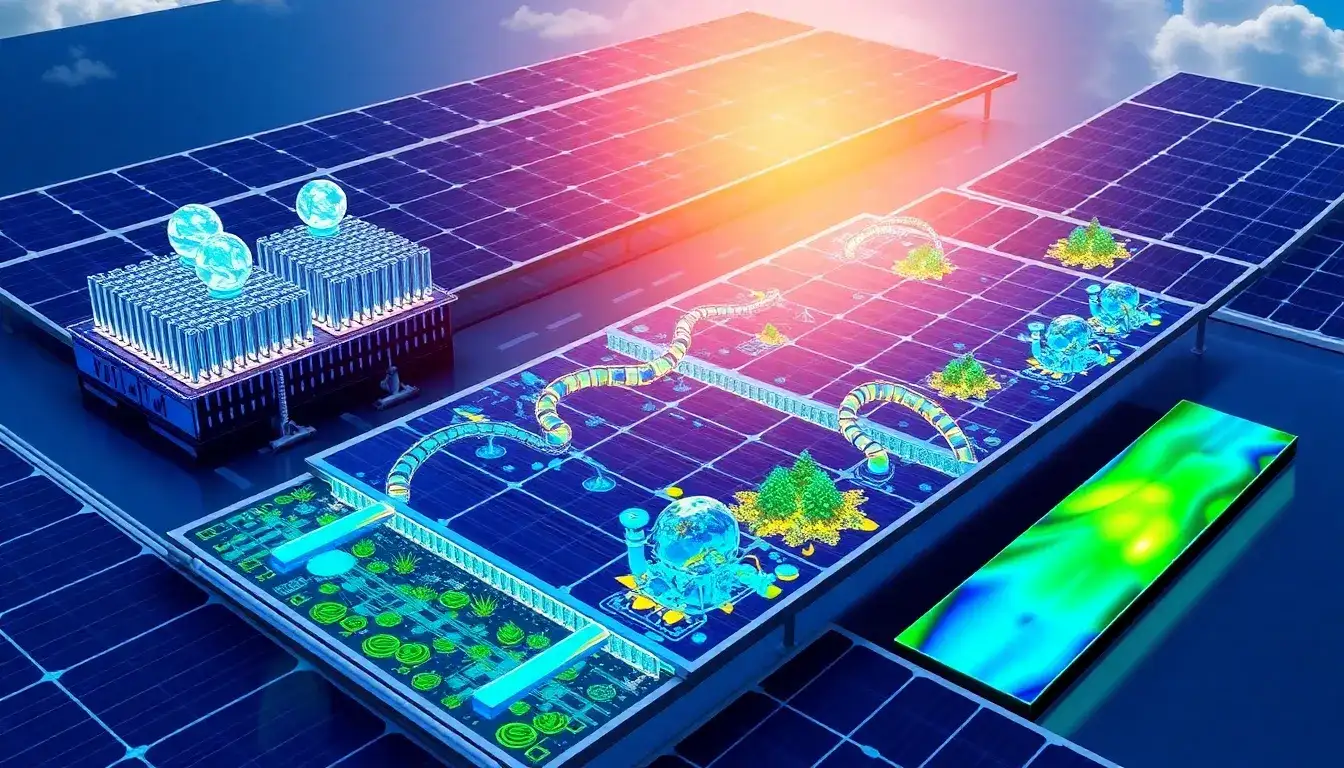
Key Cooling Technologies for Solar Panels
1. Water Cooling
- Water cooling is one of the most effective methods, reducing panel temperatures by 10-20°C, thereby increasing power output by up to 15-20% during hot periods.
- Systems typically involve spraying water over the panels or using tubes with circulating water behind the panels to absorb heat and transfer it away.
- Water cooling can also clean the panel surface, reducing dust and debris that lower efficiency.
- However, it requires water consumption and maintenance, including using demineralized water to prevent scaling in tubes.
- Integrated water cooling systems that recycle water or combine with air cooling have shown efficiency gains up to 20% in solar farms.
2. Air Cooling
- Passive air cooling uses natural airflow around elevated or tilted panels to dissipate heat and can reduce temperatures by 2-4°C, improving efficiency by about 5-10%.
- Active air cooling employs fans or blowers to force air over or under the panels, enhancing heat transfer. This method is economical, easy to install, and low maintenance.
- Active systems can reduce panel temperatures by approximately 10-13°C, yielding efficiency improvements of up to 20%.
- Air cooling is often used with fins and heat sinks to increase the heat transfer surface area.
3. Reflective Coatings and Surface Treatments
- Reflective coatings applied to panel surfaces reduce heat absorption by reflecting a portion of incoming sunlight.
- These coatings can reduce panel temperatures by around 5°C, resulting in an 8-10% increase in energy production during peak sun hours.
- This method is passive, low cost, and requires minimal maintenance.
4. Phase Change Materials (PCMs)
- PCMs absorb heat when changing from solid to liquid, storing thermal energy and preventing panel temperatures from rising excessively.
- They can reduce panel temperatures by up to 10-22°C, enhancing efficiency by about 3-9% depending on the material and design.
- PCMs can be integrated behind panels or in movable shutters but require design innovations to handle heat dissipation during cooler periods.
5. Elevated Mounting and Passive Ventilation Designs
- Elevating panels a few inches above the mounting surface allows natural convection cooling underneath, reducing temperatures by 2-4°C.
- Tilted and slotted mounts increase airflow around panels, improving passive cooling by 2-3°C, especially effective in windy or coastal regions, with around 10% increased output on windy days.
- This method is simple, cost-effective, and widely used in solar farms.
6. Combined Photovoltaic-Thermal (PV/T) Systems
- PV/T systems integrate solar thermal collectors with PV panels to actively remove heat while generating heat energy.
- They combine natural and forced circulation cooling using air or liquid and can achieve conversion efficiencies from about 40% to 80%.
- While offering high performance, PV/T systems are more complex and costly and require further research for widespread electrical efficiency improvements.
Comparative Summary
| Cooling Technology | Temperature Reduction (°C) | Efficiency Gain (%) | Cost & Maintenance | Typical Application |
|---|---|---|---|---|
| Water Cooling (spray or tubes) | 10-20 | 15-20 | Higher cost, water use, maintenance | Large solar farms, hot arid climates |
| Active Air Cooling (fans) | 10-13 | Up to 20 | Moderate cost, low maintenance | Residential and commercial panels |
| Passive Air Cooling | 2-4 | ~5-10 | Low cost, minimal maintenance | General solar installations |
| Reflective Coatings | ~5 | ~8-10 | Low cost, simple application | Any solar panel |
| Phase Change Materials | 10-22 | 3-9 | Moderate cost, design complexity | Experimental/test systems |
| PV/T Systems | Variable up to ~80% system efficiency | High (thermal + electrical) | High cost, complex maintenance | Commercial/utility scale |
Conclusion
For practical, scalable deployment, water cooling and air cooling (active and passive) are the most effective and widely used technologies in solar panel cooling, with water cooling delivering the highest temperature reductions and output increases but at higher operational cost and complexity. Reflective coatings and passive ventilation designs provide cost-effective supplemental cooling. Phase change materials offer promise but need further development for commercial viability. PV/T systems provide a hybrid solution for combined heat and power but are more complex and costly.
Choosing the right cooling technology depends on local climate, cost considerations, water availability, and scale of the solar installation.
References
- Tongwei Co., Ltd. blog: Overview of cooling methods including water spraying, reflective coatings, phase change materials, and mounting techniques.
- Tycorun Batteries: Detailed comparison of natural and forced circulation cooling technologies and PV/T hybrid systems.
- Scientiae Radices (2023): Review of air cooling, PCM use, and active cooling benefits with scientific data.
- Power Technology news: Experimental water cooling systems increasing voltage and power output, with recycling benefits.
- ACDC FAN explanation: Air and liquid cooling system details and benefits of fan cooling for solar panels.
Original article by NenPower, If reposted, please credit the source: https://nenpower.com/blog/what-are-the-most-effective-cooling-technologies-for-solar-panels/

