

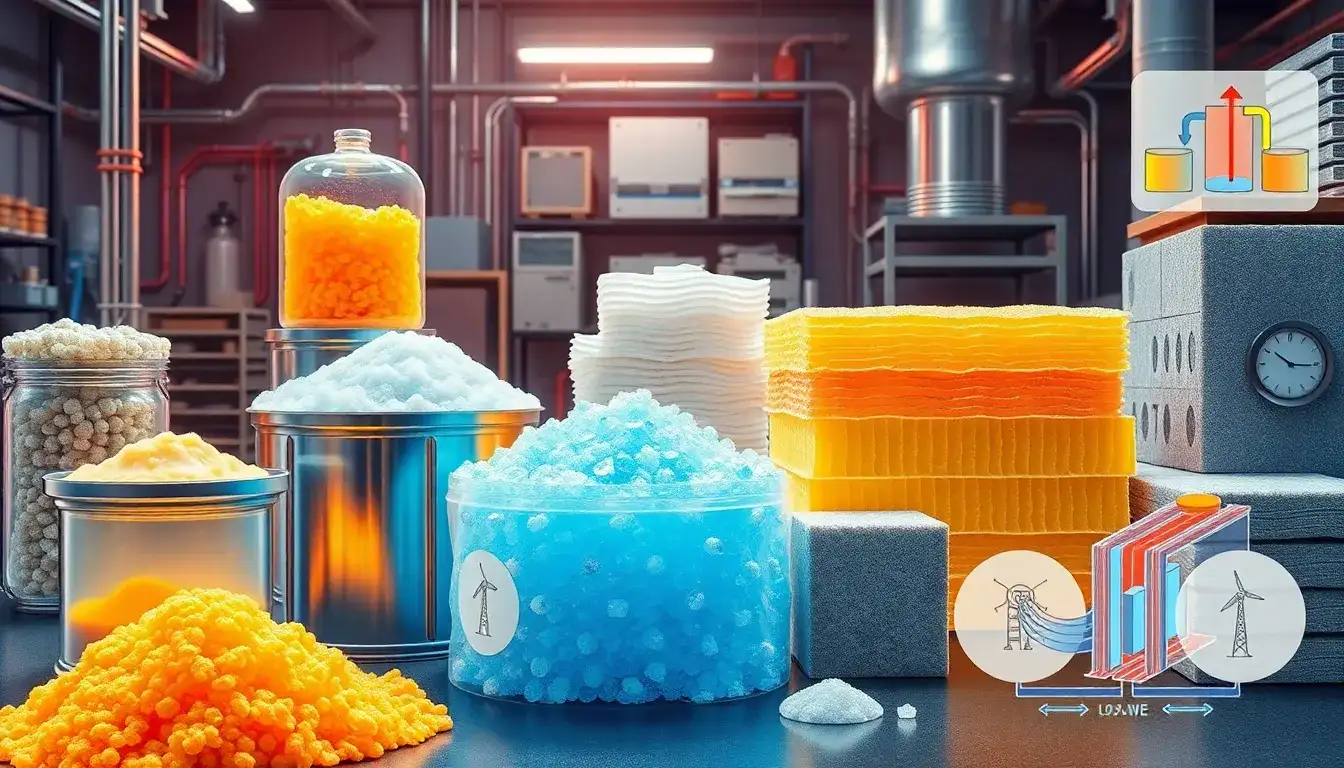
Currently, several materials are considered cost-effective for thermal energy storage (TES) systems:
- Crushed Rock: It is highly cost-effective and widely available, making it suitable for storing heat up to 550°C. Its low cost and thermal properties make it ideal for high-temperature TES systems.
- Molten Salt and Similar Salts: While molten salt systems are effective, they can be expensive due to complex infrastructure. However, they are widely used in solar thermal power plants for storing heat. Newer developments aim to make these systems more economical.
- Silica Sand: NREL has developed a technology using silica sand as a thermal storage medium, which is very inexpensive and has minimal ecological impact. Sand is heated to high temperatures and stored in insulated silos, offering scalable and economical long-duration energy storage.
- Phase Change Materials (PCMs): Materials like salt hydrates and waxes are being researched for their ability to melt and freeze around room temperature, making them suitable for building heating and cooling. Though waxes are more expensive, efforts focus on developing low-cost alternatives like salt hydrates.
- Supercritical Fluids: UCLA and JPL are exploring supercritical fluid-based systems, which promise to be less expensive than molten-salt systems, potentially offering a more cost-effective solar thermal energy storage solution.
These materials help achieve cost-effective thermal energy storage by leveraging abundant resources and reducing infrastructure costs.
Original article by NenPower, If reposted, please credit the source: https://nenpower.com/blog/what-are-the-most-cost-effective-materials-currently-used-in-thermal-energy-storage-systems/

