

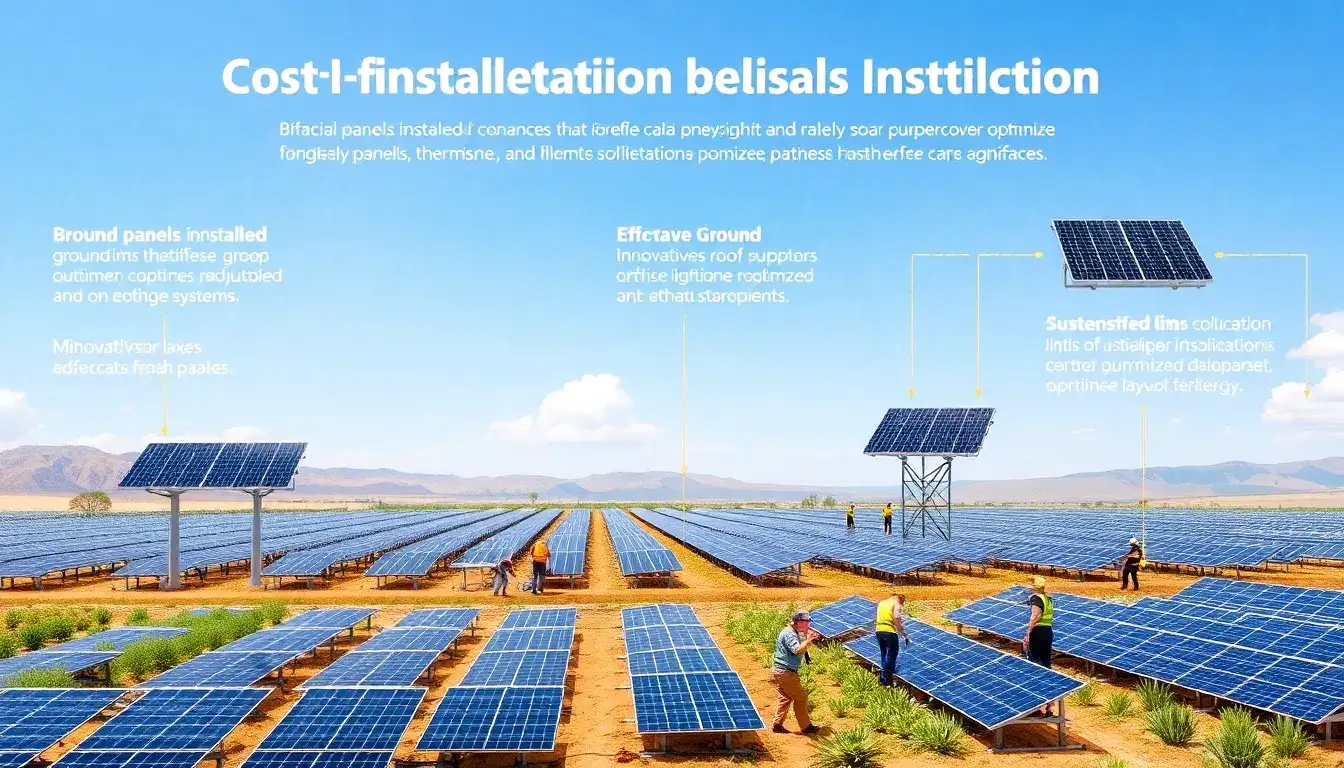
The most cost-effective installation methods for bifacial solar panels focus on optimizing energy yield while minimizing installation complexity and upfront costs. Key practices include:
1. Optimize Mounting Height and Tilt
- Elevate panels at least around 1 meter (3.3 feet) above ground or roof surfaces to maximize light reflection on the rear side and reduce shading at panel edges.
- Use a tilt angle typically between 20° and 30°, adjusted for geographic location, to optimize sunlight capture and reflection efficiency.
2. Use Cost-Efficient Mounting Systems
- Choose mounting structures specially designed for bifacial panels that allow light passage or reflection underneath, such as elevated ground mounts or sturdy rooftop racks with sufficient clearance.
- Implement light-colored or reflective mounting components (rails, brackets) to increase albedo and enhance backside illumination without adding expensive materials.
- Avoid complex tracking systems unless justified by significant gains, as they increase costs substantially.
3. Site Selection and Ground Surface Preparation
- Install bifacial panels in locations with highly reflective surfaces (high albedo), such as white gravel, light-colored roofs, sand, or snow-covered ground to improve rear-side energy generation without costly additional equipment.
- Enhance reflectivity through economical means, such as painting nearby surfaces white or using reflective films around the installation.
- Avoid low-reflectivity surfaces or shaded areas, which reduce bifacial panel advantages and thus cost-effectiveness.
4. Maintain Proper Panel Spacing
- Space panel rows adequately (around 2.5 meters or more on the ground) to avoid shading between panels and allow sunlight to reach the ground and reflect back.
- Leave small gaps (3-5 inches) between panels for snow shedding and air circulation, reducing soiling and cooling panels naturally, prolonging efficiency with low maintenance costs.
5. Simplify Electrical and Structural Installations
- Use manufacturer-recommended clamps and brackets designed for bifacial panels to reduce installation time and ensure secure mounting without expensive custom fabrication.
- Plan cable management carefully to minimize shading on the back of panels by routing cables along sides and using light-colored ties or conduits, avoiding efficiency losses.
Cost Context
- Bifacial panel installations generally have higher upfront costs than traditional panels, averaging between $6,000 and $12,000 for 10 panels, depending on mounting style and location.
- Ground-mounted bifacial setups can be costlier due to land preparation and mounting structures, while roof installations or attached canopy-style installations typically reduce land and structural costs, albeit with height constraints.
- Balancing the additional cost with increased energy production (up to 30% more than monofacial panels) is essential to ensure good return on investment.
Summary Table of Cost-Effective Installation Methods
| Installation Aspect | Recommended Approach | Cost-Effectiveness Rationale |
|---|---|---|
| Mounting height and tilt | Elevate ~1m, tilt 20-30° | Maximizes reflected light capture, boosts output without complex tracking |
| Mounting system | Use specialized, reflective, or transparent mounts | Enhances bifacial effect, avoids expensive custom solutions |
| Ground surface | Light-colored gravel, painted surfaces | Improves albedo cheaply, increases energy yield |
| Panel spacing | 2.5m+ row spacing (ground), 3-5 in spacing (panels) | Minimizes shading, allows reflection, reduces maintenance |
| Cable management | Route cables along sides, use light-colored ties | Avoids rear shading, maintains output efficiency |
| Installation complexity | Use manufacturer clamps, avoid tracking if cost-prohibitive | Balances secure fixing and installation time/cost |
By applying these methods—focused on simplifying mounting, enhancing reflective surfaces economically, and optimizing panel placement—bifacial solar panel installations can become more cost-effective while maximizing their higher energy yield potential compared to monofacial systems.
This strategic installation approach is particularly suitable for large-scale ground-mounted projects with suitable reflective terrain or residential setups utilizing patios, carports, or pergolas where roof mounting is impractical.
Original article by NenPower, If reposted, please credit the source: https://nenpower.com/blog/what-are-the-most-cost-effective-installation-methods-for-bifacial-solar-panels/

