

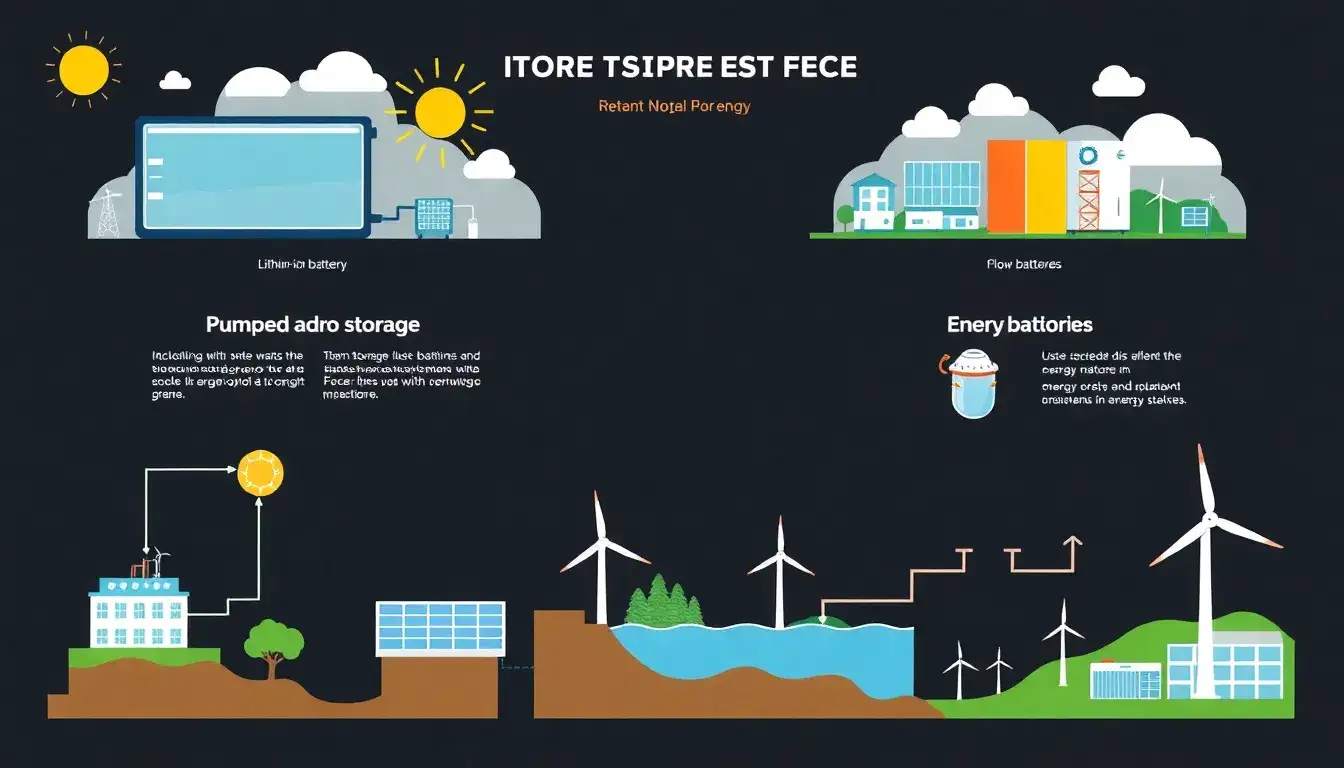
The most common types of energy storage used for integrating renewable energy into power grids include:
1. Pumped Hydro Storage (PHS)
Pumped hydro is the oldest and most widely used form of energy storage for renewable energy integration. It involves pumping water from a lower reservoir to a higher one during off-peak hours and releasing it to generate electricity during peak demand. PHS is particularly effective for long-term energy storage but requires specific geographical conditions.
2. Battery Energy Storage
Battery storage, particularly lithium-ion batteries, is widely used for storing renewable energy. These batteries are scalable and can offer short-term to medium-term storage solutions. They are highly adaptable, from small residential systems to large utility-scale installations.
3. Thermal Energy Storage
Thermal storage involves storing heat or cold in materials like molten salt or chilled water. It is often used with solar thermal systems to store excess heat generated during sunny periods for use when sunlight is insufficient. This method is especially beneficial in regions with high solar irradiation.
4. Mechanical Energy Storage
Mechanical storage includes technologies like flywheels and compressed air energy storage. Flywheels store energy kinetically in spinning rotors, while compressed air systems involve compressing air in underground caverns for later use in driving turbines. These methods provide rapid response capabilities and are suitable for large-scale storage.
These technologies complement each other by providing a range of storage durations and capacities to effectively integrate renewable energy sources into the grid.
Original article by NenPower, If reposted, please credit the source: https://nenpower.com/blog/what-are-the-most-common-types-of-energy-storage-used-for-renewable-energy-integration/

