

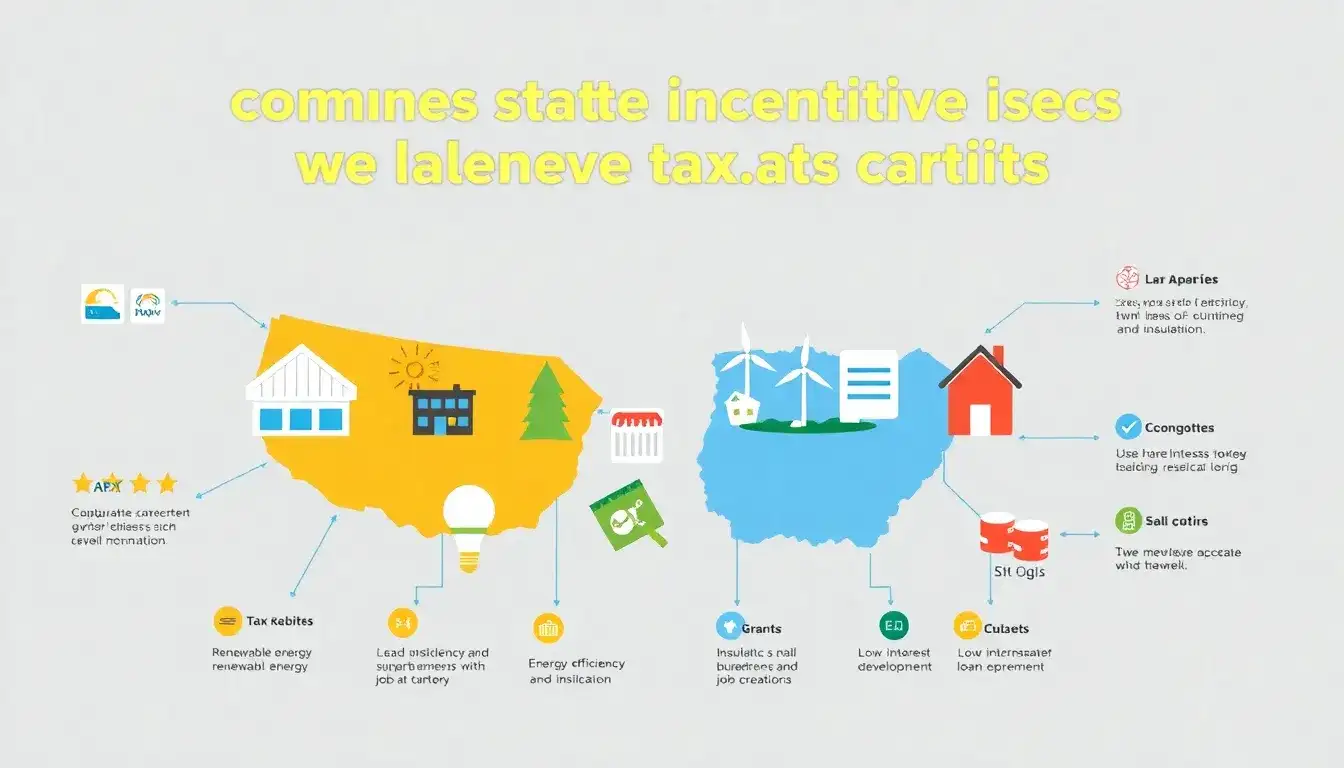
When combining state incentives with federal tax credits, several state-level programs and incentives can be used in conjunction with federal credits like the Energy Efficient Home Improvement Credit and the Residential Clean Energy Credit. Here are some common state incentives that are often used in combination with federal tax credits:
Common State Incentives
- Job Creation and Hiring Credits: While not directly related to energy credits, these can provide additional benefits to businesses investing in clean energy projects, helping offset labor costs.
- Investment Tax Credits for Targeted Industries: Many states offer investment credits for industries like renewable energy, providing a percentage of the investment as a credit against state taxes.
- Sales and Use Tax Exemptions: Some states exempt certain renewable energy equipment from sales and use taxes, reducing the upfront cost and complementing federal credits.
- Employee Retraining Programs: Useful for companies transitioning their workforce into renewable energy sectors, these programs can help train staff in new technologies.
- Favorable Apportionment Approaches: This can impact how businesses calculate their state tax liabilities, potentially benefiting companies with significant investments in clean energy.
Energy-Specific Incentives
- State Renewable Portfolio Standards (RPS): Encourage utilities to generate a certain percentage of electricity from renewable sources.
- State Solar Rebates: Provide direct rebates to homeowners or businesses for installing solar or other renewable energy systems.
- Property Tax Abatements for Renewable Energy Installations: Some states offer property tax reductions for properties with renewable energy systems.
Combining with Federal Credits
When combining these state incentives with federal tax credits like the Residential Clean Energy Credit or the Energy Efficient Home Improvement Credit, taxpayers can significantly lower the cost of transitioning to cleaner energy solutions. For instance, a homeowner can claim a federal tax credit for solar panels and also receive a state rebate or sales tax exemption on the equipment, further reducing the cost.
By strategically leveraging both state and federal incentives, individuals and businesses can maximize their savings and contribute to sustainable goals outlined under legislation like the Inflation Reduction Act of 2022.
Original article by NenPower, If reposted, please credit the source: https://nenpower.com/blog/what-are-the-most-common-state-incentives-used-in-combination-with-federal-tax-credits/

