

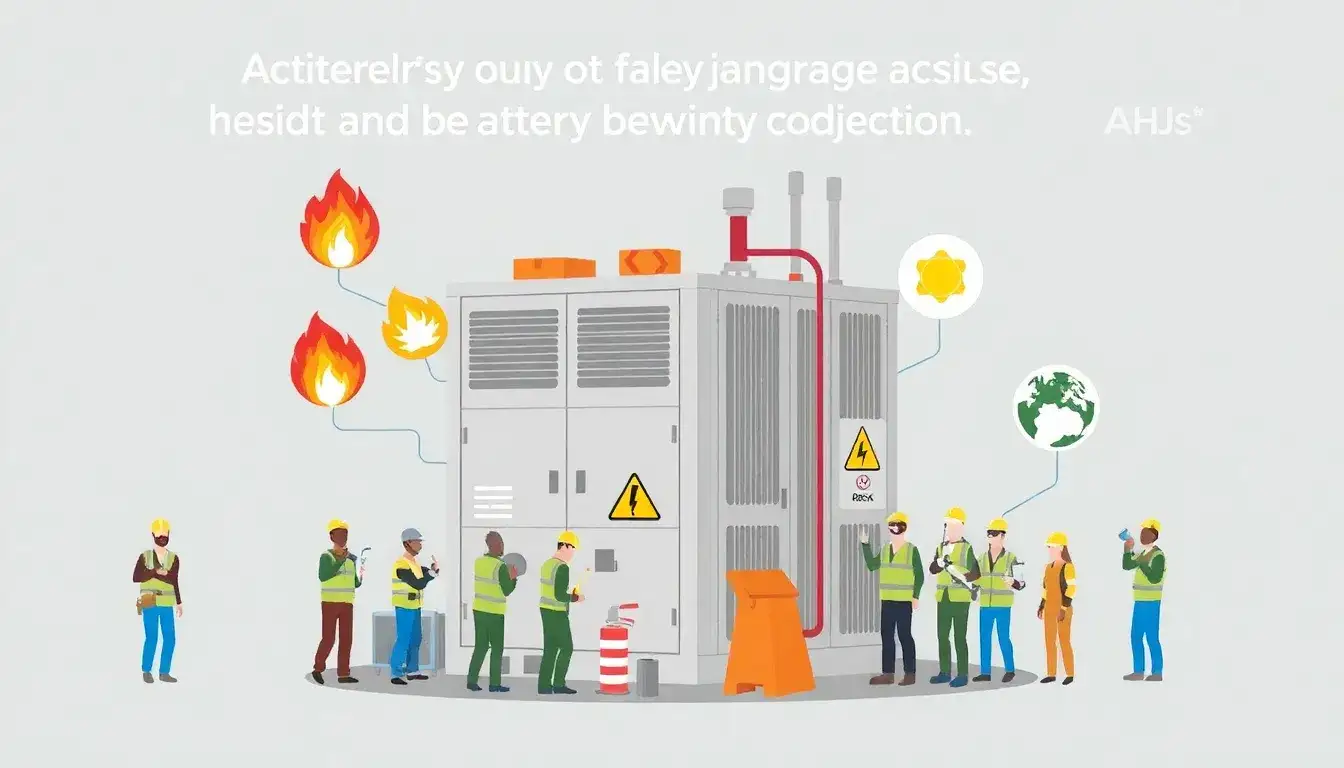
For Authorities Having Jurisdiction (AHJs), the most common safety concerns regarding battery energy storage systems (BESS) include:
Common Safety Concerns
- Fires and Explosions: Fires and explosions can result from thermal runaway, which is often caused by internal short circuits due to electrical, mechanical, or thermal damage to battery cells. Fires can also be triggered by temperature issues, cell defects, damage during installation, operational issues, or lack of maintenance.
- Toxic Gas Emissions: In the event of a fire, BESS can release toxic gases, adding to environmental and health hazards. Community concerns about these risks are prevalent.
- Fire Suppression and Containment: While fire suppression systems might seem beneficial, they can sometimes exacerbate the situation by introducing explosion risks. The current best practice is to contain fires rather than suppress them, allowing affected units to burn out safely and avoiding reignition and explosions.
- System Design and Regulation: Ensuring that BESS are designed with adequate safety features at all levels (cell, module, enclosure) and that they comply with evolving national and international safety codes is crucial. This includes proper integration of cooling systems, barriers, and battery management systems to prevent thermal runaway from spreading.
- Public Education and Acceptance: Educating the public about the safety mechanisms and risks associated with BESS can help alleviate concerns and facilitate smoother implementation of these systems.
These concerns highlight the need for robust safety standards, effective fire containment strategies, and public awareness efforts.
Original article by NenPower, If reposted, please credit the source: https://nenpower.com/blog/what-are-the-most-common-safety-concerns-for-ahjs-regarding-battery-energy-storage-systems/

