

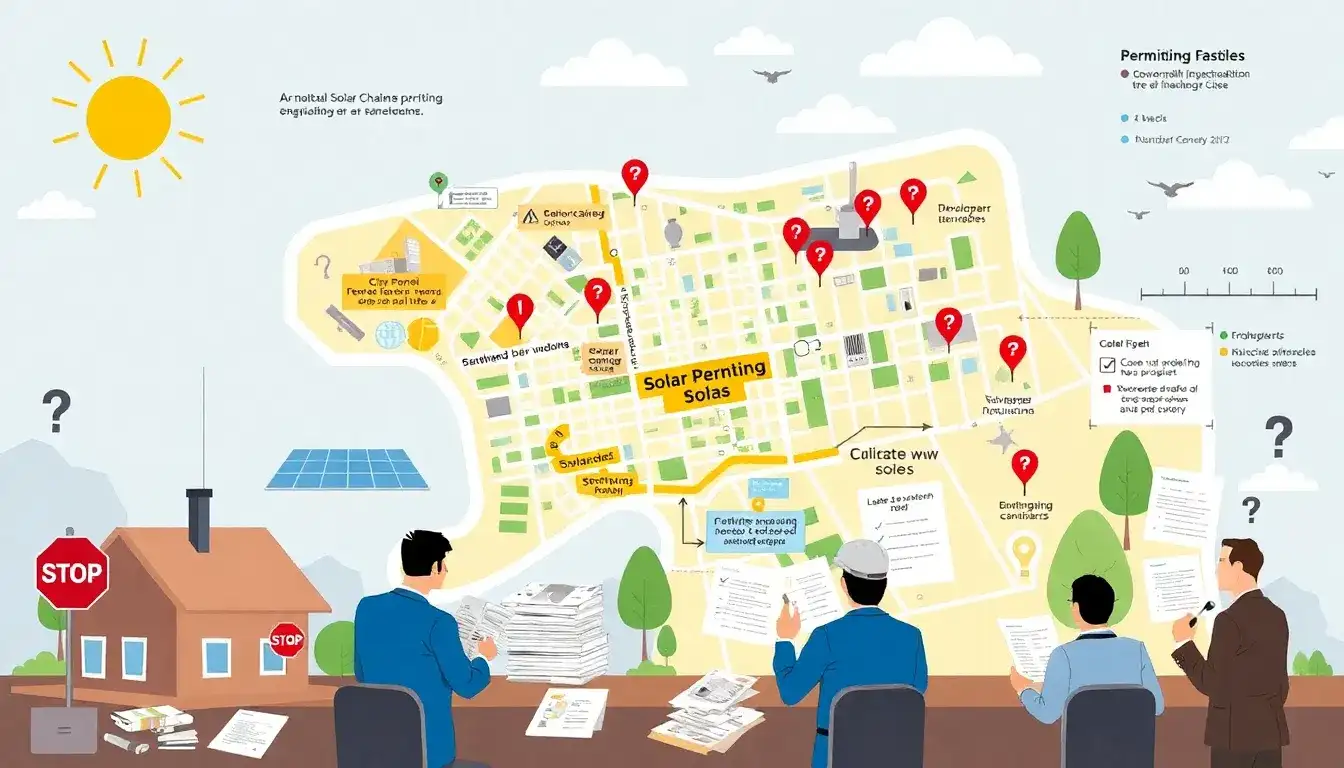
- Slow and Unpredictable Permit Review Timelines: Permit processing times can vary significantly across different jurisdictions, leading to delays and increased costs. Installers often face difficulty in scheduling projects due to uncertainty in permit approval times.
- Poor Communication from Permitting Departments: Lack of clarity about what information a permit application should contain and inadequate communication from reviewers can complicate the process, making it harder for installers to navigate.
- Incorrect or Inconsistent Application of Health and Safety Codes: Variations in regulatory requirements between jurisdictions can lead to inconsistent demands on solar installations, affecting standardization of materials and equipment.
- Variations in Permit Application Processes: Different jurisdictions have unique application processes, which can increase the complexity and cost for solar installers operating across multiple areas.
- Lack of Standardization: There is a need for standardized permitting processes to simplify and expedite approvals, but this is often lacking.
- Additional Requirements Unrelated to Health or Safety: Some areas impose additional aesthetic or land-use regulations that can restrict the installation of solar panels, further complicating the process.
To mitigate these challenges, strategies include maintaining strong relationships with local authorities, preparing thorough permit applications, and advocating for standardized and expedited permitting processes.
Original article by NenPower, If reposted, please credit the source: https://nenpower.com/blog/what-are-the-most-common-permitting-challenges-for-solar-installations/

