

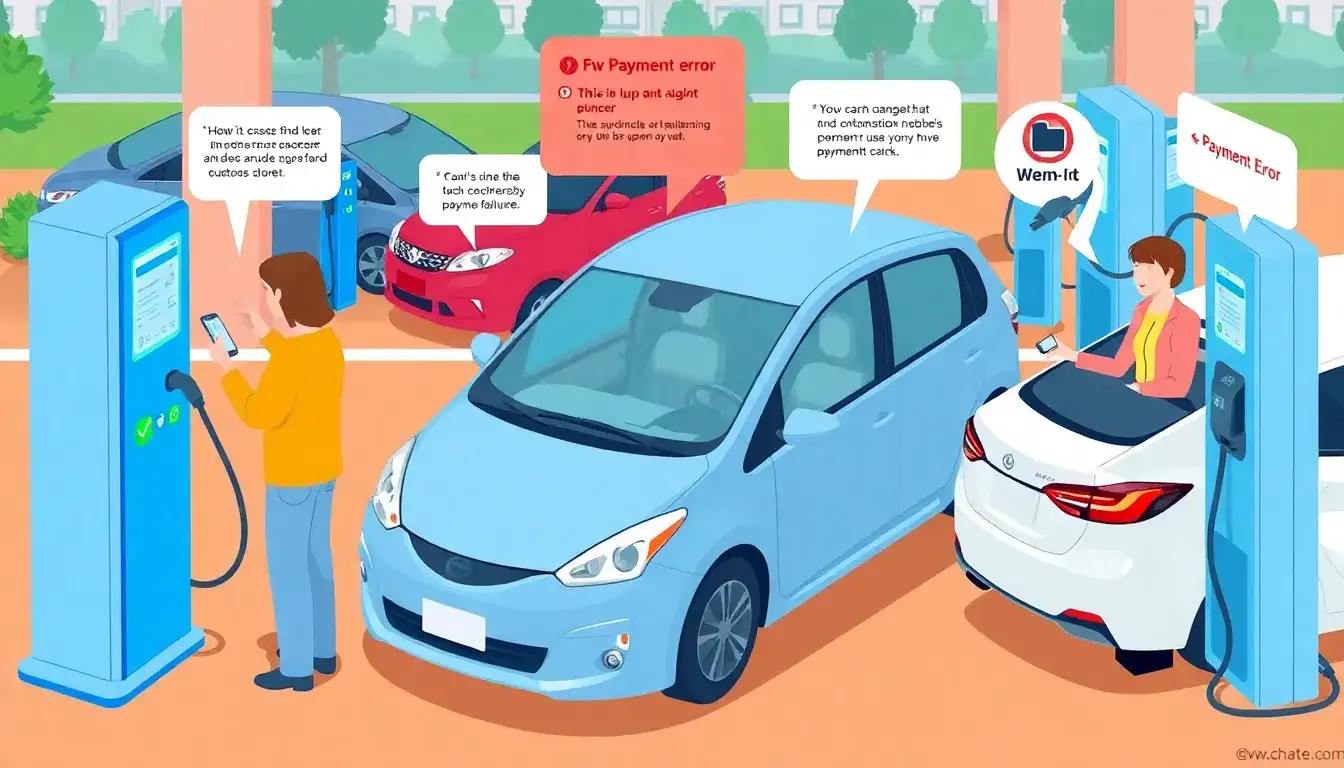
EV charging stations face several persistent payment challenges that create friction for users:
1. Payment method fragmentation
The proliferation of payment options – including apps, RFID cards, credit readers, and Plug & Charge – leads to user confusion and technical complexity. Unlike gas stations’ standardized card/cash payments, EV drivers often need multiple apps/accounts.
2. Credit card reader failures
Hardware reliability issues plague card readers, with problems including network connectivity failures, weather damage, and software integration glitches. These account for frequent session interruptions even when payment appears successful.
3. App-related payment failures
Common app issues include expired payment methods on file, account login problems, and transaction processing errors. Nearly 1 in 5 drivers report paying successfully only to have charging fail to initiate.
4. Transaction ghosting
A critical failure mode occurs when payment processes but charging doesn’t start, leaving users paying for unused electricity. This contrasts with gas pumps’ immediate fuel delivery upon payment.
5. Maintenance shortcomings
Many networks struggle with slow repair response times for failed payment hardware, particularly non-Tesla networks where problem rates reach 41-48% per session. The ChargeX Consortium recommends proactive maintenance checks and cellular connectivity testing during installations.
Worst offenders
Shell Recharge (48% problem rate), EVgo (43%), and Blink (41%) users report the most payment issues, while Tesla Superchargers (4%) and Rivian (5%) demonstrate better reliability.
Original article by NenPower, If reposted, please credit the source: https://nenpower.com/blog/what-are-the-most-common-payment-issues-at-ev-charging-stations/

