

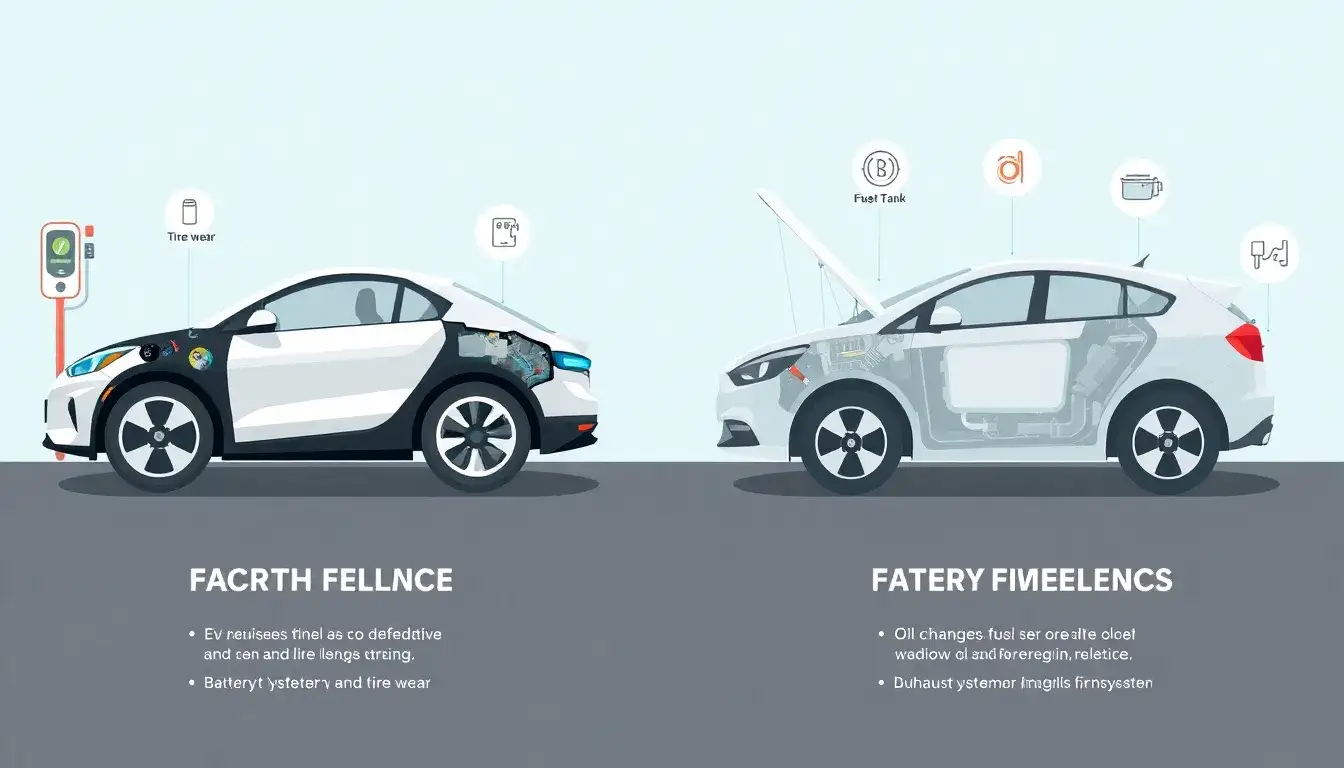
Common maintenance issues for electric vehicles (EVs) differ significantly from those of gas-powered cars, though some areas overlap.
Most Common Maintenance Issues for EVs
- Battery Degradation: EV batteries gradually lose capacity over time and with charging cycles, reducing range. Battery replacement outside warranty can be costly, but warranties typically cover 8 years or 100,000 miles. Proper cooling system maintenance helps prolong battery life.
- Coolant System Maintenance: EVs use coolant to regulate battery temperature. Coolant must be periodically checked and replaced to prevent overheating and battery damage, similar to cooling system needs in combustion engines.
- Brake Components Wear: Thanks to regenerative braking, EV brake pads and discs last longer, but these traditional components still require inspection and occasional replacement.
- Electric Motor Issues: Though electric motors are durable (lasting 15-20 years), they can suffer from overheating, dust accumulation, or insulation issues that may lead to failure. Maintaining motor cooling is essential.
- Suspension and Alignment Problems: EVs, like gas cars, face suspension and alignment issues caused by uneven tire pressure, rough terrain, or mechanical faults. These can affect safety if unaddressed but are generally straightforward to repair.
- Other Routine Maintenance: Tire rotation, replacement of cabin filters, and fluid changes (like brake fluid) remain necessary for EVs.
How EV Maintenance Compares to Gas-Powered Cars
| Maintenance Aspect | Electric Vehicles (EVs) | Gas-Powered Vehicles (ICE) |
|---|---|---|
| Engine Maintenance | No engine oil changes or traditional engine parts maintenance needed; fewer moving parts reduce mechanical wear. | Regular oil changes, filter replacements, and engine tune-ups essential. |
| Brake Wear | Brake components last longer due to regenerative braking, requiring less frequent replacement. | Brake pads and discs wear out faster without regenerative braking. |
| Battery vs Fuel System | Battery needs monitoring for degradation; expensive replacement possible; coolant system for battery management required. | Fuel system maintenance includes fuel filters, injectors, and fuel pump checks. |
| Cooling System | Cooling system focused on battery and motor temperature management; requires periodic coolant checks. | Cooling system manages engine temperature; requires similar maintenance. |
| Electrical System | Minimal scheduled maintenance for battery, motor, and electronics; fewer components to fail. | Complex electrical and ignition system requiring routine checks. |
| Suspension and Alignment | Common issues similar to ICE vehicles; requires regular monitoring. | Similar suspension and alignment issues common. |
In summary, EVs generally require less routine maintenance since they lack traditional engines and have fewer moving parts. Brake wear is reduced due to regenerative braking, but key maintenance areas include battery health and cooling system upkeep. Some mechanical issues such as suspension and alignment remain common across both EVs and gas vehicles. While EV motors are durable, they still need attention to cooling and cleanliness to avoid problems.
Original article by NenPower, If reposted, please credit the source: https://nenpower.com/blog/what-are-the-most-common-maintenance-issues-for-evs-and-how-do-they-compare-to-those-for-gas-powered-cars/

