

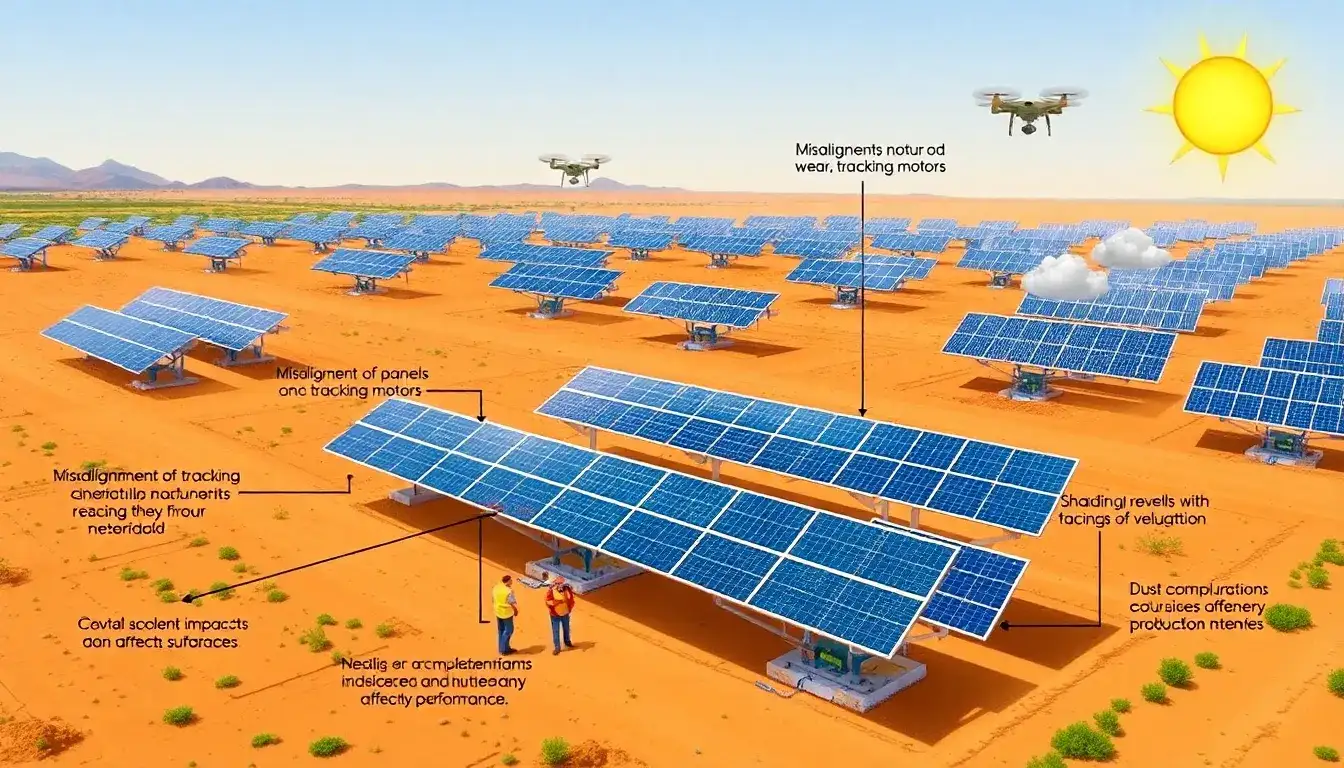
The most common issues with dual-axis solar trackers primarily stem from their technical complexity and environmental vulnerabilities:
- Higher Technical Complexity and Vulnerability to Glitches: Dual-axis trackers involve more sophisticated motion controls and equipment than single-axis trackers. This complexity increases the likelihood of mechanical or electronic failures, making them more prone to glitches during operation.
- Increased Maintenance and Cost: The added movement and complexity lead to higher installation costs and ongoing maintenance requirements compared to simpler tracker systems or fixed arrays.
- Shorter Lifespan and Reliability Concerns: Due to the complexity and more moving parts, dual-axis trackers tend to have shorter operational lifespans and reduced reliability relative to single-axis or fixed systems.
- Performance Sensitivity to Weather Conditions: Dual-axis trackers perform optimally under sunny conditions but show low performance gains during cloudy or overcast weather, limiting their effectiveness in such climates.
- Weather-Related Damage Risks: Environmental factors such as hail, high winds, snow, and freezing conditions pose significant risks. Snow accumulation and drift can obstruct movement and damage the mechanical parts if not properly managed. Hailstones can cause costly damage to the solar panels themselves. Systems need to incorporate protective features like overcurrent protections to avoid motor damage when obstructed and should be designed to handle physical stress from temperature extremes.
In summary, while dual-axis trackers offer superior solar tracking capabilities and higher power output, their main issues are related to increased complexity, greater maintenance demands, vulnerability to mechanical and weather-related damage, and sometimes reduced reliability under adverse weather conditions.
Original article by NenPower, If reposted, please credit the source: https://nenpower.com/blog/what-are-the-most-common-issues-with-dual-axis-trackers/

